

Understanding the Science of the Afternoon Slump
Ever hit 2 PM and feel like your battery just hit 1% despite a full night's rest? It is incredibly frustrating, but there is a real physiological reason this is why your energy disappears by afternoon. It isn't just you being "lazy" or needing more coffee; your body is actually following a strict internal clock.
Your circadian rhythm, which acts as your body's master timekeeper, naturally dictates periods of alertness and sleepiness. Most people experience a significant dip in this cycle during the early afternoon, separate from how well you slept the night before. Alongside this rhythm, your brain accumulates a chemical called adenosine throughout the day. The longer you are awake, the more this "sleep pressure" builds up, making your eyelids feel heavy by midday.
What you eat for lunch plays a massive role too. A heavy meal rich in simple carbohydrates causes a rapid spike in blood sugar, followed by a sharp crash. This drop triggers fatigue and brain fog right when you need to focus.
To help stabilize your day, keep these factors in mind:
- Adenosine Build-up: It creates "sleep pressure" that peaks in the afternoon.
- Circadian Dip: Your internal body clock signals a natural biological lull.
- Blood Sugar Swings: High-carb lunches lead to energy crashes.
Understanding these hidden forces helps you stop blaming yourself and start supporting your body better.
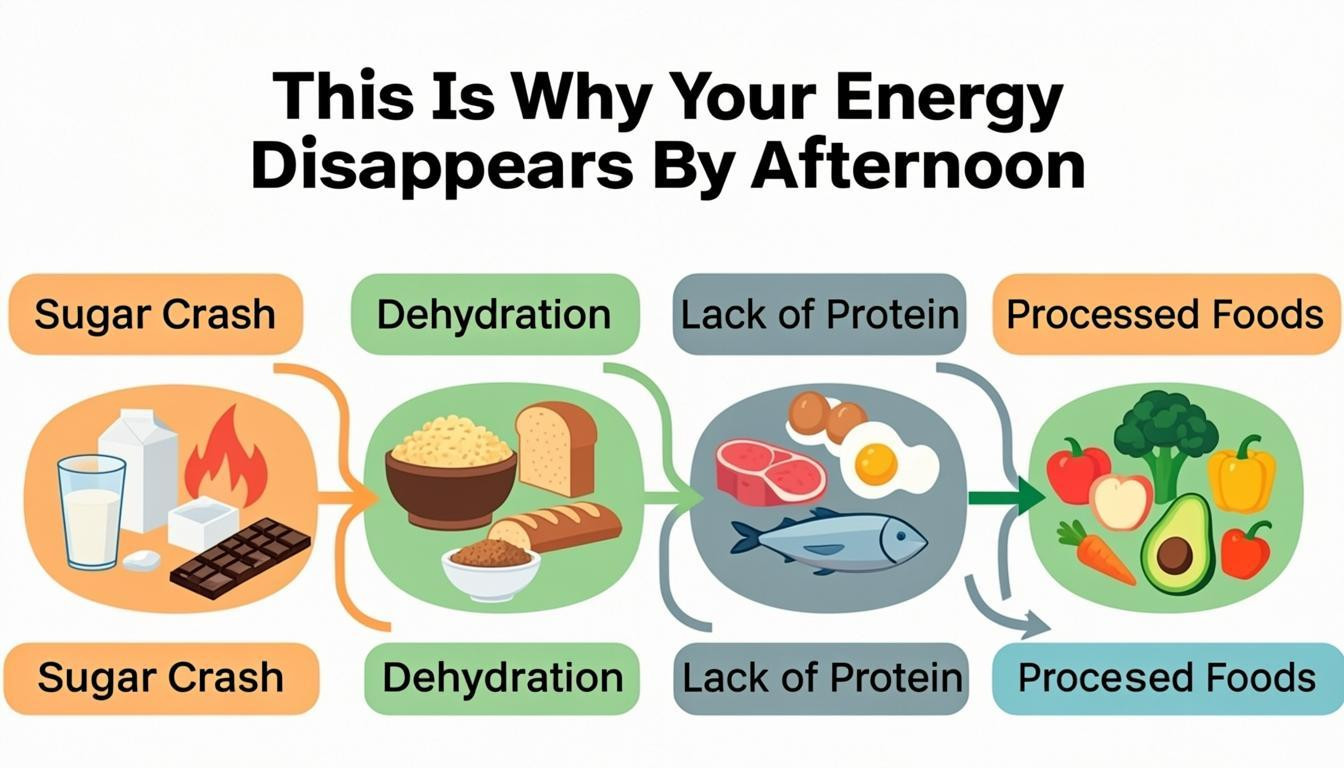
This Is Why Your Energy Disappears By Afternoon: Dietary Factors
I used to wonder why I hit a wall by 2 PM, feeling like I needed a nap just to survive the rest of the day. It turns out, what you eat in the morning sets the stage for your entire afternoon. Starting your day with high-sugar breakfasts or refined carbs—like sugary cereal, pastries, or even just toast—causes your blood sugar to skyrocket and then crash. That sudden drop is exactly why your energy disappears by afternoon, leaving you foggy and reaching for another caffeine fix.
Then there's the post-lunch slump. When you eat a heavy meal, your body shifts into the "rest and digest" mode to process all that food. This natural response draws blood flow away from your brain and muscles, making you feel sluggish and sleepy. It is not just laziness; it is biology trying to do its job.
To keep your engine running smoothly, you need the right mix of fuel. Skipping macronutrients is a recipe for disaster. Instead, focus on balanced meals that provide sustained energy:
- Pair carbs with protein or healthy fats to slow down sugar absorption
- Choose whole foods over processed snacks to avoid spikes and crashes
- Don't fear fat—it keeps you full and your brain sharp
Small changes to your plate can stop that afternoon energy drain before it starts.
Struggling With Afternoon Fatigue?
Support your thyroid to balance energy levels and combat that daily crash naturally with Thyrafemme.
Lifestyle Habits That Drain Your Battery
Have you ever wondered this is why your energy disappears by afternoon even after a decent night's sleep? It often comes down to the silent daily habits we barely notice.
First, let's talk about water. Even mild dehydration acts like a hidden anchor on your energy levels. When you don't drink enough, your blood volume drops, making your heart work harder to push oxygen around. This leads to that heavy, foggy feeling where focusing on a single email feels like climbing a mountain.
Then there is the sitting trap. It sounds counterintuitive, but doing absolutely nothing can actually make you more tired. When you stay sedentary for long periods, your circulation slows down, and your mitochondria—the power plants in your cells—become less efficient. Moving your body actually creates energy, while stillness drains your reserves.
Finally, that morning latte might be setting you up for a hard fall. Relying on caffeine to wake up often leads to a blood sugar roller coaster followed by an afternoon crash. Instead of steady fuel, you get a spike and a sharp drop, leaving you exhausted before the day is half over.
To protect your battery, try these small shifts:
- Sip water consistently before you even feel thirsty.
- Take five-minute movement breaks to wake up your circulation.
- Pair caffeine with food to soften the crash.
Small tweaks can stop the energy leak and help you feel like yourself again.
Sleep Quality and Its Effect on Your Day
Have you ever noticed that this is why your energy disappears by afternoon no matter how hard you try to push through? It’s not just in your head. Sleep debt sneaks up on you, quietly piling up night after night until your body simply can't sustain the facade of alertness. You might start the morning with a borrowed burst of energy from stress hormones, but by 2:00 PM, that borrowed time runs out, leaving you crashing hard.
When we neglect sleep hygiene, our cognitive function takes a massive hit. It’s not just about feeling tired; it’s about your brain struggling to process information.
- You walk into a room and immediately forget why.
- Simple words seem to sit on the tip of your tongue.
- Tasks that usually take ten minutes suddenly drag on for an hour.
There is also a vicious cycle between stress hormones and exhaustion. When you don't sleep well, your body pumps out more cortisol to keep you awake. This constant hormonal roller coaster keeps you in a state of "wired but tired," draining your battery even when you’re technically resting. Breaking this cycle is essential for reclaiming your focus and stabilizing your mood throughout the day.
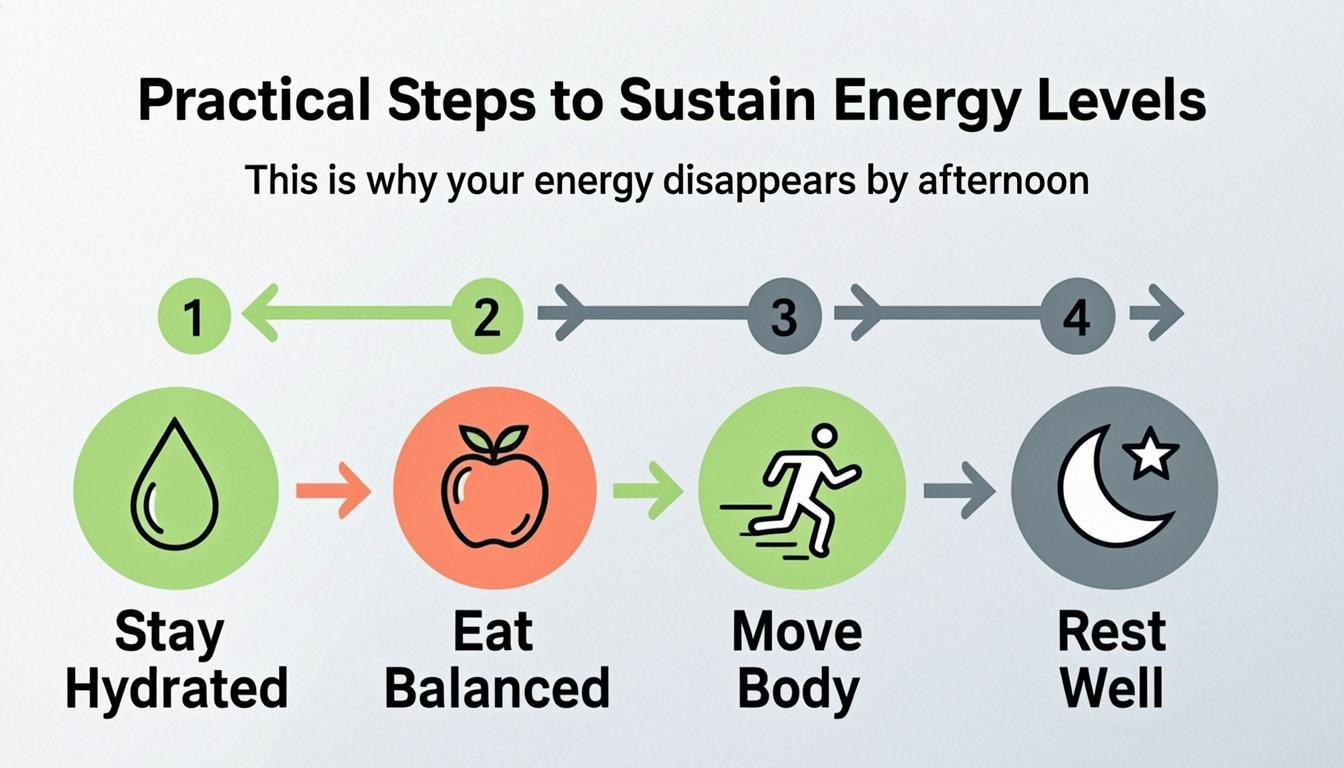
Practical Steps to Sustain Energy Levels
If you’ve ever wondered this is why your energy disappears by afternoon, the answer often lies in how you start your day. I learned the hard way that skipping breakfast or grabbing a sugary pastry sends my blood sugar on a rollercoaster, leaving me crashing by 2 PM. Instead, try prioritizing protein and healthy fats at your first meal to keep your glucose stable.
When you feel that heavy fog setting in, movement acts as a reset button. You don’t need a full workout; just five minutes of stretching or a quick walk outside can work wonders. Combine this with natural light exposure to signal your brain that it’s time to wake up and focus.
Finally, look at what you’re drinking. Hydration impacts our energy more than we realize, so aim for water before reaching for another coffee. If you love caffeine, try sipping it slowly or stopping by noon to protect your sleep quality.
- Balance your plate: Pair carbs with protein or fat to avoid spikes.
- Get outside: Morning light helps regulate your internal clock.
- Hydrate first: Drink water before your morning brew.
Long-Term Strategies for Consistent Vitality
If you feel wiped out by 3 PM, this is why your energy disappears by afternoon: your body’s internal clock might be out of sync. Establishing a consistent sleep-wake schedule is a game-changer. Going to bed and waking up at the same time every day—even on weekends—helps regulate your hormones and keeps your energy levels steady. Think of it as setting a rhythm your body can actually dance to instead of constantly tripping over.
Building resilience to stress is just as important. When stress hits hard, it drains your battery fast. Integrating relaxation techniques isn't just a luxury; it's necessary maintenance. Try deep breathing exercises, gentle yoga, or even five minutes of quiet meditation to reset your nervous system.
However, sometimes lifestyle changes aren't enough. It’s crucial to know when to bring in a professional. If your fatigue feels heavy, persists despite rest, or makes daily tasks impossible, don't ignore it. You deserve to feel vibrant, and a doctor can help uncover underlying issues getting in your way.


Comments
0