
Introduction
Starting a new project is often exhilarating, but maintaining that initial momentum is where the real challenge lies. The gap between setting a goal and actually crossing the finish line usually comes down to your ability to show up every day, even when the excitement fades. Learning how to take action consistently is what turns vague intentions into tangible results, whether you are building a business or trying to adopt a healthier lifestyle. Consistency is rarely about perfection; it is about having the discipline to keep moving forward despite the obstacles.
To keep this drive alive, it helps to understand the mechanics of human behavior. Habit tracking is essentially about monitoring your daily actions to see how often you follow through. This practice gives you a clear record of your efforts, making the abstract concept of progress feel visible and real. For instance, if you are trying to exercise daily, seeing a streak of completed days on a calendar reinforces your identity as someone who is active and healthy.
Visual progress and structured planning are powerful tools in this process. By using daily routine apps or even simple checklists, you can organize your time and see your advancement in real-time. This approach goes beyond basic to-do lists by offering a structured method to manage your day. When you schedule your time in blocks for work and personal routines, you create a balanced framework that supports sustained action over the long haul.
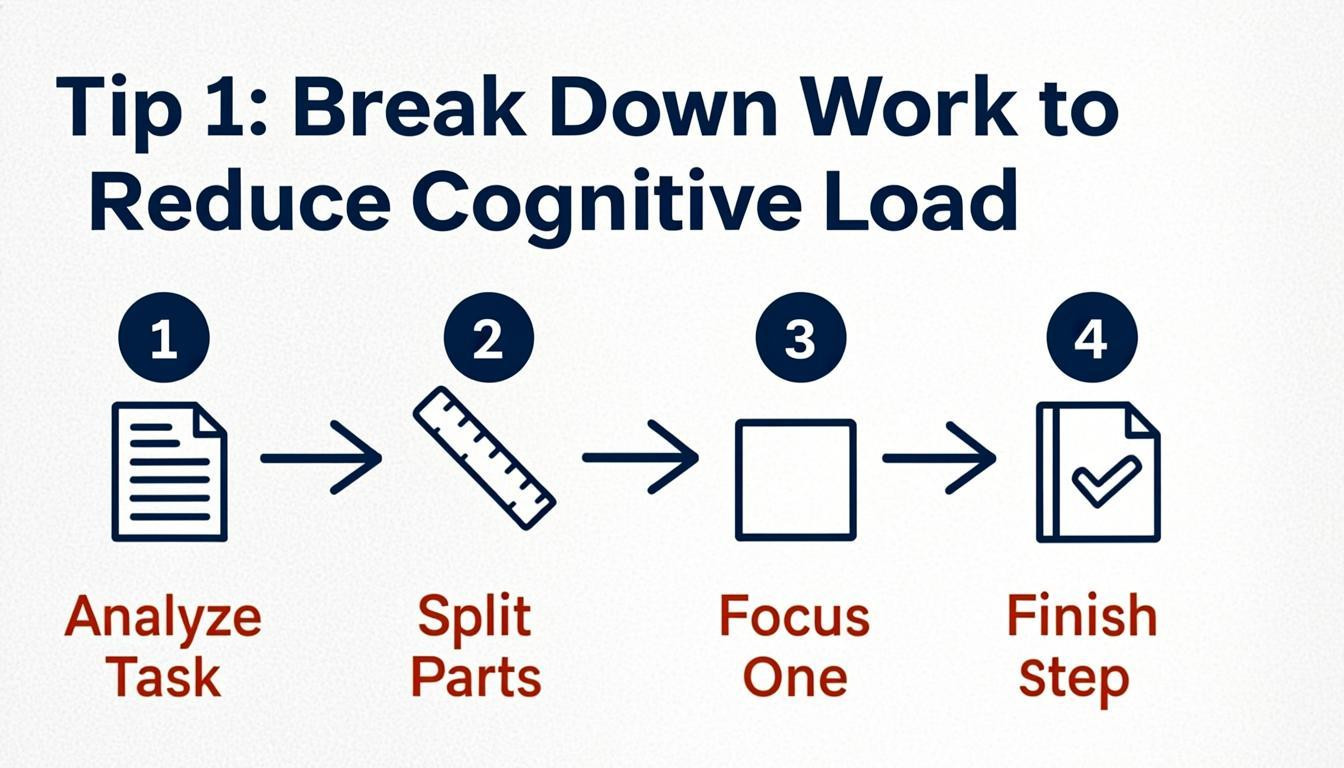
Tip 1: Break Down Work to Reduce Cognitive Load
Large, vague projects often trigger procrastination because they create psychological friction. The brain naturally perceives complex tasks as threats, which often leads to avoidance. To master how to take action consistently, you need to reduce this cognitive load by transforming intimidating objectives into tiny, manageable steps. When a task feels safe and specific, the motivation to act usually overrides the desire to avoid it.
The best approach is to deconstruct your goals immediately. Instead of scheduling a vague block of time to "write report," break it down into micro-tasks such as "outline headings" or "write introduction." This strategy clarifies exactly what needs to be done and significantly lowers the barrier to entry.
- Divide and Conquer: Split major projects into sub-goals that take less than 30 minutes to complete.
- Be Hyper-Specific: Replace vague intentions with concrete actions. For example, change "study biology" to "review Chapter 4 notes."
- Time-Box Your Tasks: Assign a fixed time slot to each small step to prevent overthinking and encourage focus.
By minimizing the mental effort required to start, you create momentum that makes consistent action much easier to sustain.
Tip 2: Leverage Behavioral Activation Techniques
Behavioral activation relies on the principle that action precedes motivation. Instead of waiting until you feel like doing a task, you simply engage in the activity, which often brings a sense of accomplishment or enjoyment afterward. This approach directly counteracts procrastination, which is frequently rooted in avoidance. By actively approaching tasks aligned with your values, you break the cycle of waiting for the "right" mood and build momentum simply by doing.
If you want to learn how to take action consistently, focus on scheduling specific behaviors rather than relying on willpower.
- Schedule activities first: Put tasks on your calendar before you feel ready. Treat these appointments as non-negotiable to reduce the mental friction of starting.
- Start small: Break larger goals into micro-steps. Completing a five-minute version of a task can provide the immediate sense of accomplishment needed to fuel further progress.
- Track your progress: Monitor your daily behaviors to identify patterns and reinforce positive routines. Seeing a visual record of your consistency helps maintain momentum over time.
Tip 3: Schedule Time Before You Spend It
To figure out how to take action consistently, try treating your time like your money: allocate it before you actually use it. Procrastination often stems from a lack of intention rather than a lack of time. By pre-determining your schedule, you remove the mental friction of deciding what to do next, making it much easier to stick to your plans and maintain momentum.
The most effective approach is to plan your specific time blocks the night before or during a weekly review. Instead of simply reacting to demands as they arise, assign dedicated windows for deep work, routine tasks, and breaks. This method ensures you feel balanced and accomplished across all areas of your life.
- Plan ahead: Set specific time blocks in your calendar the evening before to structure your upcoming day.
- Break down tasks: Define exactly what you will accomplish during each block to lower cognitive load and resistance.
- Separate categories: Assign distinct blocks for professional work and personal routines to maintain work-life balance.
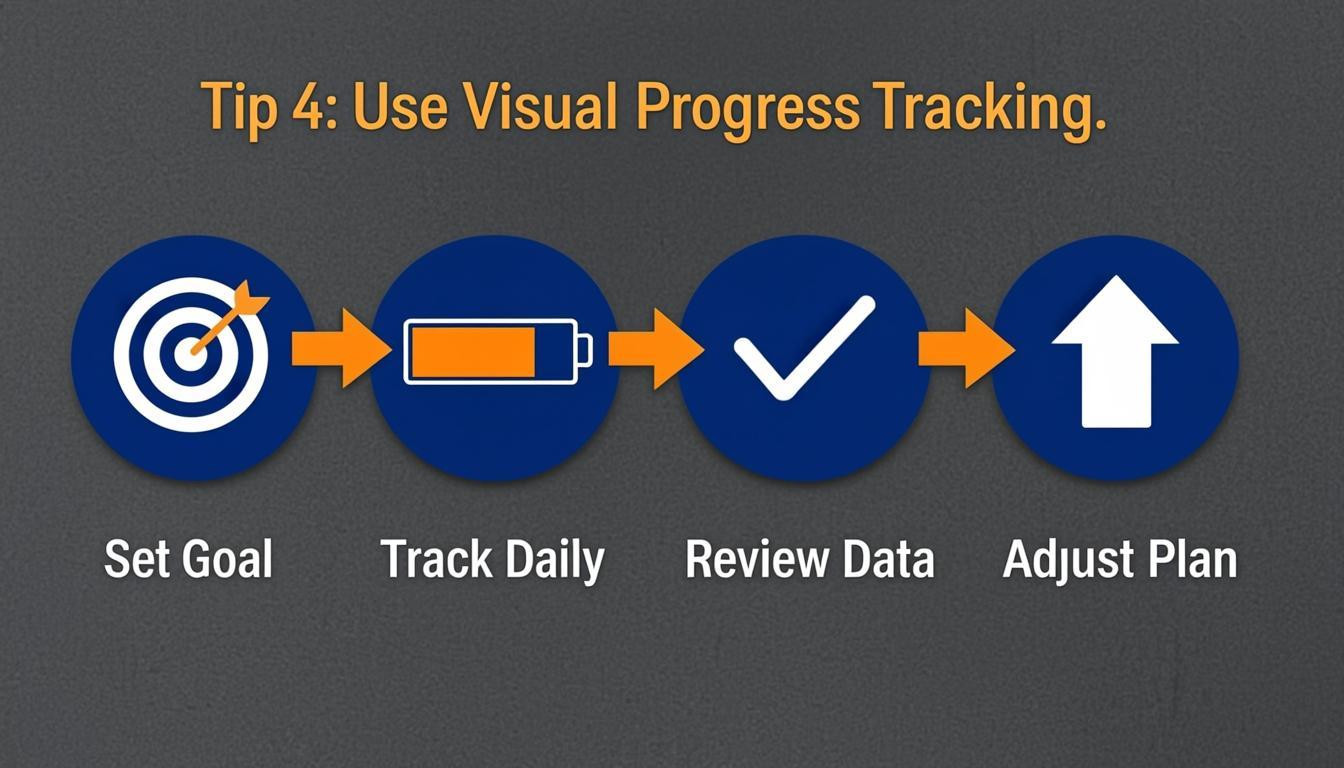
Tip 4: Use Visual Progress Tracking
Visualizing your achievements acts as a powerful psychological trigger for maintaining momentum. Seeing a streak of completed tasks or a filled progress bar creates a genuine sense of accomplishment that motivates you to keep going. When learning how to take action consistently, transforming abstract goals into tangible, visual data helps you identify patterns and celebrate small wins immediately. This method shifts your focus from the daunting end goal to the daily process, making routine adherence much more manageable.
To implement this effectively, use tools that make progress obvious and satisfying. You do not need complex systems; simplicity often leads to better compliance.
- Habit Tracking Apps: Utilize apps designed to build routines by offering clear visual markers for daily completion.
- Calendars and Stickers: Place a physical calendar on your wall and mark an "X" for every day you complete a specific action.
- Progress Bars: Break large projects into smaller milestones and fill a bar as you complete each segment.
- Gamification Elements: Use tools that apply game-like features, such as points or levels, to reward consistent behavior.
Turn Consistency into Results
Showcase your progress with a fast, reliable website. Hostinger provides the stable platform you need to build your online presence without technical hurdles.
Select a method that fits your lifestyle and review your visual trackers daily to reinforce your commitment.
Tip 5: Reduce Friction by Preparing in Advance
Procrastination often stems from high friction rather than laziness. To figure out how to take action consistently, you must minimize the mental and physical effort required to start a task. Big, vague goals create resistance, whereas preparation lowers cognitive load and makes beginning feel safe and manageable.
Arranging your environment and schedule the night before eliminates decision fatigue. When you pre-decide what to do and prepare the necessary tools, you remove the barriers that usually stall progress. This approach allows you to spend your time before you actually have it, ensuring a balanced sense of accomplishment.
Implement these strategies to streamline your workflow:
- Schedule in advance: Block specific times for work and routines during a weekly review or the night before.
- Break tasks down: Convert large objectives into small, specific steps that are easy to initiate immediately.
- Prepare your tools: Lay out physical equipment or open digital tabs required for your first task so you can jump straight in.
Reducing startup friction transforms intentions into immediate execution, building momentum that sustains productivity throughout the day.
Tip 6: Incorporate Accountability and Social Support
Procrastination often thrives in isolation, making social support a powerful mechanism for learning how to take action consistently. When you commit to a goal publicly, you leverage social pressure to maintain momentum. Accountability partners provide external motivation during periods when internal drive dips, ensuring you stick to your planned tasks even when motivation fades.
To implement this effectively, find an accountability buddy or join a community with similar objectives. Share specific deadlines rather than vague intentions to increase the stakes. You might schedule weekly check-ins to report progress or use apps that allow friends to view your completion streaks.
- Partner up: Choose a friend or colleague who will honestly review your progress.
- Make public commitments: Announce your goals on social media or within a dedicated group.
- Schedule check-ins: Set recurring times to discuss completed tasks and upcoming hurdles.
Transforming solitary work into a shared responsibility reduces the likelihood of skipping essential actions. This social framework turns abstract intentions into concrete, external obligations.
Tip 7: Start Small to Build Sustainable Consistency
Overwhelming yourself with drastic changes often leads to burnout rather than long-term success. When learning how to take action consistently, focusing on intensity is generally less effective than focusing on frequency. Repetition strengthens neural pathways in the brain, turning difficult behaviors into automatic habits over time. By reducing the cognitive load required to start, you minimize the friction that causes procrastination.
To build momentum without exhausting your willpower, begin with micro-habits that require minimal effort. This approach allows you to master specific behaviors before introducing new complexities.
- Select one or two habits: Choose small, manageable actions rather than attempting to overhaul your entire routine at once.
- Prioritize daily repetition: Perform the chosen habit every day, even on weekends, to solidify the behavior and make it feel automatic.
- Track your progress: Use a simple checklist or journal to mark off completed days, providing visual proof of your consistency.
For example, instead of committing to an hour-long workout, start with five minutes of stretching daily. Once this small action becomes a non-negotiable part of your day, you can gradually increase the duration or intensity.
Conclusion
Mastering the ability to persist is a skill developed through practice, not an innate talent. Successful individuals simply treat consistency as a tool to navigate obstacles rather than possessing inherent superiority. You can learn how to take action consistently by shifting your perspective and utilizing the right resources. There is no single "best" application for everyone; the ideal choice depends on whether you prefer robust task management, visual planning, or gamified elements to maintain motivation.
Start implementing these strategies today:
- Schedule time in advance: Plan your day before it begins by assigning specific blocks for work and routine tasks.
- Monitor behaviors: Track your daily actions to identify patterns and verify how often you perform new habits.
- Start immediately: The best time to begin tracking was yesterday, but the second best time is right now.
View yourself as being on the same path as those you admire, simply at a different stage. By practicing these principles and leveraging tools that fit your lifestyle, you can build the momentum necessary to achieve your long-term goals.

Comments
0