
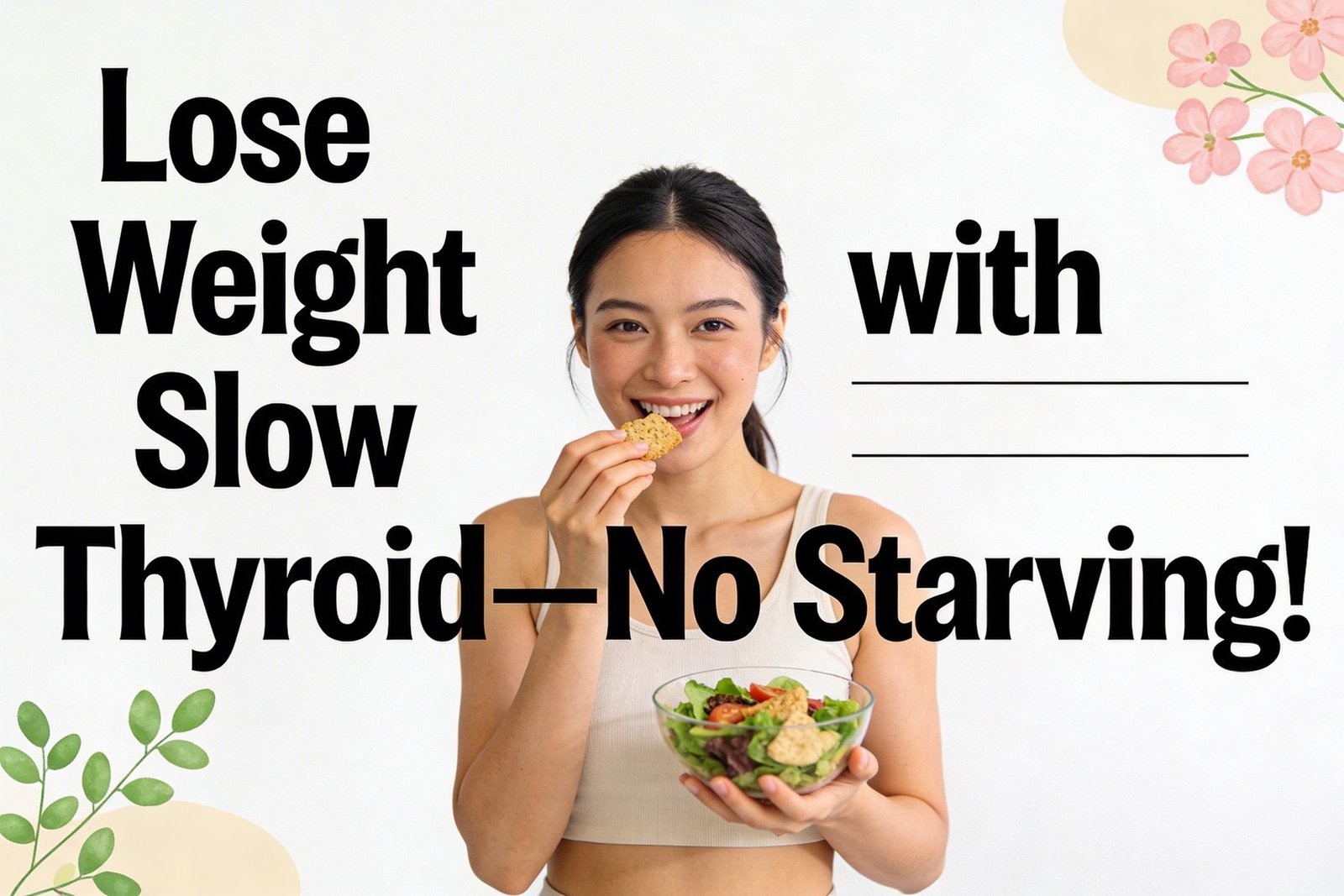
Tired of the Battle? How to Finally Shed Pounds with a Sluggish Thyroid
Does it feel like no matter how many salads you eat or miles you run, the scale just won’t budge? You watch friends drop a few pounds just by skipping dessert for a week, while you count every calorie and still feel stuck. It is exhausting, disheartening, and frankly, frustrating. If you are nodding your head right now, know that you aren’t alone, and it isn’t just a lack of willpower. For many women in their 30s, 40s, and 50s, a hidden butterfly-shaped gland in the neck might be the culprit. If you are ready to feel like yourself again, you are in the right place. Today, we are discussing exactly how to lose weight with a slow thyroid (without starving yourself) so you can get back to feeling vibrant and energized.
What Is a Slow Thyroid?
To understand the weight struggle, we have to look at the engine of your metabolism: the thyroid gland. This small gland produces hormones that act as messenger chemicals, telling your body’s cells how much energy to use. When your thyroid is functioning optimally, it hums along like a well-tuned car, burning fuel efficiently and keeping your weight stable.
However, when you have hypothyroidism—an underactive thyroid—your body slows down. It enters a sort of "power saving mode" that it cannot easily snap out of. This condition is incredibly common in women, particularly as we age and navigate life changes like pregnancy or menopause. It creates a metabolic environment where weight gain happens easily and loss feels nearly impossible, regardless of how strictly you diet.
Signs and Symptoms
While weight gain is often the most noticeable symptom, it is rarely the only one. Because thyroid hormones affect every cell in your body, a slowdown can trigger a wide range of issues.
Recognizing these signs is the first step toward getting the right help:
- Unrelenting fatigue: You wake up tired, need coffee to function, and could nap by 2 PM.
- Sensitivity to cold: You are constantly chilly when others are comfortable, often with cold hands and feet.
- Brain fog: You might forget names, lose your train of thought, or feel mentally "sluggish."
- Dry skin and brittle nails: No amount of lotion seems to keep your skin hydrated, and nails may chip easily.
- Hair thinning: This is often one of the most emotional symptoms,表现为 hair loss or thinning, particularly at the outer edges of the eyebrows.
- Heavy periods: Your menstrual cycles may become heavier, more painful, or irregular.
Common Causes
Why does the thyroid slow down in the first place? It is often a combination of genetics, lifestyle, and environmental factors.
Here are the most common reasons women struggle with thyroid function:
1. Autoimmune Disease (Hashimoto’s): This is the leading cause of hypothyroidism in industrialized countries. Essentially, your immune system mistakenly attacks your thyroid gland, gradually impairing its ability to produce hormones. 2. Nutrient Deficiencies: Your thyroid needs specific building blocks to create hormones. A deficiency in selenium, iodine, zinc, or iron can bring production to a halt. 3. Chronic Stress: When you are constantly stressed, your body produces high levels of cortisol. Over time, elevated cortisol can suppress thyroid function and block your body’s ability to convert thyroid hormones into their active, usable form. 4. Hormonal Fluctuations: Major hormonal shifts, such as pregnancy or perimenopause, can trigger thyroid imbalances or make existing ones worse.
Natural Solutions and Tips
Kickstart Your Metabolism Naturally
Support your thyroid health and restore hormone balance with Thyrafemme—so you can finally stop fighting your body.
The old advice of "eat less and move more" simply doesn't work when your metabolism is suppressed. Instead, we need to focus on healing and supporting the thyroid. Here is how to approach weight loss gently and effectively.
Focus on Nutrient-Dense Foods
Instead of calorie counting, focus on nutrient counting. Your body needs raw materials to heal.
- Prioritize Protein: Protein is thermogenic, meaning it burns more calories to digest than fats or carbs. It also helps prevent muscle loss, which is common in hypothyroidism.
- Selenium Sources: Eating just two Brazil nuts a day can provide your daily requirement of selenium, a mineral vital for thyroid hormone conversion.
Be Smart with Exercise
High-intensity interval training (HIIT) can actually stress the body further if your thyroid is already struggling. Focus on low-impact, restorative movements like walking, yoga, or swimming. These help manage insulin levels without spiking cortisol.
Manage Stress and Sleep
It sounds cliché, but sleep is non-negotiable. Poor sleep increases hunger hormones (ghrelin) and decreases fullness hormones (leptin), setting you up for cravings. Aim for 7–9 hours of quality sleep and incorporate 5–10 minutes of daily meditation or deep breathing to lower cortisol levels.
Eliminate Potential Triggers
Some women find relief by reducing inflammatory foods. While not everyone needs to go gluten-free, there is a molecular link between gluten and thyroid tissue. If you suspect sensitivity, try cutting back on refined sugars and highly processed foods, which cause inflammation and blood sugar spikes.
When to See a Doctor
If you suspect a thyroid issue, self-diagnosis isn’t enough. It is crucial to partner with a healthcare provider who understands thyroid health.
Keep an eye out for "red flag" symptoms such as a rapid heartbeat, goiter (visible swelling at the base of the neck), or extreme depression. When you visit your doctor, ask for a full thyroid panel. Standard testing often only checks TSH (Thyroid Stimulating Hormone), but you need to see Free T3, Free T4, and Thyroid Peroxidase (TPO) antibodies to get the full picture. Don’t be afraid to ask questions about your ranges—being on the "low end of normal" might still be too low for your body to lose weight effectively.
Supporting Your Health Journey
Finding the right balance can take time, and there is no one-size-fits-all answer. Alongside diet and lifestyle changes, some women support thyroid balance using supplements like Thyrafemme as one option. Many find that targeted herbal and mineral support can help fill nutritional gaps and promote energy levels naturally. However, remember that supplements are just one piece of the puzzle. They work best when combined with a balanced diet, stress management, and guidance from your healthcare provider. Always consult your doctor before starting a new regimen to ensure it complements your specific health needs.
Key Takeaways
You don’t have to starve yourself to see results. By supporting your body rather than fighting against it, you can restore your energy and reach a healthy weight.
- It’s not your fault: Weight gain with a slow thyroid is a physiological response, not a failure of willpower.
- Test, don’t guess: Ask your doctor for a comprehensive thyroid panel to understand exactly what is happening.
- Nutrient over calories: Focus on selenium, zinc, and protein rather than just cutting calories.
- Heal your stress: High cortisol blocks thyroid function, so sleep and stress management are just as important as diet.
Pinterest Quote: "Healing your thyroid is about nourishing your body, not starving it. Weight loss is a side effect of wellness, not the goal."


Comments
0