
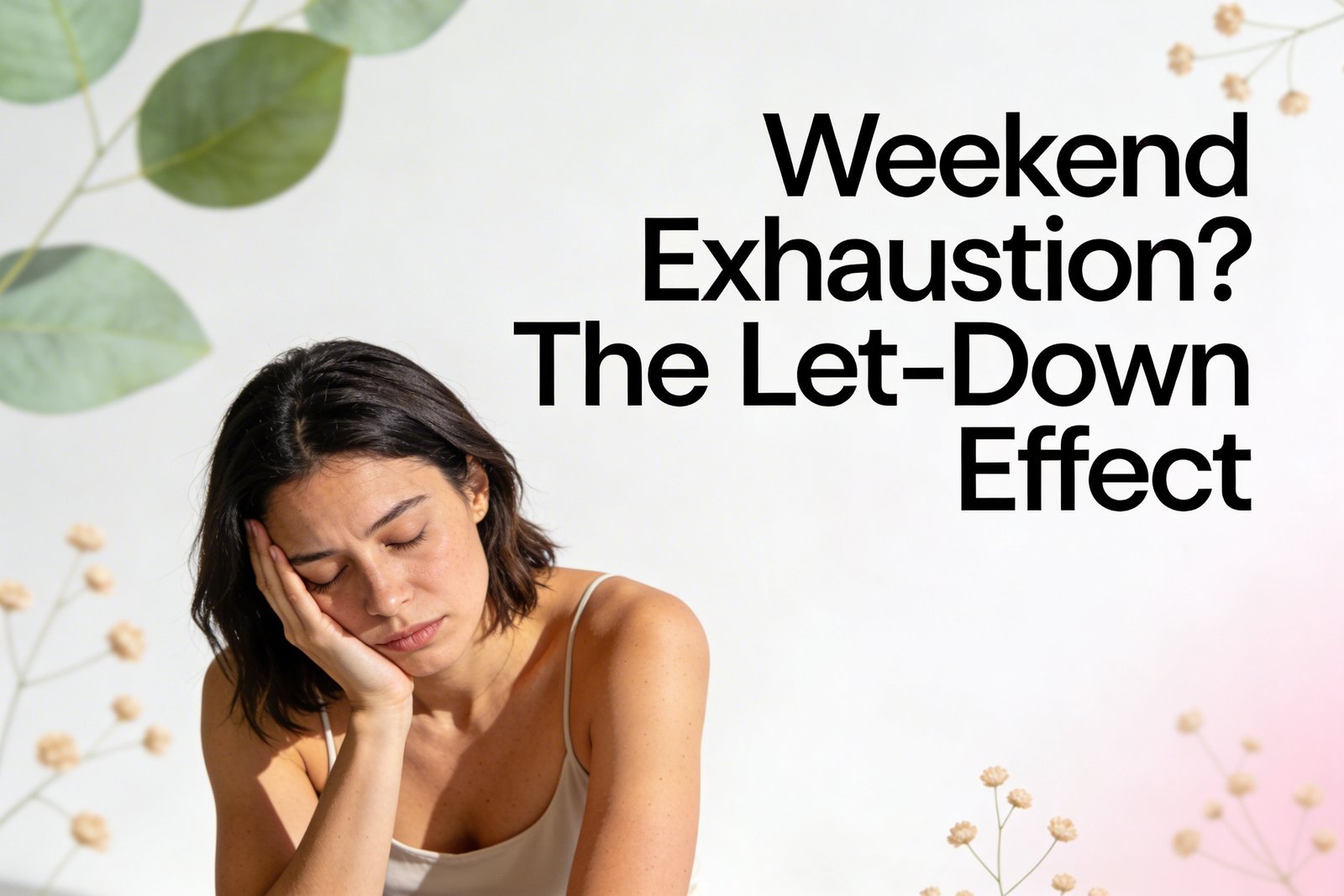
Why Does the Weekend Wipe You Out? Understanding the Let-Down Effect
Do you spend your entire work week counting down the hours until Friday, dreaming of sleeping in and lazy mornings? You imagine the weekend as a time to recharge, reconnect, and finally breathe. But then, Saturday morning rolls around, and instead of feeling energized, you feel like you’ve been hit by a truck.
If you’ve ever found yourself wondering why weekends make you exhausted when you’re supposed to be resting, you are definitely not alone. It is a frustrating and confusing paradox, but there is a real physiological reason behind it. It’s known as the “let-down effect,” and it explains why your body chooses to crash the moment you slow down. Let’s explore what is happening to your body and how you can actually reclaim your time off.
What Is the Let-Down Effect?
The let-down effect is a phenomenon where the body experiences a surge of physical symptoms or intense fatigue immediately following a period of high stress or busyness. Think of it as your body’s physiological "exhale." When you are in "go mode"—managing a career, running a household, or caring for family—your system is flooded with stress hormones like cortisol and adrenaline. These hormones act like natural fuel, keeping you alert, focused, and moving even when you’re physically tired.
Once the deadline passes or the weekend begins, those stress levels drop rapidly. While this sounds like a good thing, that sudden drop can catch your immune system off guard, leading to inflammation, headaches, and overwhelming exhaustion. For women in their 30s, 40s, and 50s, who often shoulder the bulk of the "mental load" at home and work, this shift is particularly common. It isn't just in your head; it’s a very real response to chronic stress cycles.
Signs and Symptoms
Recognizing the let-down effect is the first step toward managing it. It often masquerades as laziness or the flu, but the pattern is distinct. You might feel fine on Friday afternoon, only to wake up feeling heavy and groggy on Saturday.
Common signs include:
- Unrelenting Fatigue: A deep, bone-tired feeling that makes getting out of bed feel impossible, regardless of how much you slept.
- Sudden Illness: Coming down with a sore throat, runny nose, or low-grade fever right as your vacation starts.
- Tension Headaches or Migraines: A nagging pain that sets in as your shoulder muscles finally unclench.
- Digestive Issues: Bloating, nausea, or stomach upset that correlates with your days off.
- Brain Fog: Difficulty focusing on simple conversations or making decisions about weekend plans.
These symptoms typically appear within 12 to 24 hours of the stressor ending. If you feel "sick" every single Saturday or Sunday, it is likely your body struggling to adjust to the calm.
Common Causes
Why does our body react to rest with sickness? It usually comes down to how we handle stress and how our immune system responds to relaxation.
Here are the primary drivers behind why weekends make you exhausted:
1. The Adrenaline Crash
During the week, you rely on adrenaline to push through fatigue. When the pressure lifts, your adrenaline production plummets. Without that chemical support, the accumulated fatigue from the week catches up with you all at once.
2. Immune System Whiplash
Chronic stress actually suppresses your immune system initially. However, when stress hormones drop, your immune system rebounds and can become overactive, triggering inflammation that makes you feel achy and sick.
3. Sleep Debt
Many women survive the week on six hours of sleep (or less) relying on adrenaline. When the weekend comes, the body demands immediate repayment for that debt, leading to lethargy that naps can’t always fix.
4. Hormonal Shifts
For women in perimenopause or menopause, cortisol levels directly interact with estrogen and progesterone. High stress during the week can worsen hormonal imbalances, leading to severe crashes when stress levels decrease.
Natural Solutions and Tips
The goal isn't to eliminate stress entirely—that's impossible—but to smooth out the transition from high-stress to high-rest so your body doesn't go into shock.
1. Decelerate Gradually
Instead of rushing from a frantic Friday at work to a chaotic Friday night, create a buffer zone. Spend 15-20 minutes in transition. Take a walk, listen to calming music, or do deep breathing exercises before you dive into your weekend mode. This signals your nervous system to switch gears slowly.
2. Prioritize "Gentle" Rest
Avoid the urge to "crash" by sleeping 12 hours straight or binge-watching TV all day, which can actually make you feel groggier. Instead, choose restorative activities like gentle yoga, reading a book, or spending time in nature. Movement helps flush out stress hormones.
3. Hydrate and Nourish
Stress depletes essential nutrients like B vitamins and Vitamin C. Focus on anti-inflammatory foods over the weekend, such as leafy greens, berries, and nuts. Limit alcohol, as it can disrupt sleep quality and increase inflammation, mimicking the symptoms of the let-down effect.
Stop Weekend Exhaustion
Balance the stress hormones that trigger the let-down effect. Support your thyroid and reclaim your energy naturally.
4. Maintain a Sleep Rhythm
Try to wake up and go to bed at roughly the same time, even on weekends. If you need to catch up on sleep, aim for an earlier bedtime rather than sleeping in until noon. This protects your circadian rhythm and prevents "social jetlag."
When to See a Doctor
While weekend fatigue is often a result of stress and lifestyle, it can sometimes indicate an underlying health issue. It’s important to listen to your body and recognize when you need professional support.
You should schedule an appointment with your healthcare provider if:
- Your fatigue does not improve even after a period of prolonged rest.
- You experience extreme hair loss, weight gain, or sensitivity to cold.
- You feel depressed or lose interest in activities you usually enjoy.
- Your exhaustion is accompanied by unexplained aches or swelling.
A doctor can check for conditions like anemia, thyroid disorders, or chronic fatigue syndrome. Don’t be afraid to advocate for yourself; feeling this tired isn't "just part of getting older."
Supporting Your Health Journey
Managing your energy levels often requires a holistic approach. Because stress can take a toll on the thyroid gland—a powerhouse for energy regulation in women—some women support thyroid balance using supplements like Thyrafemme as one option. While lifestyle changes are the foundation, targeted supplements can sometimes help fill nutritional gaps and support hormonal health. Of course, it is always essential to discuss any new supplements with your healthcare provider to ensure they are safe and appropriate for your specific needs.
Key Takeaways
- It’s Biological: The let-down effect is a physical response to the rapid drop in stress hormones, not a character flaw.
- Transition Gently: Avoid going from 100 mph to 0 instantly; use transition rituals to help your nervous system adjust.
- Choose Restorative Rest: Active recovery like gentle movement is often more effective than sedentary crashing for beating fatigue.
Understanding why weekends make you exhausted is the first step in breaking the cycle. By treating your transition to the weekend with the same care you treat your work projects, you can start to actually enjoy your time off.

Comments
0