

Understanding The Thyroid-Hormone Connection Most Women Don't Know About
Think of your thyroid gland as your body's metabolic engine. It produces hormones that dictate how your cells utilize energy, influencing everything from your heart rate and digestion to muscle control. These hormones are essential for overall vitality, so when production levels fluctuate, metabolic processes can either slow down or accelerate. This leads to noticeable shifts in energy levels and weight management. Understanding the thyroid-hormone connection most women don't know about reveals why even slight imbalances can cause significant disruptions in daily life.
Statistics show that women are far more likely to develop thyroid disorders than men, largely due to the intricate interplay between thyroid hormones and the female reproductive system. Pregnancy, menopause, and monthly hormonal cycles can trigger or mask underlying thyroid issues, creating a complex clinical picture that is often overlooked.
Unfortunately, symptoms of imbalance often go unnoticed because they mimic common health complaints. Keep an eye out for these frequently overlooked signs:
- Unexplained weight changes despite consistent diet and exercise
- Persistent fatigue that does not improve with sleep
- Dry skin and brittle nails or hair loss
- Mood swings, brain fog, or feelings of depression
Recognizing these subtle indicators is crucial for early intervention and maintaining long-term metabolic health.
The Impact of Estrogen and Progesterone on Thyroid Health
The intricate balance between sex hormones and thyroid function is a key part of the thyroid-hormone connection most women don't know about. When estrogen levels climb too high, they can increase the production of thyroid-binding globulin (TBG). This protein binds to thyroid hormones, effectively reducing the amount of free, active hormones available for cells to use. This blockade can lead to hypothyroid symptoms like fatigue and weight gain, even if standard thyroid test results appear normal.
Progesterone plays a vital opposing role by supporting thyroid receptor sensitivity. It helps cells become more responsive to thyroid hormones, ensuring efficient metabolism and energy production. Managing hormonal fluctuations is essential for optimal thyroid health, particularly during specific life stages.
- Menstrual Cycle: Hormonal shifts during the luteal phase can temporarily exacerbate thyroid symptoms.
- Menopause: The decline in progesterone and fluctuating estrogen levels during perimenopause often trigger thyroid imbalances.
- Pregnancy: High estrogen demands can stress the thyroid, requiring increased hormone production.
Balancing these hormones is crucial for maintaining metabolic stability and overall well-being.
Uncovering The Thyroid-Hormone Connection Most Women Don't Know About In Stress Response
Chronic stress triggers a sustained release of cortisol, which directly inhibits the hypothalamus and pituitary gland. This suppression reduces the secretion of Thyroid Stimulating Hormone (TSH), limiting the conversion of inactive thyroxine (T4) into active triiodothyronine (T3). Consequently, metabolism slows down as a protective mechanism against perceived danger.
This physiological response creates a significant obstacle for weight management. When cortisol remains elevated, the body prioritizes survival over fat burning, often leading to stubborn weight gain despite strict dieting. For example, a woman reducing calories while maintaining high stress levels may find her scale weight refuses to budge because her thyroid activity has effectively downregulated.
To restore hormonal equilibrium, try implementing specific stress reduction practices:
- Deep breathing exercises to activate the parasympathetic nervous system
- Regular moderate physical activity to lower circulating cortisol levels
- Prioritizing seven to nine hours of quality sleep to facilitate natural hormonal repair
Managing stress is not merely about relaxation; it is a foundational requirement for optimal thyroid function and metabolic health.
Nutritional Deficiencies That Disrupt Hormonal Synthesis
Delving deeper into the thyroid-hormone connection most women don't know about reveals that specific nutrients are non-negotiable for metabolic health. The conversion of inactive T4 into active T3 is a delicate process heavily dependent on adequate micronutrients. Without these, the thyroid cannot effectively regulate energy levels or body temperature.
Critical nutrients required for this conversion include:
- Selenium: Essential for the enzymes that convert T4 to T3 and helps reduce autoimmune attacks on the thyroid.
- Zinc: Works directly with thyroid receptors to facilitate hormone uptake and utilization.
- Iron: Required to build the enzymes that drive thyroid hormone production.
Significant calorie restriction or aggressive dieting can severely disrupt this balance. When energy intake drops too low, the body perceives a threat and naturally lowers thyroid hormone output to conserve resources. This adaptive mechanism slows metabolism, making fat loss increasingly difficult despite strict adherence to a diet.
To support rather than inhibit function, focus on nutrient-dense whole foods. Examples include brazil nuts for selenium, oysters and pumpkin seeds for zinc, and grass-fed beef or spinach for iron. Avoiding excessive intake of raw cruciferous vegetables like kale and broccoli can also prevent interference with iodine uptake if the thyroid is already compromised.
The Role of Blood Sugar Stability in Hormone Regulation
Many women struggle with unexplained fatigue and weight gain, unaware of the thyroid-hormone connection most women don't know about. Blood sugar stability acts as a foundation for endocrine health, directly influencing how well thyroid hormones function within the body.
When insulin spikes frequently due to high sugar intake, it can interfere with the liver's ability to convert thyroxine (T4) into active triiodothyronine (T3). This process is crucial because T3 is the hormone responsible for regulating metabolism. Additionally, insulin resistance can cause thyroid hormones to be trapped in the bloodstream, preventing them from entering cells where they are needed most.
Hypoglycemia, or low blood sugar, is equally problematic. The body perceives low glucose as a threat and responds by elevating cortisol. High cortisol levels inhibit the conversion of T4 to T3, leading to a reduced metabolic rate. This creates a cycle where energy levels crash and the body holds onto fat stores.
To maintain consistent energy and hormone levels, focus on dietary strategies that prevent drastic glucose fluctuations:
- Pair carbohydrates with healthy fats and protein to slow absorption
- Prioritize complex carbohydrates like vegetables and whole grains over refined sugars
- Eat regular intervals to prevent blood sugar crashes
- Incorporate fiber-rich foods to promote insulin sensitivity
Balancing blood sugar is a critical step toward optimizing thyroid function and overall vitality.
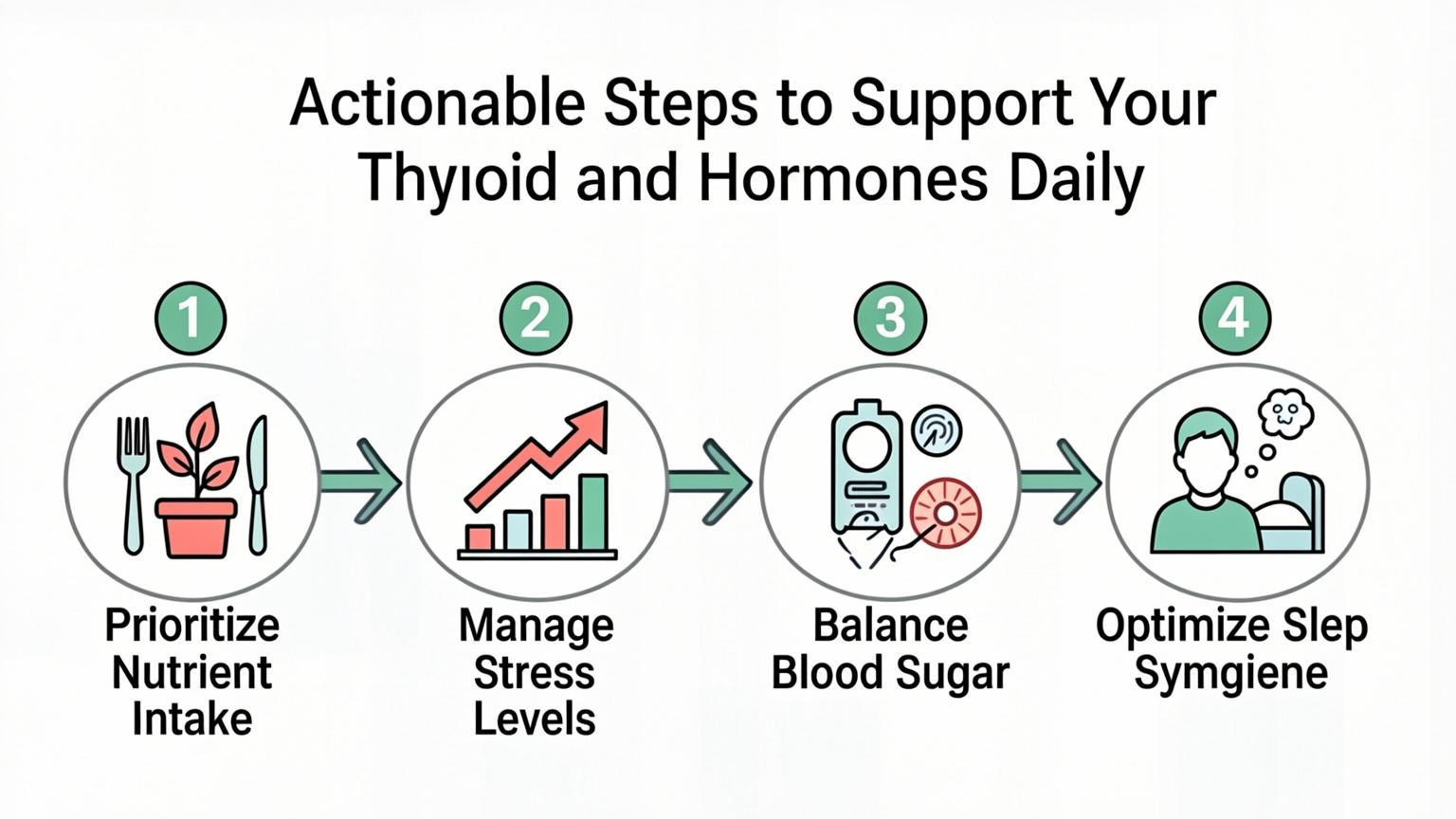
Actionable Steps to Support Your Thyroid and Hormones Daily
Establishing a morning routine is vital for stimulating natural hormone production. Begin your day with exposure to natural sunlight to help regulate your circadian rhythm and cortisol levels. Follow this with hydration, ideally incorporating electrolytes, and consider stress-reduction techniques like deep breathing or meditation to set a calm tone for the day.
For a comprehensive picture of thyroid health, request specific lab tests beyond the standard screening. Essential panels often include:
- Free T3 and Free T4
- Reverse T3
- Thyroid Peroxidase (TPO) and Thyroglobulin Antibodies
- TSH
Making targeted lifestyle adjustments is crucial for balance. Managing blood sugar through a nutrient-dense diet and prioritizing restorative sleep are foundational. However, understanding the thyroid-hormone connection most women don't know about can be transformative. This connection highlights how liver health and gut function directly impact the conversion of thyroid hormones. Supporting these systems through proper nutrition and reducing toxic exposure allows for optimal hormonal balance.
Restore Your Thyroid Balance
Support your metabolic engine with Thyrafemme. Designed for women to boost energy, balance hormones, and improve wellness.


Comments
0