

Introduction
In the digital landscape, attention spans are short, and competition is fierce. Whether it is a blog post, a professional profile, or a landing page, the first text a user encounters often determines if they stay or leave. Understanding why your headline matters is the first step toward improving engagement and achieving your goals. A well-crafted headline acts as a strategic asset that communicates value immediately, ensuring the reader recognizes the relevance of the content before they even begin reading.
Beyond grabbing attention, headlines serve a critical function in aligning user intent with your message. For example, effective headlines often function as value statements rather than simple labels. They combine specific elements—such as a role, an outcome, or a promise of utility—to signal exactly what the reader gains. This is particularly important because readers prefer content that offers secrets, facts, or useful skills, such as a "Beginner's Guide," over generic information.
Furthermore, headlines are essential for building trust and authority. Clear, descriptive titles that match what a user is searching for establish credibility and reduce bounce rates. To maximize impact, a strong headline should always align with the specific goal of the page, whether that is downloading a template, attending a webinar, or simply learning a new concept in five minutes.
Get Your Headlines Noticed
A fast, reliable site from Hostinger ensures your great headlines reach the audience they deserve.
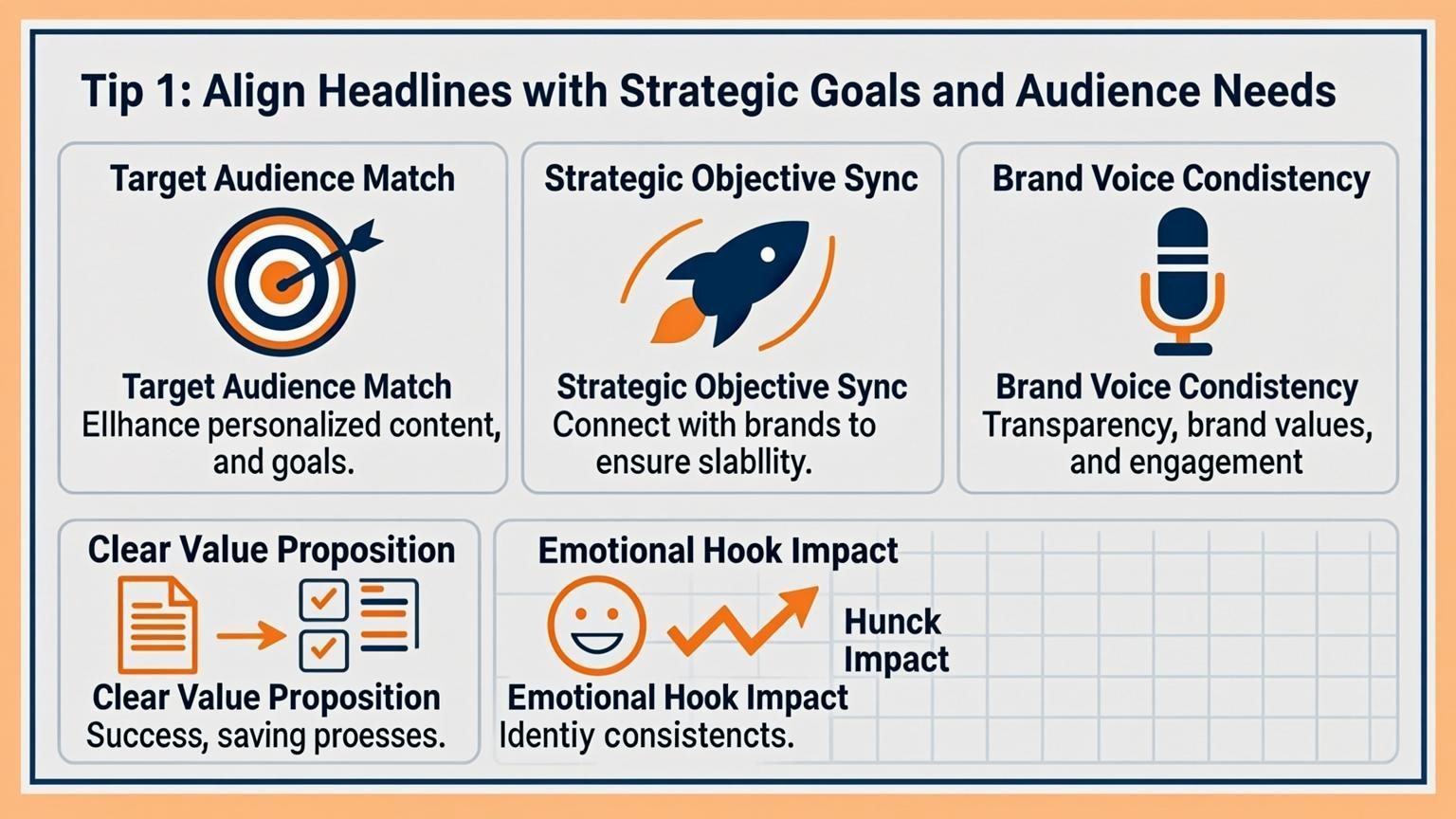
Tip 1: Align Headlines with Strategic Goals and Audience Needs
Understanding why your headline matters starts with recognizing it as a strategic asset rather than just a label. A powerful headline serves as a value statement that bridges the gap between user intent and your content's purpose. It must instantly communicate the specific outcome or benefit the audience will receive. To achieve this, focus on clarity over cleverness and ensure the title directly reflects the core promise of your content.
Effective headlines often follow a structure that combines role, outcome, and audience. This approach ensures the text is searchable and immediately relevant to the right people. For instance, a structure like "Role + Outcome + Audience" helps users quickly identify if the page solves their specific problem.
To implement this strategy, consider the following actions:
- Define the primary goal: Determine if the headline aims to drive a webinar signup, a PDF download, or a direct purchase.
- Use proven power words: Incorporate terms like "proven," "simple," or "ultimate" to boost click-through rates without appearing sensationalist.
- Mirror search intent: Use language that matches how your target market actually searches for solutions to their problems.
- Validate the promise: Ensure the content delivers exactly what the headline pledges to maintain trust and authority.
Tip 2: Incorporate Power Words to Spark Emotion
Understanding why your headline matters involves recognizing that readers often make decisions based on emotion rather than logic. Power words tap into psychological triggers like curiosity, urgency, or fear of missing out, prompting the brain to pay immediate attention. By integrating these high-impact terms, you transform a standard title into a compelling value proposition that boosts click-through rates.
To implement this effectively, avoid trendy buzzwords that quickly lose their meaning. Instead, focus on persuasive, positive trigger words that imply a benefit or outcome. Terms like free, proven, ultimate, and simple consistently drive performance. However, balance is key; stacking two or three power words is optimal, while overloading a headline can appear hypey and damage credibility.
Apply these strategies to your next headline:
- Use sensory or emotional language to create a connection (e.g., effortless, essential, powerful).
- Stack 2-3 power words to maximize impact without sacrificing trust.
- Pair power words with a clear promise to ensure the content delivers on the headline's hook.
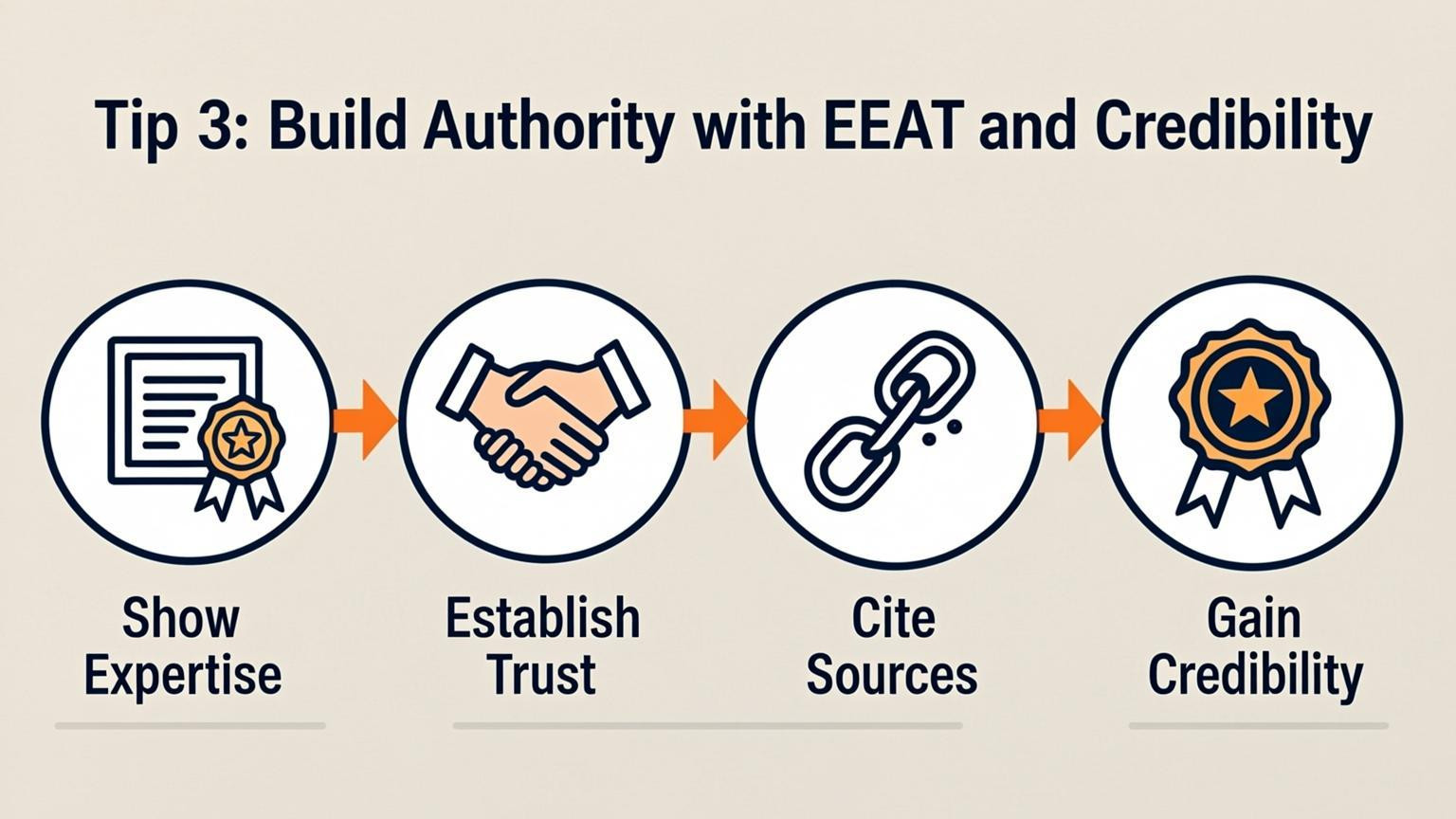
Tip 3: Build Authority with EEAT and Credibility
Understanding why your headline matters requires recognizing that titles are not just hooks for clicks, but signals of your content's legitimacy. Search engines evaluate Experience, Expertise, Authoritativeness, and Trustworthiness (EEAT) to determine ranking potential. Headlines that reflect credible, expert insights perform significantly better than keyword-stuffed or overly cute wordplay. You must prioritize accuracy and substance to build trust with both human readers and AI assistants.
To demonstrate authority, avoid vague claims or buzzword stacking. Instead, frame your headline as a clear value statement that matches user intent and proves you can deliver a solution. If you use power words to boost click-through rates, limit them to two or three; overusing these creates a "hypey" appearance that destroys credibility. Always apply the honesty test: ensure your content fulfills the specific promise made in the title to prevent creating a damaging curiosity gap.
- Structure for clarity: Define your role, the specific outcome, and the target audience to establish professional relevance.
- Validate claims: Ensure the headline matches the actual depth and quality of the content provided.
- Avoid sensationalism: Skip exaggerated tactics that might temporarily spike clicks but permanently erode user trust.
Tip 4: Utilize Curiosity Gaps to Drive Engagement
Understanding why your headline matters requires recognizing the psychological pull of an information deficit. Curiosity gaps function by creating a space between what a reader knows and what they want to know, compelling them to click for closure. The key to success lies in ensuring the content genuinely fulfills the promise made in the headline. If the article delivers the answer, you build trust and engagement. If it does not, the headline becomes deceptive clickbait that erodes credibility.
To implement this effectively, focus on crafting headlines that hint at valuable information without revealing everything immediately. This technique works because people are naturally driven to resolve uncertainty. Use the following strategies to create ethical curiosity gaps:
- Highlight a specific benefit: Promise a distinct outcome or improvement that feels attainable but requires reading to understand fully.
- Tease the "how": State a result and imply that the method inside is unique or surprisingly simple.
- Leverage trigger words: Incorporate positive, high-impact words like "proven," "simple," or "essential" to increase the perceived value of the missing information.
Always test your headlines against the honesty test to ensure the content matches the reader's expectations.
Tip 5: Highlight Educational Value and Learning Outcomes
Understanding why your headline matters involves recognizing that readers actively seek new skills to improve their lives. Headlines promising specific knowledge often outperform those offering vague advice, as people value tangible educational outcomes over generic "tips." To leverage this, frame your titles as learning opportunities that promise a clear result or a shortcut to mastery.
Incorporate phrases like "A Beginner's Guide to," "DIY," or "In 5 Minutes" to signal that the content is accessible and quick to consume. Instead of using the word "tips," which can feel insignificant, use stronger concepts like "secrets," "ideas," or "facts" to imply deeper insight. This approach aligns with demonstrating expertise and trustworthiness, essential for modern audiences looking for authoritative answers.
- Promise a specific skill: Tell the reader exactly what they will be able to do after reading.
- Use educational qualifiers: Words like "Introduction," "Course," or "Tutorial" set clear expectations.
- Focus on speed and ease: Indicate how quickly the value can be obtained, such as "Master X in 10 Minutes."
- Replace weak nouns: Swap "tips" for "strategies" or "principles" to add weight to the title.
Conclusion
Your headline serves as the primary gateway to your content, acting as a strategic asset that bridges the gap between user intent and your solution. Understanding why your headline matters is the first step toward improving your digital presence, whether for a blog post, landing page, or professional profile. A well-crafted headline moves beyond simple keyword stuffing; it functions as a value statement that clearly communicates the role, niche, and specific outcome you offer.
To ensure your headlines perform effectively, focus on these core principles:
- Alignment with goals: Ensure your title matches the specific action you want users to take, such as downloading a template or attending a webinar.
- Strategic word choice: Incorporate power words like proven, simple, or fast to boost engagement, but avoid stacking too many to maintain credibility.
- Curiosity with honesty: Create an information gap that sparks interest without resorting to clickbait that erodes trust.
Optimizing this single element can significantly impact click-through rates and overall conversion. Do not leave your success to chance. Apply these techniques today to create compelling, trustworthy headlines that resonate with both human readers and search algorithms.

Comments
0