

When You Are Doing Everything Right But Something Is Off With Your Health
You know that frustrating feeling when you’re doing everything right but something is off? You’re hitting your step count, eating salads for lunch, and maybe even cutting back on coffee, yet the scale refuses to budge. You feel constantly drained, your brain is foggy, and your patience is wearing thin. It’s heartbreaking to put in maximum effort only to feel like your body is fighting against you, rather than working with you.
I’ve been there, and I know how defeating it can be. The brutal truth is that standard diet advice often misses the mark for us. We’re told "calories in versus calories out" is the golden rule, but when your thyroid is struggling, your metabolism hits a standstill. Intense cardio might actually spike your cortisol levels, signaling your body to hold onto fat for safety rather than burn it.
Before you blame yourself for a lack of willpower, look for these subtle clues that your hormones need help:
- Your hair is falling out more than usual in the shower
- You feel freezing cold when everyone else is comfortable
- Your cholesterol levels are rising despite healthy eating
- You wake up exhausted even after a full night's sleep
Recognizing these signs is the first step toward stopping the cycle of frustration. You aren't failing; your body is just asking for a different kind of support.
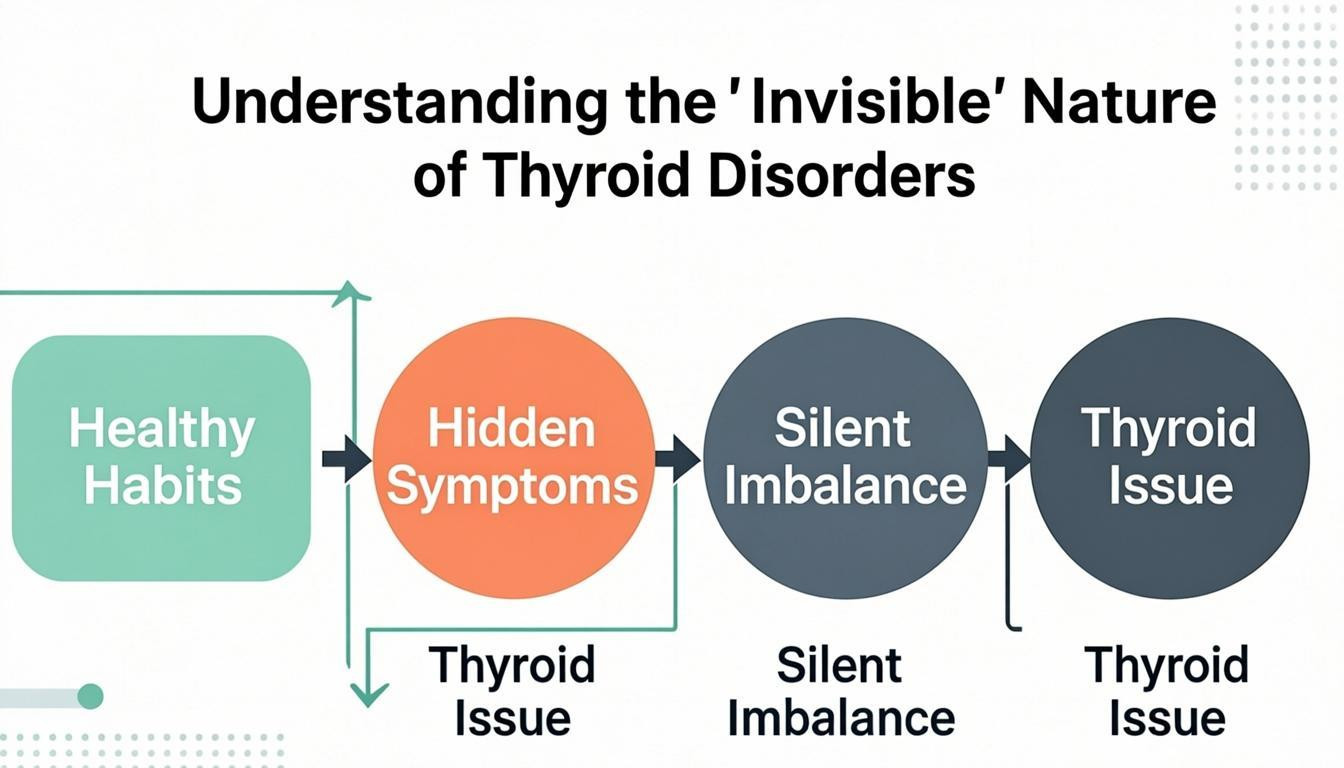
Understanding the "Invisible" Nature of Thyroid Disorders
It is incredibly frustrating when you’re doing everything right but something is off. You’re eating well, exercising, and getting enough sleep, yet you still feel exhausted, foggy, or strangely bloated. This is the maddening reality of thyroid disorders—they often masquerade as other common health issues. Because symptoms like weight gain, dry skin, and depression overlap with so many other conditions, your struggle might be dismissed as just stress, aging, or the result of a busy lifestyle.
Sometimes, the culprit is subclinical hypothyroidism. This is a tricky grey area where your thyroid is struggling, but standard blood tests haven't fully flagged a disease yet. You aren't "sick" enough by medical standards, but you certainly don't feel well.
To make matters more confusing, your lab results might actually come back looking "normal." Why does this happen?
- Standard tests often miss subtle shifts in hormone conversion.
- Reference ranges are broad, so "normal" might not be normal for you.
- Symptoms can lag behind blood work changes.
You know your body better than any number on a piece of paper. Just because the test says you're fine doesn't mean the fatigue, brain fog, or chills aren't real. Acknowledging that something feels wrong—even without a diagnosis—is the first step toward finding answers.
Support Your Sluggish Thyroid
Thyrafemme helps balance hormones, boost energy, and support metabolism when diet isn't enough.
The Hidden Impact of Diet and Nutrient Deficiencies
You eat your veggies, hit the gym, and still, you’re doing everything right but something is off. It is incredibly frustrating when the foods you think are helping are actually hurting you. Sometimes, even "healthy" choices like raw cruciferous vegetables or gluten-containing whole grains can trigger inflammation in sensitive bodies, quietly messing with your thyroid function.
Beyond the food itself, you might be missing the building blocks your thyroid desperately needs. A standard diet often lacks specific nutrients that are non-negotiable for hormone production.
- Selenium: Essential for converting thyroid hormones.
- Iodine: The key building block of thyroid hormones.
- Zinc: Critical for proper hormone synthesis.
- Iron: Low levels can literally disable your thyroid.
Let's not forget your gut. A huge portion of your thyroid hormone is converted in your digestive tract. If your gut health is compromised, that conversion stalls, leaving you feeling exhausted regardless of how well you eat. It’s all connected, and healing often requires looking deeper than the nutrition label.
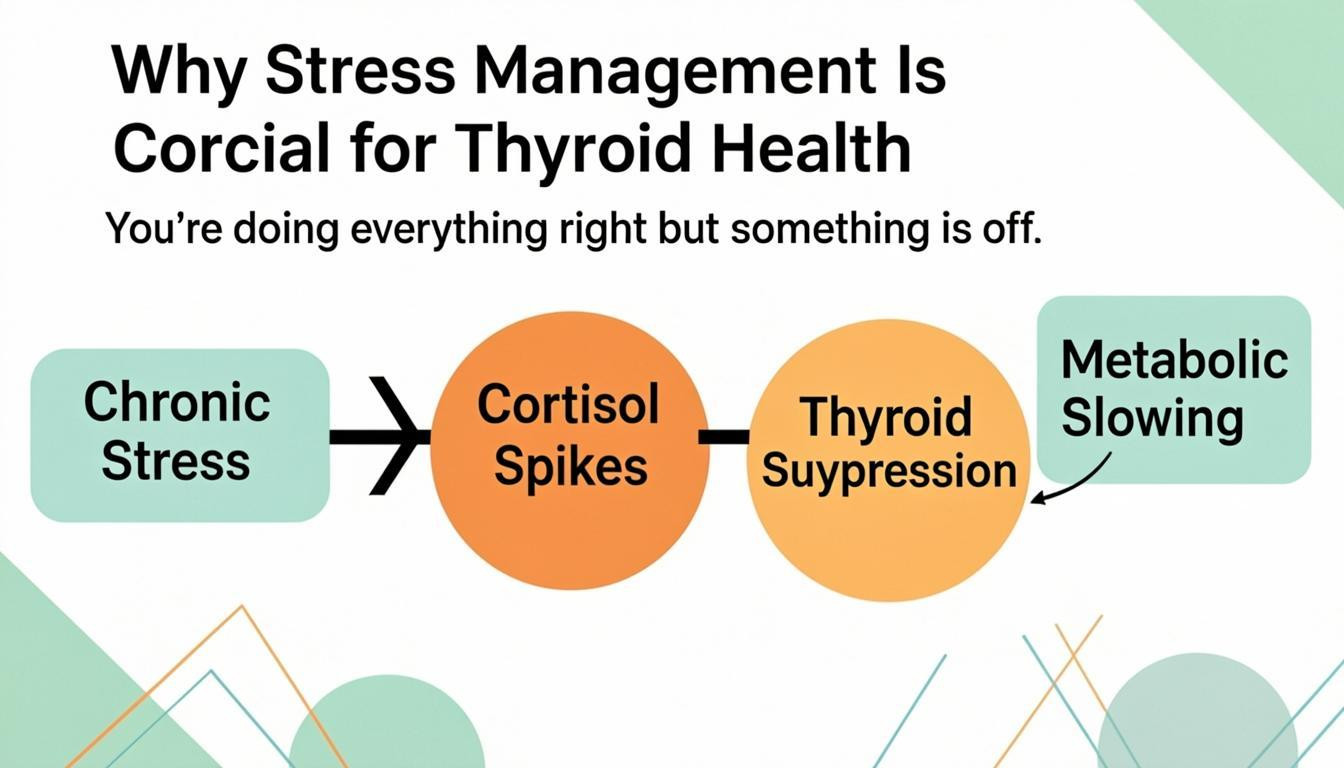
Why Stress Management Is Crucial for Thyroid Health
You’re eating clean, taking your meds, and moving your body, yet you still feel exhausted. It is incredibly frustrating when you’re doing everything right but something is off. The hidden culprit might be chronic stress, which wreaks absolute havoc on your endocrine system. When you are constantly in "fight or flight" mode, your body prioritizes survival over thyroid function, effectively pumping the brakes on hormone production.
High levels of cortisol are particularly damaging because they block the conversion of T4 into the active T3 your cells desperately need. Instead of becoming usable energy, that T4 gets shunted into reverse T3 (RT3), a metabolically inactive form that acts like a brake pedal for your metabolism. You end up storing fat and feeling foggy regardless of how disciplined you are with your diet.
To get your thyroid back on track, you have to convince your body it is safe to relax. Try incorporating these simple, yet powerful, relaxation techniques into your daily routine:
- Deep Belly Breathing: Take five minutes to inhale deeply into your diaphragm to instantly signal your nervous system to calm down.
- Gentle Yoga or Stretching: Avoid high-intensity cardio which can spike cortisol further; opt for restorative movement instead.
- Digital Detox: Step away from screens an hour before bed to lower mental stimulation and improve sleep quality.
Environmental Factors That Disrupt Thyroid Function
If you’re doing everything right but something is off, it is time to look at your home environment. We often forget that our daily surroundings play a massive role in hormonal health. Common household items like plastics, cleaning supplies, and even non-stick cookware can act as endocrine disruptors. These chemicals, such as flame retardants and phthalates, mimic thyroid hormones and confuse your body, leading to unexpected fluctuations in your levels.
These toxins don't just sit there; they actively mess with your metabolic rate. When your body detects these chemical impostors, it may slow down your metabolism to protect itself, making weight loss feel impossible despite your best efforts. It is incredibly frustrating to eat clean and exercise only to feel sluggish because of hidden chemicals in your living room.
You can take control, though. Reducing your exposure doesn't require a total home overhaul, just a few smart swaps:
- Ditch the plastic: Store food in glass containers and never heat plastic in the microwave.
- Check your personal care products: Look for natural alternatives to lotions and shampoos that are free of parabens and strong fragrances.
- Improve indoor air: Open windows regularly and consider houseplants that help filter the air.
- Filter your water: Use a high-quality filter to remove chlorine, fluoride, and heavy metals from your drinking water.
Small changes add up, creating a safer space for your thyroid to heal.
Troubleshooting Your Routine When You're Doing Everything Right But Something Is Off
There is nothing more frustrating than feeling like you’re doing everything right but something is off. You’re eating clean, taking your meds, and dragging yourself to the gym, yet the scale won’t budge and your fatigue persists. Trust me, I’ve been there, and sometimes the solution lies in tweaking the approach rather than working harder.
Take a good look at your exercise routine. Intense cardio might actually be adding stress to your body instead of relieving it. If you feel wiped out after a workout, swap that HIIT class for restorative yoga or a brisk walk. Your body needs movement that nourishes, not depletes.
Don't underestimate the power of sleep hygiene. Recovery isn't just about resting; it's about hormonal balance. Poor sleep can mimic thyroid symptoms or make them worse.
Try these simple sleep adjustments tonight:
- Keep your bedroom cool and pitch black
- Turn off screens one hour before bed
- Stick to the same wake-up time every day
Finally, listen to your gut. If you feel dismissed by your current doctor or your lab results look "normal" while you feel terrible, it might be time to seek a second opinion or specialized testing. You are your own best advocate, and feeling good should be the baseline, not a luxury.
Creating a Sustainable Plan for Thyroid Recovery
Recovery isn’t a straight line, and what works for one woman might not work for you. If you feel like you’re doing everything right but something is off, it is time to personalize your approach. Maybe your fatigue is the main issue while your friend struggles most with weight gain. Listen to your specific body signals rather than chasing a generic standard.
When tracking progress, look beyond the bathroom scale. That number never tells the full story of your healing journey. Instead, focus on the quality of your daily life. You might notice that your brain fog is lifting or you finally have the energy to cook dinner after work. These non-scale victories are often the first signs that your thyroid is finding its balance.
Building a support system is crucial for the long haul. You need people who "get it" without you having to explain why you need a nap on a Saturday. Here is how to start building your circle:
- Join a community: Find online or local groups where you can vent freely.
- Educate loved ones: Share simple articles so your family understands your limits.
- Seek the right experts: Work with doctors who view you as a partner, not just a chart.


Comments
0