
Understanding Why You Feel Stuck for a Reason
There is a massive difference between being tired from a long day and feeling that heavy, invisible fog that just won't lift. I know that feeling well—you wake up exhausted even after a full night's sleep, wondering if you're just lazy or losing your edge. But here is the truth: you feel stuck for a reason, and it usually starts deep inside your cells rather than in your head. This physiological fatigue mimics depression or emotional stagnation, making it incredibly confusing to figure out what is actually wrong.
It is heartbreaking when you finally drag yourself to the doctor, desperate for answers, only to be told your blood work is "normal." You leave the office with a clean bill of health but the same crushing symptoms. Standard lab ranges often miss subtle imbalances in thyroid hormones or nutrient deficiencies, leaving you to suffer in silence. When the medical world offers no solution, it is easy to fall into a familiar and exhausting trap.
We often look for external fixes to solve internal problems, hoping a new diet, supplement, or workout plan will suddenly snap us back to life. You might find yourself constantly chasing the next big health trend, looking for that magic bullet. However, recognizing this pattern is the first step toward breaking it.
- Confusing physical exhaustion with emotional burnout
- Accepting "normal" test results despite feeling unwell
- Constantly seeking new solutions outside yourself
The Hidden Link Between Emotional Health and Physical Energy
Have you ever noticed how you feel stuck for a reason you can't quite put your finger on? It’s that heavy, dragging sensation that sleep just doesn’t fix. When we bottle up tough feelings like grief, anger, or resentment, our bodies treat that emotional baggage like a physical weight. It takes a massive amount of biological energy to keep the lid on a boiling pot, leaving you drained before your day even begins.
Suppressing stress or trauma keeps your nervous system in a state of high alert. This constant internal firing exhausts your adrenals and depletes your vitality, mimicking the symptoms of physical thyroid dysfunction. You might feel wired but tired, unable to relax even when you collapse onto the couch. This is why simply "resting" often fails to cure this type of exhaustion:
- True rest requires safety: Your body can't recharge if it feels threatened by unprocessed emotions.
- Sleep isn't the same as release: Napping doesn't address the cortisol buildup from emotional suppression.
- The mind stays active: Mental tension keeps your muscles working overtime, even during stillness.
Until you acknowledge and process those buried feelings, your body will keep diverting energy to manage them, leaving you with little left for the life you want to live.
Identifying the Life Traps That Cause Stagnation
You feel stuck for a reason, even if you can't quite put your finger on it yet. Often, that heavy, stagnant sensation isn't a sign that you're failing; it's a protective mechanism. When fear drives the bus, you might find yourself making choices based on avoiding pain rather than chasing joy. Maybe you stay in a job that drains you because the terror of the unknown feels scarier than the daily grind. That safety keeps you small, but it also keeps you stationary.
Sometimes, the friction comes from deeper within. If your daily actions clash with your core values, your subconscious mind puts on the brakes. It is hard to build momentum when you are climbing a ladder that is leaning against the wrong wall. You might be pushing for a promotion your soul actually doesn't want, creating an invisible wall of resistance.
Your environment matters more than you think, too. If your surroundings constantly trigger your "freeze" response, your body is essentially in survival mode, not growth mode. Watch out for these subtle signs that your setting is sabotaging your progress:
- A persistent feeling of "brain fog" or fatigue in specific rooms or situations
- The inability to make simple decisions without overthinking
- Withdrawing from friends or family to avoid conflict
- Feeling physically smaller or quieter when certain people are around
Recognizing these traps is the first step to dismantling them. You aren't broken; you are just responding to the life you are living.
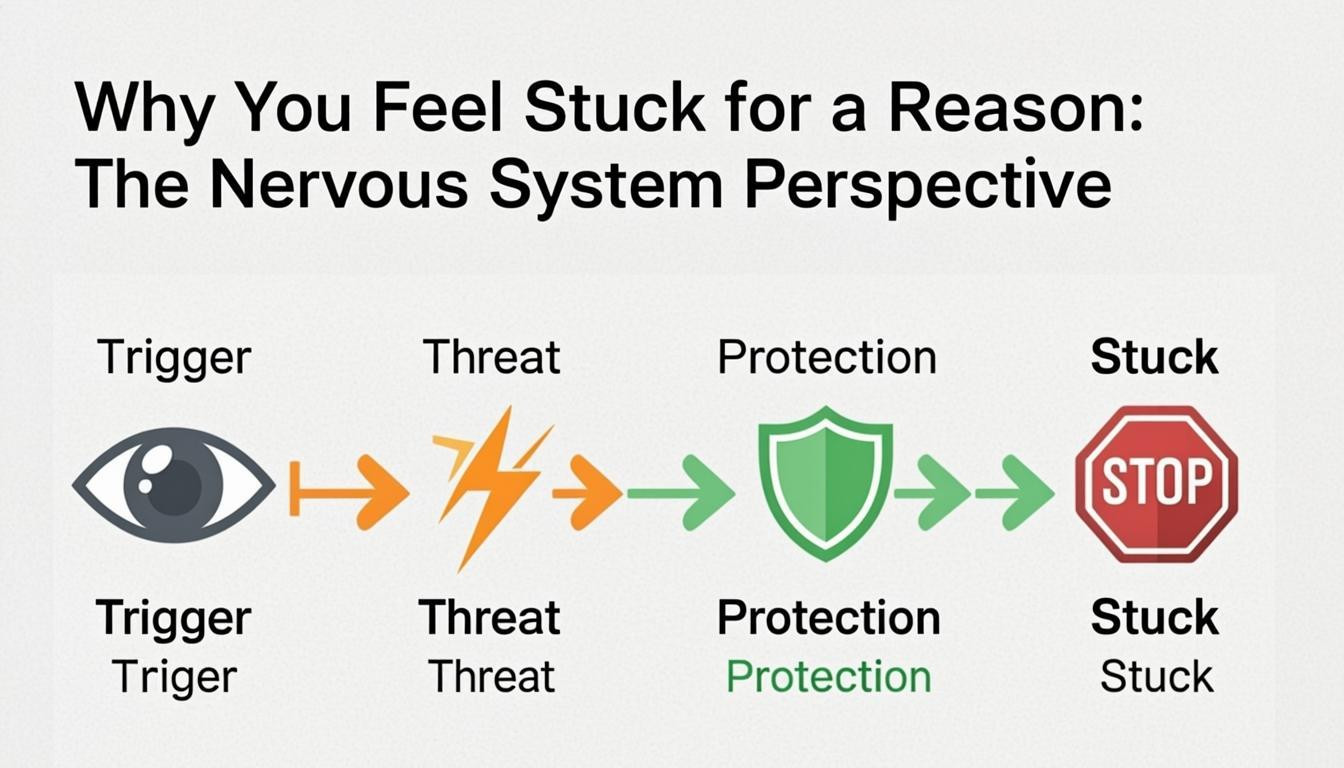
Why You Feel Stuck for a Reason: The Nervous System Perspective
You aren't lazy or broken. In fact, you feel stuck for a reason that is deeply rooted in your biology. When your thyroid is struggling, your body often perceives the world as unsafe, triggering a "freeze" response in the nervous system. This isn't a lack of willpower; it is a protective mechanism designed to conserve energy when survival feels threatened.
To move forward, your nervous system needs specific safety signals to confirm it is okay to expend energy. Without these signals, your body prioritizes survival over growth or action.
- The Freeze Response: This state mimics exhaustion, making even small tasks feel impossible because your internal system is bracing for danger.
- Survival Mode: Your body diverts resources away from motivation and creativity to keep your vital functions running.
- Safety Signals: Things like deep breathing, gentle movement, or a predictable routine tell your brain it is safe to "unlock" and engage.
When you feel paralyzed, remember that your body is trying to protect you, not sabotage you. Recognizing this shift allows you to approach yourself with compassion rather than frustration. By creating safety first, you give your body the permission it needs to heal and eventually find the motivation to move again.
Actionable Steps to Unfreeze Your Life
When your body is in survival mode, pushing harder only backfires. You feel stuck for a reason—it is a biological safety mechanism, not a character flaw. To move forward, you first need to signal safety to your nervous system. Try simple physiological sighs: two short inhales through the nose followed by a long exhale through the mouth. This hacks your vagus nerve, instantly lowering cortisol and convincing your body that the danger has passed.
Once you are a bit calmer, focus on ridiculously small movements. We aren't talking about a full workout; we are talking about wiggling your toes or standing up to stretch. These micro-actions bypass the brain's "freeze" response by removing the pressure to perform. By starting small, you generate momentum without triggering overwhelm.
Finally, let’s tackle the inner critic. You might be calling yourself lazy, but that voice is lying to you. Your brain is trying to conserve energy because it perceives a threat. When you catch yourself spiraling into self-judgment, pause and consciously reframe the thought. Instead of asking, "Why can't I just do this?", try telling yourself, "My body is trying to protect me, but I am safe now." This shift from shame to compassion creates the mental space needed to finally take that next step.
Realigning Your Actions With Your Core Values
If you feel stuck for a reason, it might be time to look at whether your daily life actually matches what you care about most. We often spend years checking boxes we didn't write ourselves, leaving us drained and resentful. Conducting a personal values audit is like spring cleaning for your soul. Grab a journal and list the top five things that define you—maybe it’s creativity, family, or health. Then, look at your calendar. Does how you spend your time reflect that list?
Living according to others' expectations comes with a steep price tag: your energy. Every time you say "yes" to something you don't value, you are quietly saying "no" to yourself. It is exhausting to perform a version of you that doesn't exist. To fix this, you have to get ruthless about protecting your peace.
Setting boundaries isn't about being mean; it's about preservation. Try these shifts to keep your energy focused on what matters:
- Decline invitations without over-explaining
- Limit time with people who drain your emotional battery
- Say "let me think about it" instead of an automatic "yes"
When your actions line up with your heart, that stuck feeling starts to dissolve.
Moving Forward When Medical Solutions Aren't Enough
Shed the Invisible Weight
Some women support thyroid balance using supplements like Thyrafemme to target cellular fatigue and restore natural energy.
Sometimes, even with the perfect dosage and a clean diet, the fog doesn't lift. It is incredibly frustrating to do everything "right" and still feel exhausted, but you feel stuck for a reason. Often, that reason isn't physiological—it's the nervous system holding onto old patterns of stress and burnout that medication alone cannot fix.
Integrating psychological tools with your physical health strategies creates a bridge to true recovery. You have to calm the mind to heal the body. If you find yourself constantly overcommitting, people-pleasing, or unable to relax, it might be time to seek therapy or coaching. These professionals help untangle the behavioral loops that keep your cortisol high and your healing slow.
Creating a sustainable plan means committing to your emotional well-being just as strictly as you commit to your lab work. It is not selfish; it is necessary.
- Set strict boundaries: Learn to say no without guilt.
- Practice nervous system regulation: Try deep breathing or gentle restorative yoga daily.
- Prioritize rest: Schedule downtime like you would a doctor's appointment.
Healing is a holistic journey. By addressing your emotional landscape alongside your physical symptoms, you finally give yourself permission to thrive.



Comments
0