
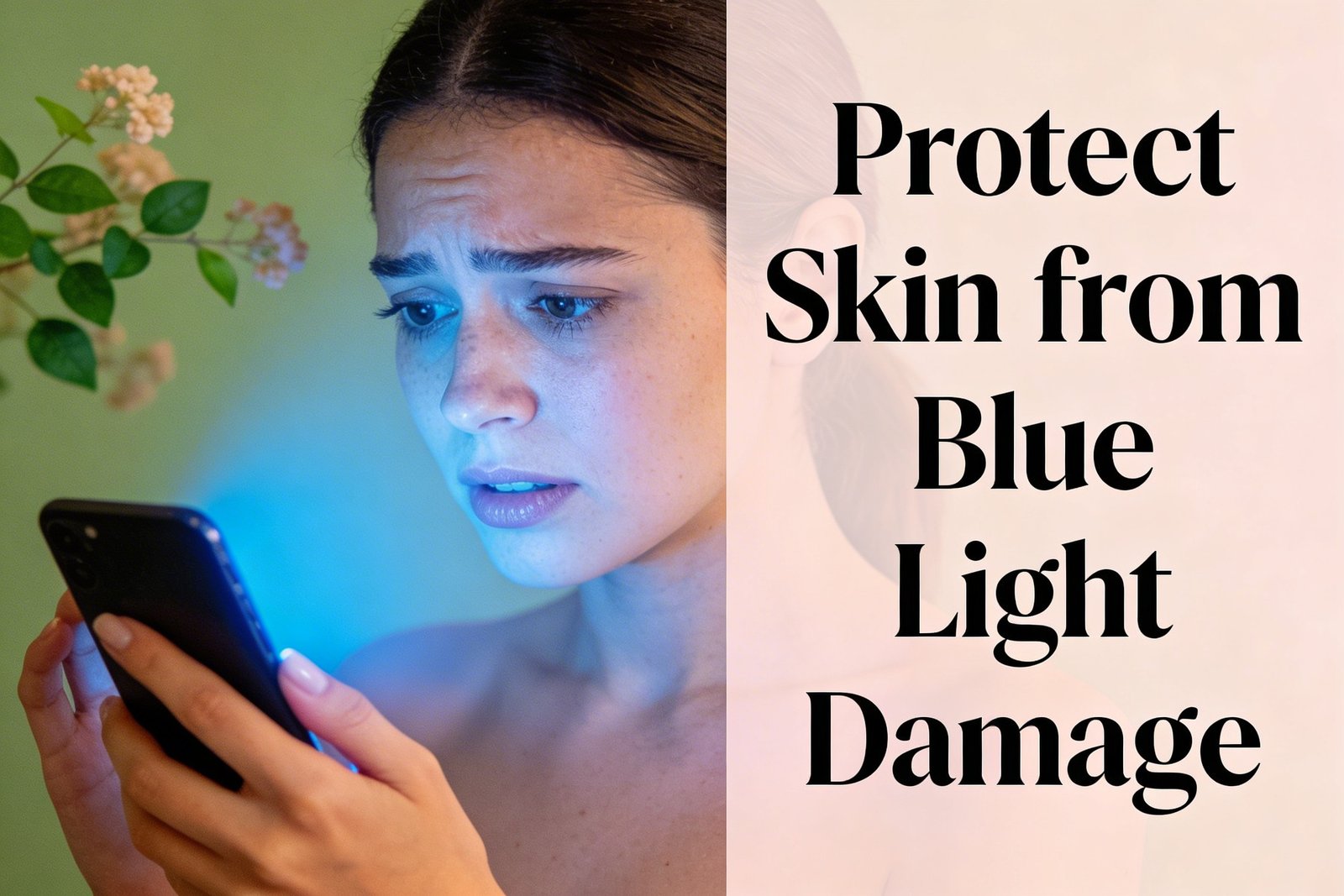
Is Your Screen Time Stealing Your Glow?
We’ve all been there. It’s 10:00 PM, you’re finally winding down for the day, and instead of sleeping, you’re doom-scrolling through social media or catching up on emails in bed. We live in a digital world, and let’s be honest—our screens are our lifelines. But have you ever looked in the mirror after a long day of Zoom meetings and noticed your skin looks a little… dull? Maybe you’re seeing more hyperpigmentation or fine lines that seem to have popped up overnight.
While UV rays from the sun have long been our primary skin concern, there is a new culprit in town: High Energy Visible (HEV) light, better known as blue light. If you are wondering how to protect your skin from blue light damage, you aren’t alone. More women are discovering that the devices we rely on for work and connection might be contributing to premature aging. In this article, we’ll explore exactly what blue light is doing to your skin and, more importantly, give you seven actionable ways to defend your glow without having to ditch your smartphone.
What Is Blue Light Damage?
Blue light is a high-energy, short-wavelength light that is part of the visible light spectrum. While the sun is actually the largest source of blue light, we are increasingly exposed to it through artificial sources like LEDs, computer screens, tablets, and smartphones.
Why does this matter for your health? Unlike UVB rays, which burn the surface of the skin, blue light penetrates deeper into the dermis. It generates free radicals—unstable molecules that cause oxidative stress. This oxidative stress is essentially the biological equivalent of rusting; it breaks down collagen and elastin, the proteins responsible for keeping our skin firm and bouncy. For women in our prime years, preserving collagen is key to maintaining a youthful complexion.
Signs and Symptoms
Recognizing the impact of screen time on your face can be tricky because the damage is often cumulative. However, if you spend 6+ hours a day in front of a screen, you might notice:
- Hyperpigmentation: Specifically, you might notice dark spots on the cheeks or nose. This is often more pronounced in darker skin tones and can be triggered by the pigment-inducing effects of blue light.
- Dull or lackluster tone: If your skin looks tired even when you feel rested, oxidative stress might be damaging the skin barrier.
- Inflammation and redness: Blue light can trigger inflammatory responses, leading to increased sensitivity or conditions like rosacea flaring up.
- Accelerated fine lines: Since blue light reaches the deeper layers of the skin, it breaks down collagen faster than natural aging would, leading to early onset wrinkles.
- Eye-area fatigue: While not a skin symptom per se, the strain around the eyes can exacerbate the appearance of crow's feet due to squinting.
Common Causes
It’s not just your phone causing the issue. Understanding the sources helps you manage your exposure better.
1. Office Environment: Standard fluorescent and LED lighting emits significant amounts of blue light. If you work under these lights for 8 hours a day, you are in a constant "exposure zone." 2. Digital Devices: This is the most obvious culprit. The closer the device is to your face, the higher the exposure. Think about how close your phone is to your skin compared to your television. 3. The "Invisible" Sun Exposure: You might wear SPF on a sunny day, but many sunscreens only protect against UV rays, not visible light like blue light. This means you might be unprotected even when you think you aren't. 4. Hormonal Fluctuations: Women undergoing hormonal changes—such as during perimenopause or pregnancy—are often more susceptible to pigmentation issues (melasma). Blue light can worsen these conditions by overstimulating melanocytes, the cells that produce pigment.
Natural Solutions and Tips
The good news is that you don’t have to move to a cabin in the woods to save your skin. Here are seven practical ways to shield yourself:
Shield Your Skin from Within
Blue light stress can disrupt hormones and accelerate aging. Thyrafemme balances thyroid health to protect your glow naturally.
1. Embrace Mineral Sunscreen Not all sunscreens are created equal. To block blue light, look for physical blockers containing Iron Oxides and Zinc Oxide. While standard chemical sunscreens are great for UV rays, mineral formulas act as a shield that reflects visible light away from the skin.
2. Layer Antioxidants Vitamin C is your best friend here. Applying a Vitamin C serum in the morning creates a reservoir of antioxidants that neutralize free radicals caused by blue light exposure before they can damage your cells.
3. Invest in "Night Mode" Most smartphones and computers now have a "Night Shift" or "Blue Light Filter" setting. Turn this on after sunset. It changes the screen temperature from a harsh blue to a warmer amber tone, reducing the strain on your eyes and potentially the impact on your skin.
4. Practice the 20-20-20 Rule Every 20 minutes, look at something 20 feet away for 20 seconds. While this is primarily for eye health, it encourages you to blink, reset your posture, and often prompts you to step away from the direct light source hitting your face.
5. Use a Screen Protector You can buy physical filters for your laptop and phone that block a significant percentage of blue light. They are an inexpensive investment in your long-term dermatological health.
6. Nourish from the Inside Out Your skin needs internal armor to fight oxidative stress. Focus on eating foods rich in antioxidants—think berries, leafy greens, and dark chocolate. Staying hydrated is also crucial to maintaining the skin barrier integrity.
7. Prioritize Beauty Sleep It’s called beauty sleep for a reason. During deep sleep, your body repairs cell damage. If you use your phone late at night, the blue light suppresses melatonin, disrupting your sleep cycle and preventing your skin from repairing the daily wear and tear.
When to See a Doctor
If you notice sudden, drastic changes in your skin pigmentation, or if over-the-counter products aren't helping with inflammation, it might be time to consult a dermatologist. They can prescribe stronger topical antioxidants or recommend specific treatments like chemical peels to reverse deep-set pigmentation.
If you suspect that your skin issues are connected to hormonal imbalances—such as persistent acne or severe melasma—it is worth visiting your primary care physician or an endocrinologist to check your hormone levels.
Supporting Your Health Journey
We know that skin health is often a reflection of what is happening inside your body. Hormonal shifts during our 30s, 40s, and 50s can make our skin more reactive to environmental stressors like blue light. Some women support thyroid balance using supplements like Thyrafemme as one option to help stabilize their internal systems, which can positively impact skin clarity and energy levels. Remember, though, that topical treatments and supplements are just one part of a holistic approach. A balanced diet, stress management, and proper sleep are the foundations of wellness. Always be sure to consult your healthcare provider before starting any new supplement regimen.
Key Takeaways
- Blue light penetrates deep: It reaches the dermis, causing oxidative stress that breaks down collagen and leads to aging and pigmentation.
- Upgrade your skincare routine: Incorporate mineral sunscreens with Iron Oxide and use topical antioxidants like Vitamin C daily.
- Don’t forget the inside: Hydrate well, eat antioxidant-rich foods, and consider your hormonal health as part of your overall wellness strategy.
Your skin is resilient, and with a few small adjustments to your daily routine, you can enjoy your digital life without sacrificing your glow. Start today by applying that Vitamin C serum and turning on your screen filter—your face will thank you


Comments
0