
Breaking the Cycle: How to Eat Without Guilt and Boost Your Energy
Do you ever feel like you’re doing everything “right”—eating clean, hitting your workouts, and watching your portions—only to hit an invisible wall? You feel exhausted, your workouts seem stale, and that number on the scale just won’t budge. It’s frustrating, and frankly, it’s exhausting. For many women in their 30s, 40s, and 50s, the constant pressure to be perfect with food can lead to a backlash of intense cravings and metabolic slowdowns.
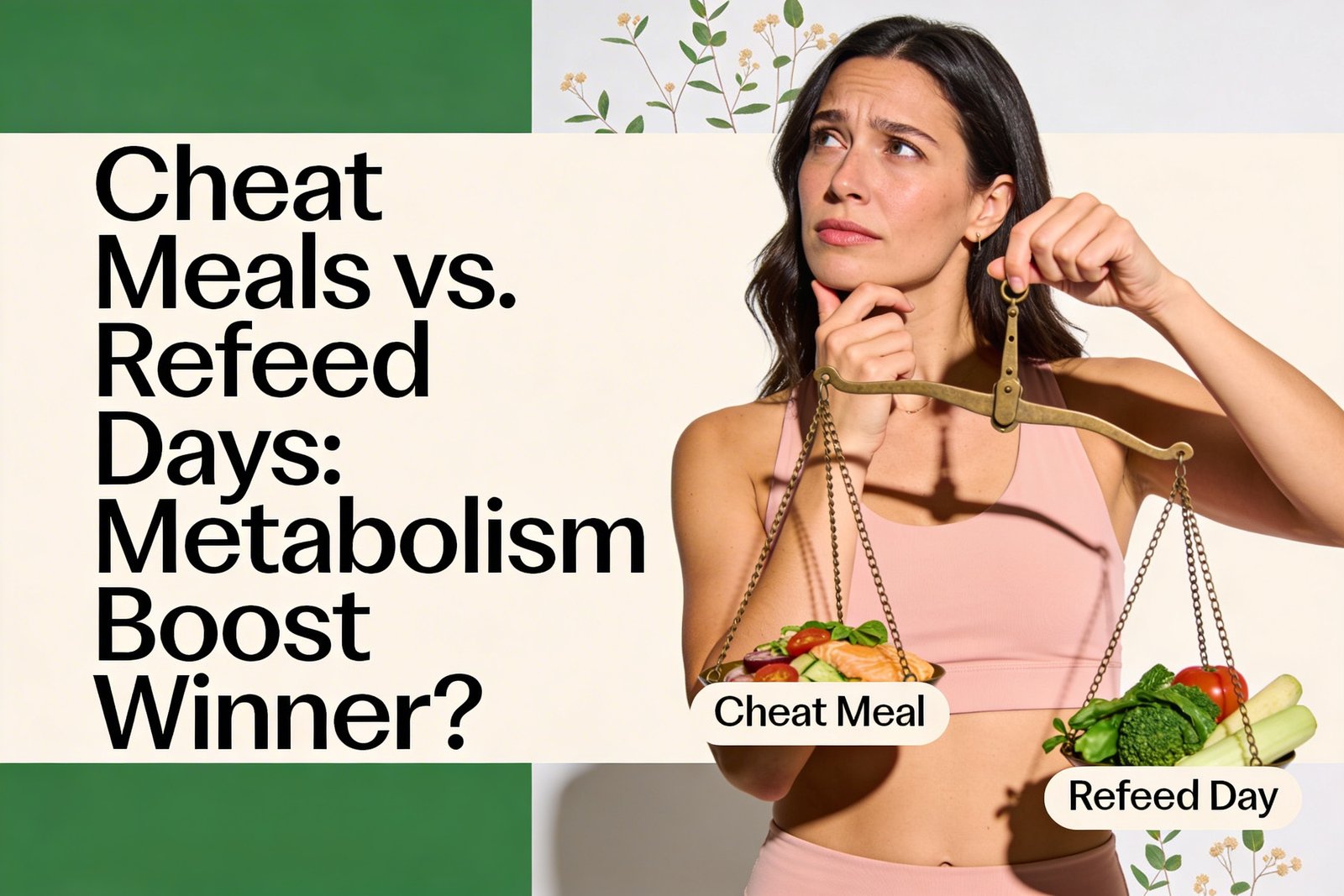
If you’ve ever stared longingly at a slice of pizza while eating your grilled chicken and salad, wondering if there’s a better way, you aren’t alone. This is often where the concepts of “cheat meals” and “refeed days” come into play. But are they actually helpful, or are they just setting you up for a cycle of guilt and bingeing? Today, we are diving into the nuances of cheat meals vs. refeed days: which strategy is better for metabolism? so you can finally find a sustainable approach to eating that nourishes your body and your soul.
What Is the Difference Between Cheat Meals and Refeeds?
To understand which strategy might work for you, we first need to define exactly what we are talking about. While they both involve increasing your calorie intake temporarily, the mindset and the physiological goals are very different.
The Traditional "Cheat Meal"
A cheat meal is typically a psychological tool. It’s a designated time—usually once a week—where you give yourself permission to eat foods that are strictly "off-limits" on your diet. Think a burger and fries, a decadent dessert, or a few slices of pizza. The idea is to satisfy cravings so you can stick to your strict diet the rest of the week. However, it often comes with a heavy dose of guilt and can sometimes turn into a "cheat weekend" that derails your progress.
The Strategic "Refeed Day"
A refeed day is a physiological tool often used by those tracking their macros (macronutrients). It involves a planned increase in calories, specifically from carbohydrates, while keeping fat intake low. The goal isn't just to eat "junk food," but to replenish glycogen stores in your muscles and boost leptin levels—a hormone that signals fullness and regulates energy expenditure. It’s less about "cheating" and more about "fueling" a sluggish metabolism.
Signs Your Metabolism Might Need a Boost
How do you know if you need to incorporate a higher-calorie day? If you’ve been in a calorie deficit for a long time, your body adapts. Here are some tell-tale signs that your metabolic fire might be dimming:
- Persistent Fatigue: You feel tired even after a full night's sleep, and simple tasks feel like a chore.
- Constant Coldness: You are always cold, especially your hands and feet, which can indicate a lower body temperature and reduced metabolic rate.
- Difficulty Losing Weight: Despite eating very little and exercising, the scale won’t move.
- Intense Cravings: You feel an overwhelming urge for sugar or carbs, usually in the evenings.
- Poor Workout Performance: You can’t lift as heavy, run as fast, or recover as well as you used to.
- Mood Irritability: You feel "hangry" often, or experience sudden mood drops.
Common Causes of a Sluggish Metabolism
Why does this happen? It’s rarely just about willpower. Several factors can cause your metabolism to pump the brakes, especially for women in the 30-55 age bracket.
1. Prolonged Caloric Deficit
If you consistently eat fewer calories than you burn for months on end, your body adapts by lowering its Basal Metabolic Rate (BMR) to survive. This is often called "metabolic adaptation." Your body becomes incredibly efficient at using less energy, making weight loss nearly impossible.
2. Hormonal Fluctuations
As we age, estrogen and progesterone levels fluctuate, particularly during perimenopause and menopause. These changes can influence insulin sensitivity and how the body stores fat. Additionally, chronic dieting lowers leptin (the satiety hormone). When leptin drops, your brain thinks you are starving, sending signals to eat more and move less.
3. High Stress and Cortisol
Juggling career, family, and personal life can keep cortisol levels high. Elevated cortisol can lead to muscle breakdown and fat storage, particularly around the midsection. Stress also makes it harder for the body to utilize carbohydrates effectively.
4. Lack of Muscle Mass
We naturally lose muscle mass as we age (sarcopenia). Since muscle tissue burns more calories at rest than fat tissue, having less muscle leads to a slower overall metabolism.
Natural Solutions and Tips
When debating cheat meals vs. refeed days: which strategy is better for metabolism?, the answer often lies in a balanced, intuitive approach. You don't necessarily have to choose one rigidly. Here is how to implement a strategy that supports your body:
Revive a Sluggish Metabolism
If your scale won't budge despite your best efforts, your thyroid may need support. Balance your hormones to optimize refeed results.
Prioritize a "Refeed" Mindset
Instead of a chaotic cheat meal, try a planned refeed day.
- Keep Fats Low: Since you are increasing carbs, keep fats lower to avoid a massive calorie surplus that leads to fat gain.
- Choose Complex Carbs: Think oats, sweet potatoes, rice, quinoa, and fruits. These foods are best at replenishing muscle glycogen without spiking blood sugar too aggressively.
- Listen to Your Body: If you are feeling drained and weak, add a high-carb day. If you feel energized and lean, stick to your normal routine.
Eat Intuitively Most Days
Allow yourself to include the foods you love in moderation every day. This removes the "forbidden fruit" allure of a cheat meal. Having a square of dark chocolate or a slice of pizza with your salad regularly prevents the psychological buildup that leads to a 3,000-calorie binge.
Focus on Strength Training
Build muscle to boost your metabolism permanently. Incorporate resistance training 2-4 times a week. Muscle is your metabolic engine; the more you have, the more you can eat!
Manage Your Stress
High cortisol kills metabolic flexibility. Try yoga, meditation, or simply taking 10 minutes a day to breathe deeply. Sleep is also non-negotiable—aim for 7-8 hours to help regulate hunger hormones.
When to See a Doctor
Sometimes, despite your best efforts with diet and refeed strategies, underlying medical issues can keep your metabolism stuck. If you notice the following, it’s worth a visit to your healthcare provider:
- Unexplained Weight Gain: You gain significant weight without changing your eating or exercise habits.
- Hair Loss and Thinning: This can signal thyroid dysfunction or severe nutrient deficiencies.
- Menstrual Irregularities: If your period becomes very light or disappears (amenorrhea), your body is under too much stress.
- Severe Constipation: Chronic digestive issues can be linked to hormonal imbalances.
Don’t be afraid to ask for a full thyroid panel or a check on your iron and Vitamin D levels. These are often overlooked culprits in women’s fatigue.
Supporting Your Health Journey
Balancing hormones and metabolism is a holistic process. While diet and exercise are foundational, sometimes our bodies need a little extra support to find their equilibrium. Some women support thyroid balance and metabolic function using supplements like Thyrafemme as one option to complement a healthy lifestyle. It’s a tool that can work alongside your refeed strategies and nutrient-dense diet to help you feel like yourself again. Remember, though, that supplements are just one piece of the puzzle. Always consult your healthcare provider before starting a new regimen to ensure it’s the right fit for your specific biological needs.
Key Takeaways
Navigating the world of dieting doesn't have to be black and white. By understanding your body's signals, you can move away from guilt and towards nourishment.
- Refeeds are generally better for metabolism than chaotic cheat meals because they focus on replenishing glycogen and boosting leptin without the inflammatory effects of high-fat, high-sugar binges.
- Listen to your symptoms: If you are cold, tired, and craving carbs, your metabolism might need a reset.
- Muscle is your friend: Strength training is the most effective long-term strategy for a healthy metabolism in your 30s, 40s, and 50s.
- Progress over perfection: Allow yourself flexibility with food to prevent the "all-or-nothing" mindset that derails so many health journeys.
You deserve to feel energetic and strong, not deprived and stressed. Feed your body well, move with purpose, and watch yourself thrive.


Comments
0