

Introduction
If you look at the top of search engine results pages, you’ll notice a pattern: long-form content consistently takes the lead. There is a good reason for this. Search engines favor in-depth resources because they keep users on the page longer, reducing the need for them to click back and search for more information. For example, a detailed guide that breaks down every aspect of a software update will almost always outrank a brief summary simply because it answers more of the user's questions in a single visit.
However, just knowing that long-form works doesn't make writing it any easier. Understanding how to write long form content effectively is a genuine challenge. It requires striking a delicate balance between depth and readability. Writers often struggle to maintain a consistent narrative flow, avoid unnecessary repetition, and organize vast amounts of information into a digestible structure. Without a clear strategy, lengthy articles can easily turn into overwhelming walls of text that fail to engage readers or convert leads. Success relies on meticulous planning, rigorous research, and a structured approach to formatting that enhances the user experience rather than detracting from it.
Master Your Content Strategy
Discover topics, analyze competitors, and structure in-depth guides with Semrush’s all-in-one SEO toolkit.
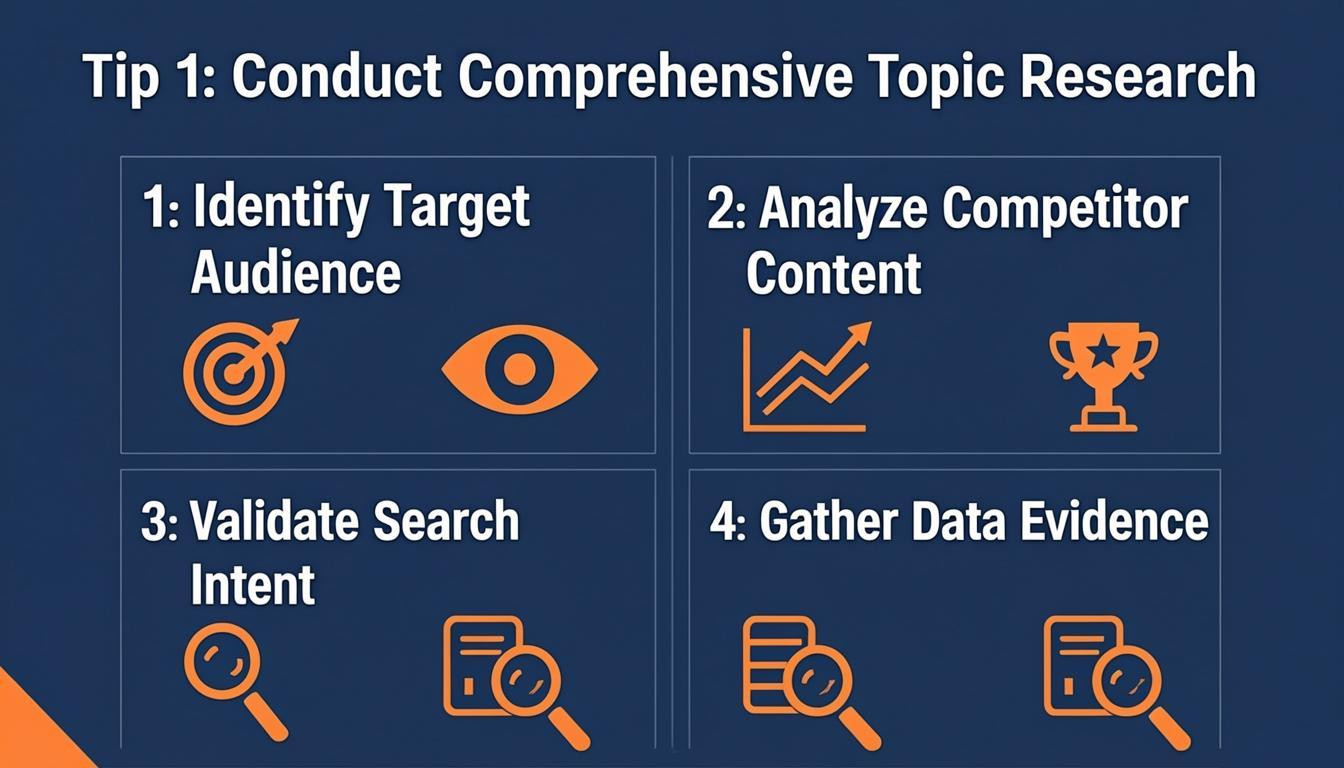
Tip 1: Conduct Comprehensive Topic Research
Creating effective long-form content starts with a deep understanding of the topic landscape. You need to move past simple keywords and identify the underlying user intent. Are users looking for a quick definition, a step-by-step guide, or a detailed product comparison? Aligning your content with this intent is crucial for ranking high. For instance, if the target query is "how to bake sourdough," users almost certainly need a comprehensive tutorial rather than a brief history of bread.
Next, take a close look at the top-ranking competitor pages to identify gaps in their coverage. Look for missing subtopics or questions they failed to answer adequately. This analysis allows you to create a superior resource. Finally, build a data-backed outline to organize your thoughts logically before you start writing.
- Review SERPs: Check the "People Also Ask" boxes and related searches to find common sub-topics.
- Audit Competitors: Note the structure and word count of the top three results to establish a baseline.
- Structure: Organize your outline to cover semantic variations and long-tail keywords naturally.
Tip 2: Structure with a Logical Hierarchy
When learning how to write long form content, establishing a clear hierarchy is essential for both user experience and search engine optimization. Readers rarely consume text word-for-word; instead, they scan for specific information. To accommodate this behavior, use H2 headers for main topics and H3 headers for sub-points or related questions. This structure breaks text into digestible chunks and signals the content's organization to search engine crawlers.
To ensure the content is easy to scan, keep paragraphs short—limited to 2-3 sentences—and incorporate varied formatting elements. This approach reduces cognitive load and encourages readers to stay on the page longer.
Additionally, structure your headers to target Featured Snippets. Search engines often pull answers directly from sections that clearly define problems and solutions.
- Use H2s for broad thematic sections.
- Use H3s to drill down into specific details.
- Write concise paragraphs to maintain visual rhythm.
- Include "What is", "How to", or "Why" questions as headers to trigger snippet extraction.
Tip 3: Master the Art of Outlining
Constructing a robust framework is essential when learning how to write long form content efficiently. Instead of staring at a blank page, build a skeleton before writing the flesh. This approach clarifies your narrative arc and ensures you cover every necessary aspect of the topic without wandering off track.
Group related themes together to create a logical flow that retains reader interest. For example, if writing a guide on digital photography, cluster all technical settings like aperture and ISO into one section, while reserving another for composition techniques. This organization prevents content fragmentation and improves readability.
Estimate word counts per section to maintain balance and depth. Assign specific targets, such as 300 words for an introduction and 600 words for a core methodology. This strategy prevents underwriting complex points or over-explaining simple concepts, resulting in a comprehensive and well-paced piece.
Tip 4: Focus on Depth and Value, Not Just Length
When learning how to write long form content, you must prioritize substance over mere word count. Search engines prioritize comprehensive resources that fully satisfy user intent rather than fluff-filled articles designed to manipulate metrics. To achieve true depth, move beyond surface-level definitions and explore the nuances of your topic. Instead of simply defining a term, analyze its implications, variations, and common misconceptions.
Ensure every section answers the fundamental questions: what, why, and how. This structure provides a complete educational journey for the reader. Use concrete examples to illustrate complex points, making abstract concepts easier to grasp and apply.
- What: Clearly define the core concept.
- Why: Explain the significance and potential benefits or risks.
- How: Provide step-by-step implementation instructions.
For instance, if writing about technical SEO, do not just list "optimize site speed." Explain the specific impact of loading times on user retention and detail exact steps like compressing images or minimizing JavaScript. This actionable approach ensures your content offers genuine value that earns top rankings.
Tip 5: Incorporate Visual and Multimedia Elements
To master how to write long form content effectively, you must address the challenge of reader fatigue. Large blocks of text can overwhelm visitors, causing them to leave the page prematurely. Integrating visual and multimedia elements breaks up the monotony, keeps users engaged, and encourages them to scroll further down the page.
Start by breaking up text with relevant images that illustrate your points or add emotional context. For instance, when discussing a complex process, a screenshot or a high-quality photograph can clarify the concept instantly. Beyond static images, create original data visualizations such as charts or infographics. These unique assets provide value to readers and increase the likelihood of others linking back to your content.
Finally, use video for complex explanations. A short embedded video can succinctly explain a difficult topic in a way that text alone cannot, catering to different learning styles. To implement this:
- Add captions: Ensure accessibility for all users.
- Optimize file sizes: Prevent slow loading times that hurt SEO.
- Use descriptive alt text: Help search engines understand the visual content.
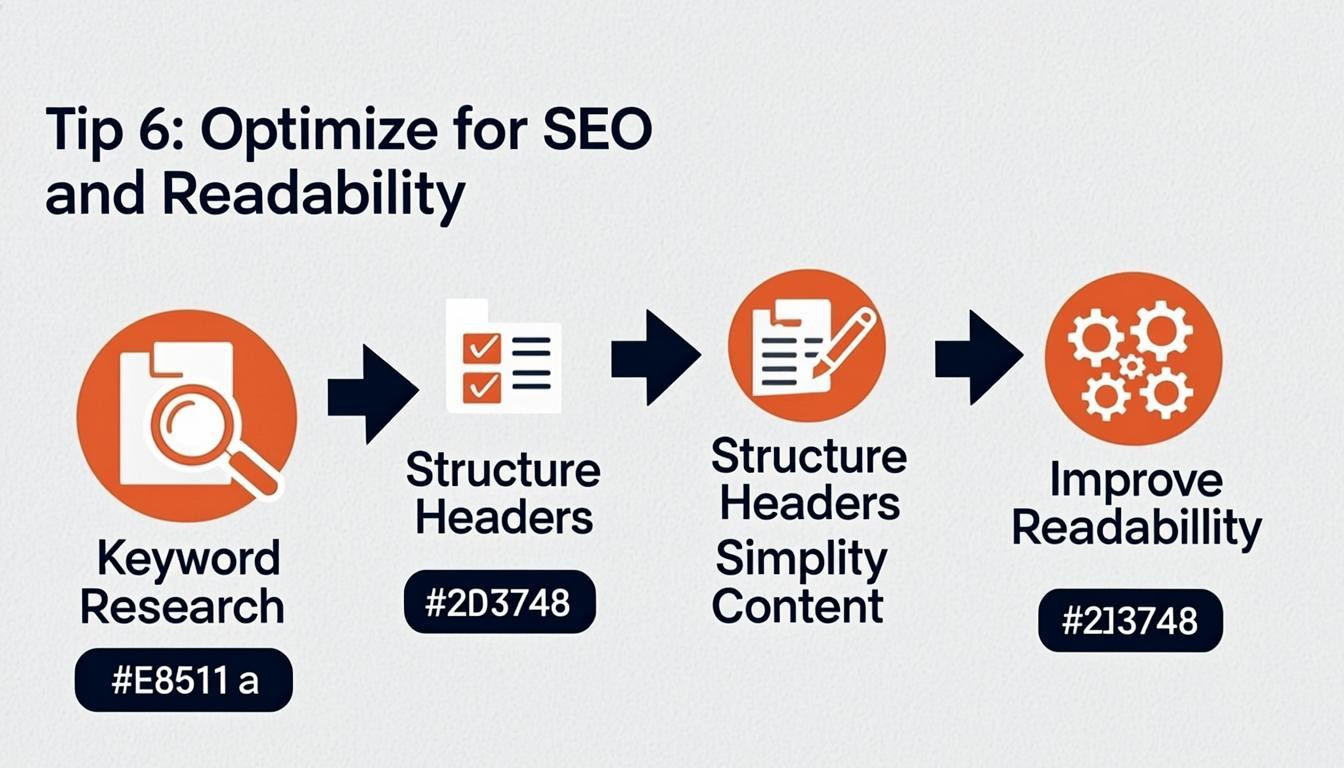
Tip 6: Optimize for SEO and Readability
Mastering how to write long form content requires balancing search engine visibility with an effortless user experience. Start by naturally integrating your primary keyword and LSI terms into headers and the first 100 words. Avoid keyword stuffing; instead, weave synonyms like "comprehensive guides" or "in-depth articles" into the narrative to maintain flow while signaling topical relevance.
Structure your text to accommodate skimming by keeping sentences under 20 words and paragraphs limited to 2-3 sentences. Large blocks of text intimidate readers, so break complex ideas into scannable sections. Finally, strengthen your site architecture by linking internally to relevant posts. For example, when discussing keyword research, link to a previous article on that topic. This keeps readers engaged longer and distributes page authority effectively.
Key implementation steps:
- Place the primary keyword in the H1 and an H2.
- Use LSI keywords in image alt text and body copy.
- Ensure every paragraph has a maximum of three lines.
Tip 7: Edit, Proofread, and Update Regularly
Mastering how to write long form content requires rigorous refinement. Never publish immediately after finishing a draft. Implementing a "cool down" period allows you to view the work with fresh eyes, making it easier to spot logical gaps or awkward phrasing. Once you step away for 24 hours, return to the text to polish the flow and tone.
Leverage editing tools to catch mechanical errors and improve readability. Software solutions can identify complex sentence structures that might confuse readers, ensuring your message remains clear. Finally, establish a content update schedule to maintain long-term relevance. Search algorithms favor current information, so revisiting older posts keeps them competitive.
To implement this effectively:
- Wait at least one day before editing a completed draft.
- Run text through grammar and clarity checkers.
- Set a calendar reminder every 3-6 months to refresh statistics and links.
Conclusion
Mastering how to write long form content requires a balance of comprehensive research and strategic optimization. Long-form assets allow for deeper topic exploration, which naturally encourages longer dwell times and higher engagement rates. To succeed, focus on structuring articles with clear headings to improve readability and crawlability.
Key Takeaways on Writing for Rankings
- Depth and Quality: Search engines prioritize content that fully satisfies user intent rather than superficial overviews.
- Structure Matters: Use hierarchical headers and short paragraphs to make complex information digestible.
- Keyword Integration: Place primary and semantic keywords naturally within the first 100 words and throughout subheaders.
Next Steps for Your Content Strategy Begin by auditing existing content to identify short posts that can be expanded into comprehensive guides. Implement a consistent internal linking strategy to distribute authority across your new long-form pages. Finally, prioritize user experience by ensuring fast load times and mobile responsiveness, as technical performance significantly impacts search visibility.


Comments
0