

Introduction
Setting ambitious targets often feels exciting in the moment, but vague resolutions frequently lead to frustration and abandonment. It is easy to fall into the trap of creating broad, unmeasurable desires like "get organized" or "be more productive" without defining specific outcomes. When objectives lack clarity, it becomes nearly impossible to track progress or recognize success, which inevitably causes motivation to fade over time.
To achieve lasting results, you need to understand that this is how to set better goals: by shifting focus from shallow wish lists to meaningful behavioral changes. Shallow targets are often just by-products of deeper habits that need to be established first. For example, instead of simply resolving to lose weight, a more effective approach involves designing a system that makes healthier choices inevitable.
Successful achievers do not rely solely on willpower; they build frameworks that support their vision. Avoid the common error of waiting too long to celebrate small wins, as acknowledging progress is crucial for maintaining momentum. By identifying specific pitfalls and aligning your targets with your personal values, you can transform vague aspirations into a concrete roadmap for success.
Turn Website Goals Into Reality
Achieve your site's potential with reliable, affordable hosting. Build your success roadmap with Hostinger today.
Tip 1: Replace Vague Objectives with Specific, Measurable Metrics
Vague aspirations like "get organized" or "be more productive" often fail because they lack clear definitions. Without concrete criteria, it is impossible to track progress or know when a goal has been achieved. To truly grasp that this is how to set better goals, you must shift from abstract intentions to precise, data-driven targets.
Specific goals define exactly what needs to happen, while measurable components quantify the outcome. Instead of aiming to "improve leadership skills," establish distinct milestones such as leading a project by Q2 or completing two specific workshops by mid-year. This clarity transforms a wish into an actionable plan.
- Quantify results: Attach numbers to your objectives to track status and deadlines effectively.
- Define deadlines: Set a specific timeframe for each milestone to maintain momentum.
- Clarify actions: Replace broad adjectives with specific verbs and tangible deliverables.
By ensuring every goal is specific and measurable, you create a roadmap that allows for progress tracking and keeps success sustainable. This approach eliminates ambiguity and provides a clear benchmark for achievement.
Tip 2: Align Your Site Goals with Core Behavioral Changes
This is how to set better goals by shifting your focus from shallow metrics to deep behavioral changes. Many website owners fail because they chase outcomes like "increase traffic" without addressing the habits required to get there. Successful goal setting involves designing systems that make success inevitable, rather than simply writing wish lists. You must identify the specific actions that lead to results, rather than fixating on the results themselves.
To implement this, prioritize flexibility and visual organization in your planning. Treat your website objectives as living parts of a larger system that must adapt to change.
- Focus on input-based goals: Instead of aiming for "10,000 visitors," set a goal to "publish two high-quality articles per week."
- Link tasks to outcomes: Use a dashboard or template that directly connects your daily or weekly actions to your long-term objectives.
- Design flexible systems: Build a workflow that can accommodate unexpected changes without breaking your progress.
- Track specific behaviors: Monitor the habits that drive growth, such as networking or content creation, rather than just vanity metrics.
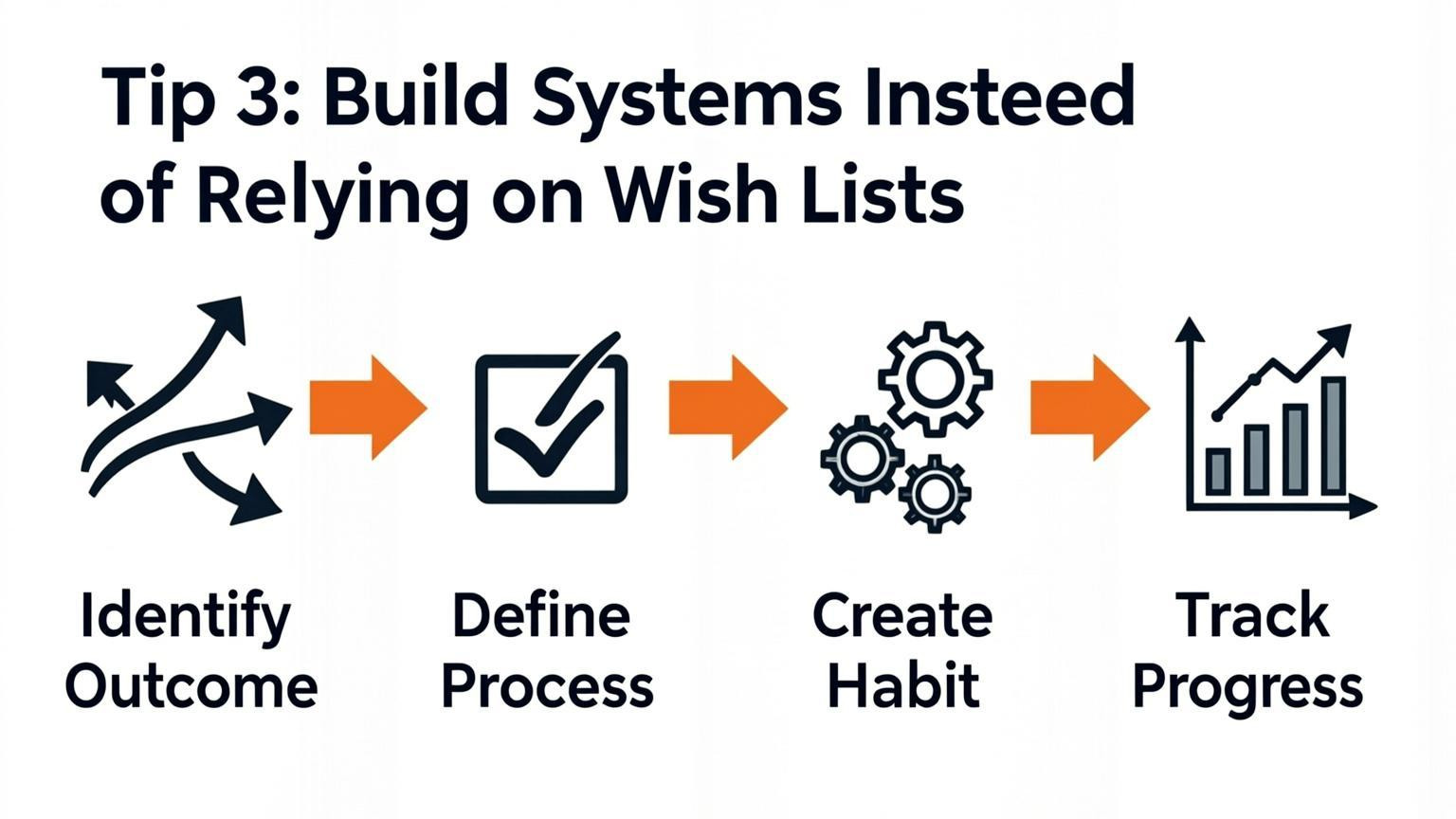
Tip 3: Build Systems Instead of Relying on Wish Lists
Wish lists focus on the result, but systems focus on the process. Successful goal achievers do not simply decide what they want; they design the framework that makes the outcome inevitable. If you are chasing someone else’s goals or lack alignment with your personal values, you will likely quit the moment things become difficult. This is how to set better goals: stop writing abstract desires and start building operational habits that drive daily progress.
Shifting your focus from metrics to growth-oriented frameworks ensures your success is sustainable, even when circumstances change.
- Start with tiny habits: Instead of aiming to "get fit," commit to walking for 10 minutes each day. Small, consistent actions build momentum more effectively than drastic changes.
- Automate the decision: Create a routine that removes the need for willpower. Design your environment so the desired action is the easiest choice.
- Celebrate micro-wins: Acknowledging small accomplishments compounds motivation and reinforces the system you are building.
Build a system that makes success the only logical outcome.
Tip 4: Celebrate Small Wins to Maintain Momentum
Progress is often abandoned because people fail to acknowledge the small steps taken along the way. Consistent, tiny habits create a sense of accomplishment that fuels long-term adherence. When you neglect these minor victories, you risk losing drive before the major objective is reached. To truly master how to set better goals, you must design a framework that values the journey as much as the destination.
Implement a system that reinforces positive behavior immediately:
- Track micro-milestones: Break large objectives into daily tasks, such as walking for 10 minutes instead of aiming for an hour-long workout immediately.
- Pause to reflect: Instead of rushing to the next task, stop specifically to review what you have just achieved.
- Reward the effort: Associate small completion markers with a tangible reward, reinforcing the habit loop.
Acknowledging these incremental successes prevents discouragement and keeps your motivation high, proving that change does not have to be monumental to be meaningful.
Tip 5: Balance Ambition with Achievable Targets
An ideal goal should feel approximately 75% achievable and 25% challenging. This specific ratio fosters momentum without inducing overwhelm, ensuring you stay motivated throughout the process. If you constantly aim for targets that feel impossible, you risk burnout; however, if the goal is too easy, you will not grow. To truly understand that this is how to set better goals, you must validate that you possess or can obtain the necessary resources, including time, finances, skills, and emotional energy.
Break major objectives down into manageable "baby steps" to maintain confidence and track progress effectively. For instance, if aiming for a leadership role, start with short-term actions like leading a small project or finding a mentor.
Key takeaways for balancing your targets include:
- Assess resources: Ensure you have the time, tools, and support required before committing.
- Break it down: Divide large ambitions into smaller, actionable tasks.
- Check the ratio: Aim for objectives that intimidate you slightly but feel mostly within reach.
- Set timelines: Define clear start and end dates to create structure and urgency.
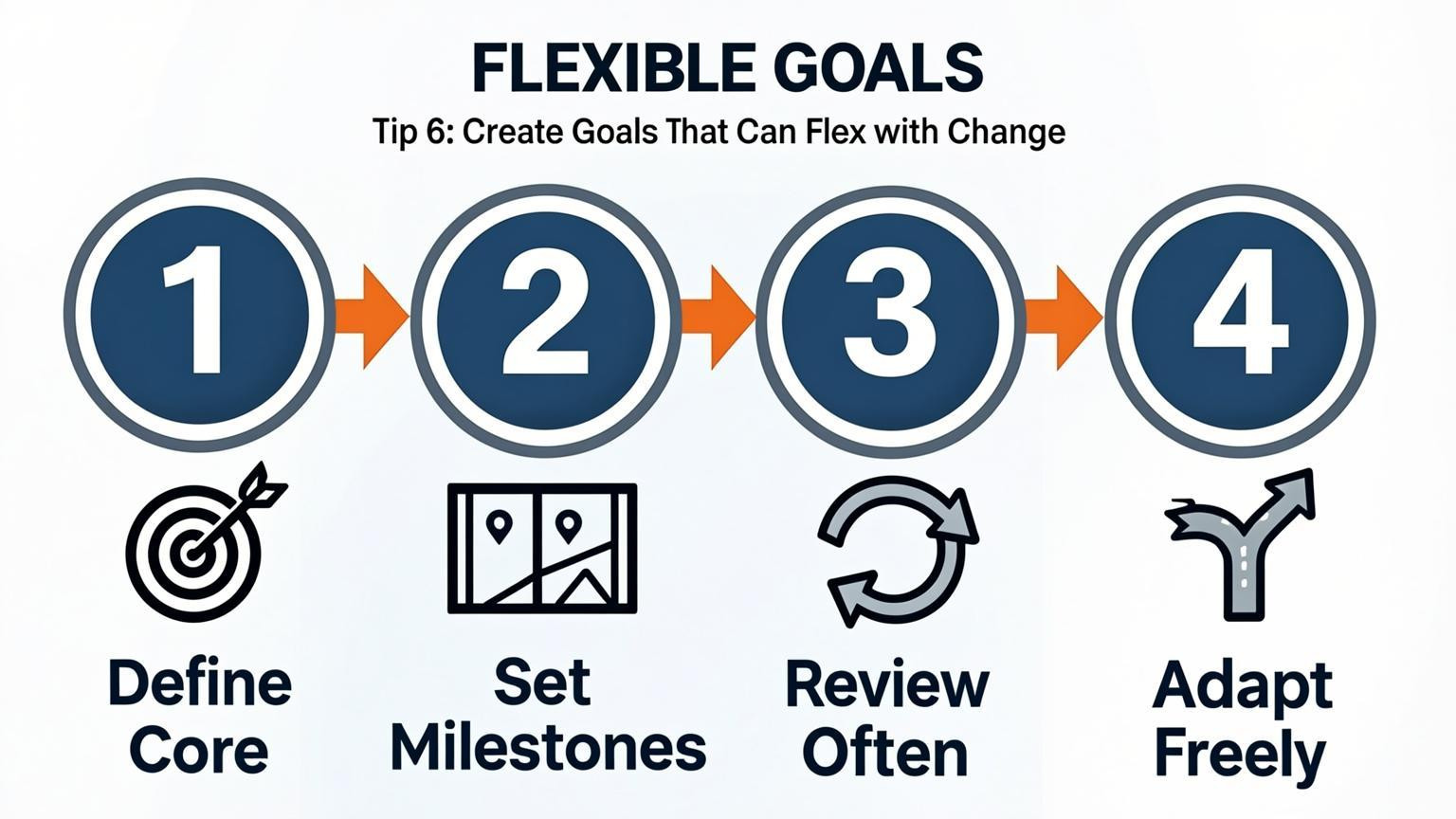
Tip 6: Create Goals That Can Flex with Change
Rigid targets often break when unexpected circumstances arise. To master this approach to setting better goals, you must design objectives that prioritize growth and adaptability over static metrics. When you build flexibility into your planning, you ensure that your team remains resilient and motivated, even when the path to success shifts course. This approach keeps progress meaningful and sustainable regardless of external changes.
Focus on establishing broad directional aims rather than fixed, immovable endpoints. This allows you to pivot strategies without abandoning your core vision. By aligning goals with a bigger picture, you create a buffer against the unpredictability of business and personal development.
- Prioritize outcomes over rigid tasks: Focus on the desired end result rather than strictly prescribing the method to get there.
- Review and adjust regularly: Schedule frequent check-ins to assess relevance and tweak the scope as needed.
- Emphasize learning: Frame setbacks as data points that inform better decisions moving forward.
- Stay aligned with values: Ensure that even as methods change, the underlying purpose remains constant.
Tip 7: Leverage Tracking Tools for Visual Progress
Visualizing your progress transforms abstract aspirations into tangible outcomes. Seeing your advancement activates the brain's reward system, creating a feedback loop that reinforces consistent action. When you track visually, you move beyond simple numbers to understand the trajectory of your efforts, which helps maintain motivation even during difficult periods.
To master how to set better goals, select tools that make progress obvious at a glance. Avoid complex spreadsheets that require daily maintenance; instead, choose platforms that offer immediate visual cues like progress bars, Kanban boards, or streak counters. This approach reduces cognitive load and keeps you focused on execution rather than data entry.
- Use Kanban boards to move tasks from "To Do" to "Done," providing a clear visual workflow.
- Select apps with dashboard views that aggregate data into charts, allowing for quick status checks.
- Implement habit trackers that display streaks, making it easy to see consistency over time.
- Customize your view to highlight daily or weekly actions that align directly with your long-term objectives.
By choosing tools that make you feel aware rather than pressured, you create a sustainable framework for success.
Conclusion
Setting vague objectives like "get organized" often leads to failure because they lack measurability. True progress requires shifting focus from shallow, wish-list items to specific behavioral changes that align with your core values. If a goal is not driven by personal conviction, you are likely to abandon it when difficulties arise. Success depends on creating a system that makes achievement inevitable rather than simply listing desires.
To ensure you stop wasting time on ineffective resolutions, apply the following steps:
- Define specific, measurable outcomes instead of abstract concepts.
- Focus on changing daily behaviors that produce the desired results as a by-product.
- Celebrate small victories to maintain motivation and compound your progress.
Avoiding common pitfalls like unrealistic timelines or ignoring milestones keeps your momentum alive. When you understand that this is how to set better goals, you transform your life from a series of failed attempts into a structured path of achievement. Stop waiting for the perfect moment and start building your framework for success today.

Comments
0