

Introduction
A solid anchor text strategy is vital for search engine optimization because it gives search engines important context about the destination page. By analyzing the clickable words in a hyperlink, search engines better understand the topical relevance of the linked page, which directly affects how well it ranks for specific search queries.
To keep things looking natural and avoid penalties, a healthy link profile relies on diversity. You want to avoid repeating the same keywords over and over or relying only on generic phrases like "click here." Instead, aim for a balanced mix that includes:
- Exact Match Keywords: Using the specific target keyword, though this usually makes up a smaller portion (around 20-30%) of the profile
- Partial Match Phrases: Natural variations that include related terms alongside the main keyword
- Branded Terms: Using the company or website name for safer linking
- Related Text: Descriptive phrases that explain the topic without forcing exact keywords
By balancing these elements, you maintain a link profile that signals organic growth to search algorithms while maximizing your SEO potential.
Master Your Anchor Text Strategy
Analyze your backlink profile for over-optimization and find the perfect anchor mix with Semrush's powerful site audit tools.
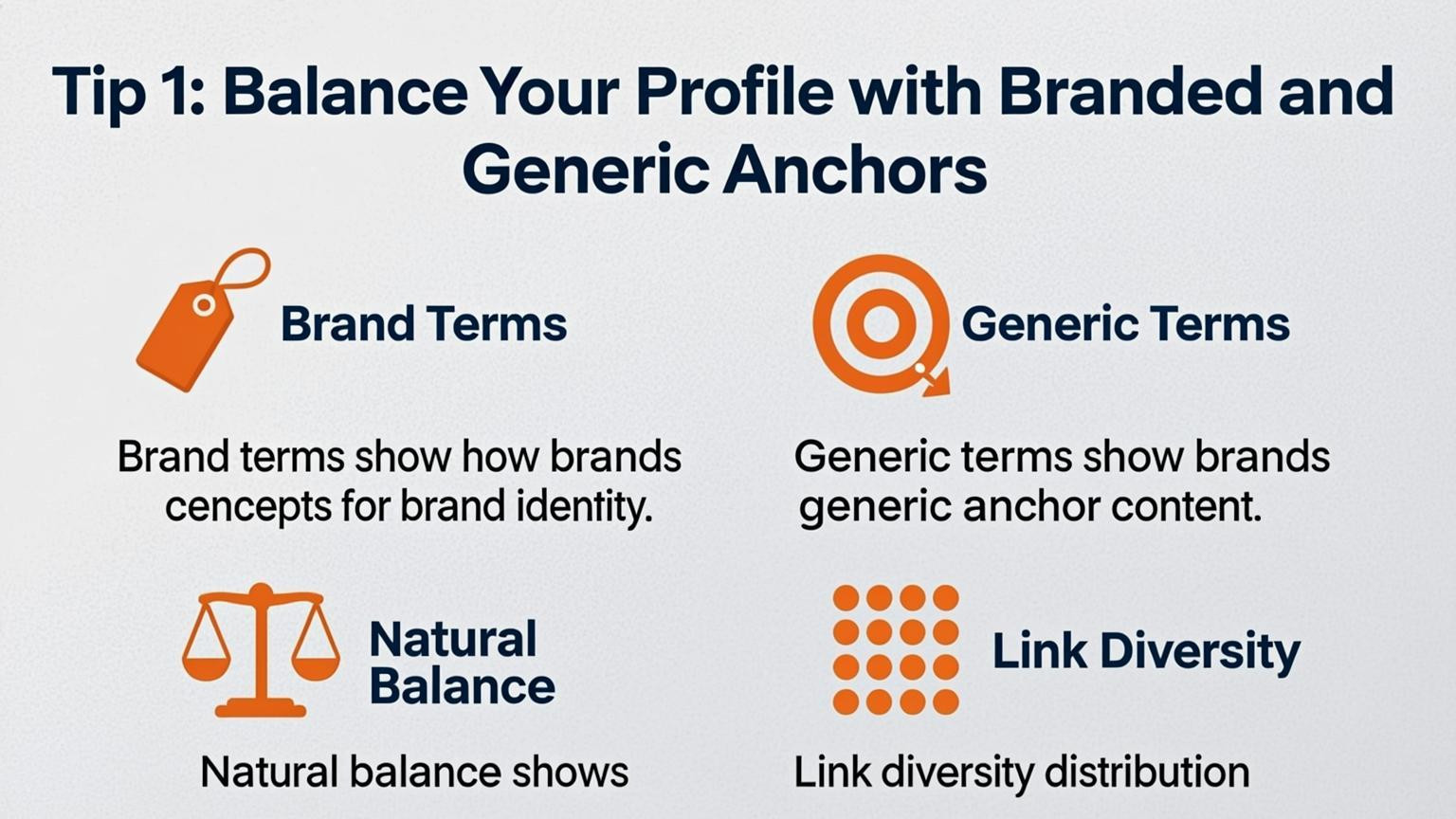
Tip 1: Balance Your Profile with Branded and Generic Anchors
A successful anchor text strategy relies on maintaining a natural and diverse link profile. If you overuse exact-match keywords, you risk triggering spam filters, so it is essential to mix in branded terms, generic phrases, and partial matches. This balance signals to search engines that your linking pattern is organic rather than manipulative. Ideally, exact-match keywords should only make up about 20-30% of your total profile, with the rest consisting of safer, natural variations.
To put this into action, audit your current backlinks and internal links to see if your ratios are skewed too heavily toward one type. If you see an overabundance of commercial keywords, focus on building links using your brand name or the raw URL. You can also use generic anchors like "click here" or "learn more" sparingly, provided they fit naturally within the sentence structure. For example, instead of repeatedly linking "best running shoes," switch things up with the brand name "BrandName" or a descriptive partial match like "comfortable running shoes."
Tip 2: Utilize Partial Match Keywords for Natural Variation
Key detail
Relying solely on exact match keywords often sets off spam filters, making your link profile look manipulative. To keep your anchor text strategy healthy, you need to incorporate partial match phrases. These variations include your target keyword surrounded by relevant, descriptive words. This approach provides necessary context to search engines while satisfying algorithmic preferences for organic language patterns. A balanced profile typically blends exact matches with partial matches and branded terms to signal authority without risking penalties.
How to implement
Integrate partial match anchors by adding modifiers such as adjectives, locations, or action verbs to your core keyword.
- Add modifiers: Change "digital marketing" to "comprehensive digital marketing strategies."
- Use long-tail variations: Instead of "link building," try "effective link building for SEO."
- Incorporate natural phrasing: Place the keyword within a sentence, such as "learn more about on-page SEO best practices here."
Review your existing backlinks and internal links to ensure you have enough variety. If a specific phrase is overused, rewrite the anchor text to include these partial variations for a safer, more robust optimization approach.
Tip 3: Prioritize Descriptive and Contextual Relevance
Key detail
Anchor text acts as a critical signal for both users and search engines, indicating what the destination page is about. Using descriptive phrases rather than generic terms like "click here" significantly improves link relevance and helps search engines establish strong topical associations. The text immediately surrounding a link also adds context, reinforcing the relationship between entities and concepts. While descriptive text is vital, it is equally important to avoid over-optimization with exact-match keywords, which can trigger spam filters. A natural, varied profile creates a balanced strategy.
How to implement
To execute this effectively, look at the intent behind the page you are linking to and let that guide your wording.
- Analyze the destination content: Identify the core theme or specific value the page offers.
- Select descriptive phrases: Use text that accurately reflects the content, such as "technical SEO guide" instead of "read more."
- Vary your usage: Mix partial-match keywords, brand names, and natural phrasing to maintain a healthy link profile.
- Review surrounding context: Ensure the sentences preceding and following the link support the topical relevance.
For example, when linking to a resource about keyword research, use anchor text like "comprehensive keyword research strategies" to provide clear, actionable context.
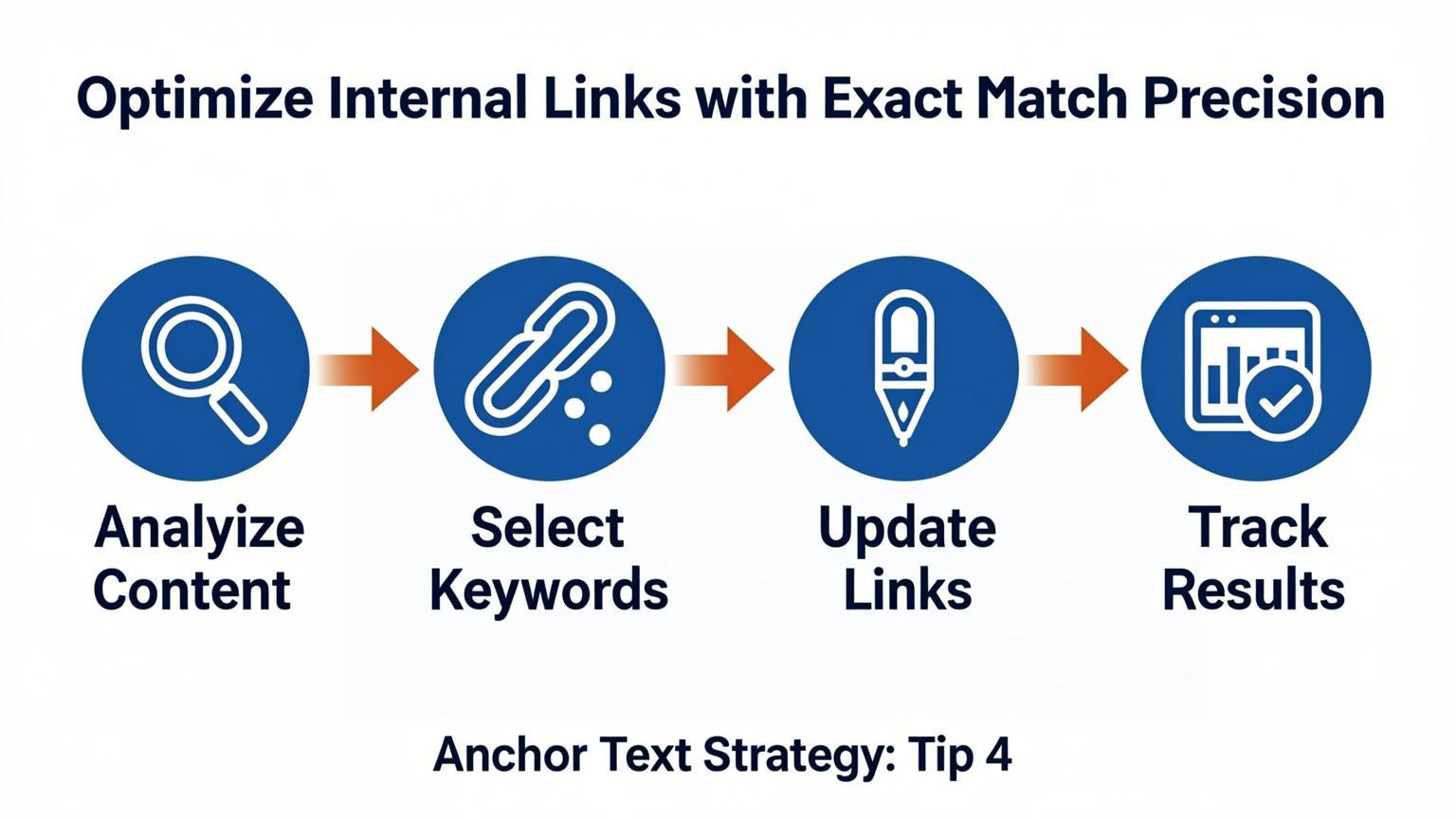
Tip 4: Optimize Internal Links with Exact Match Precision
A robust anchor text strategy relies heavily on how you handle internal linking. Exact match anchors—where the clickable text precisely matches the target page's primary keyword—send clear, direct signals to search engines about content relevance. While powerful, these should be used strategically to maintain a natural link profile.
To implement this effectively without triggering spam filters, follow these steps:
- Audit existing links: Identify internal opportunities where the destination URL aligns perfectly with a specific phrase.
- Target 20-30% exact match: Reserve exact match anchors for your most critical internal pages to boost their authority.
- Prioritize user experience: Ensure the phrase flows naturally within the surrounding sentence structure.
- Diversify immediately: Balance exact match text with partial match variations, branded terms, and generic phrases.
For example, if linking to a page about "vegan leather shoes," use that exact phrase rather than generic text like "click here" or "products." This precision helps search engines understand the page's topic while keeping the user experience intuitive.
Tip 5: Avoid Over-Optimization to Prevent Penalties
Over-optimization happens when a backlink profile contains an unnaturally high percentage of exact-match keywords, which can trigger spam filters and lead to ranking drops. Real users don't naturally click on aggressive phrases like "best hosting platform" every single time, so relying heavily on these terms signals manipulation rather than relevance. To maintain a healthy anchor text strategy, focus on creating a diverse, natural distribution of link types that mimics organic editorial behavior.
How to implement:
- Prioritize branded anchors: Use your company name or URL as the primary link source to establish trust.
- Integrate related terms: Use descriptive phrases that contextualize the target page without forcing the primary keyword.
- Vary your link profile: Ensure exact-match anchors appear sparingly and only where they fit grammatically.
- Avoid vague phrases: Do not use generic filler words like "click here" or "read this," as they provide no context to search engines.
Tip 6: Monitor and Adjust Your Strategy Regularly
Key detail
An effective anchor text strategy is never static; it requires continuous oversight to maintain long-term ranking stability. As your site grows and search engine algorithms update, your link profile evolves. Failing to track these changes leaves you vulnerable to toxic patterns that may trigger penalties or cause confusion regarding relevance. Regular monitoring helps you identify unnatural distributions of exact-match keywords or sudden shifts in your backlink profile, allowing you to spot potential risks before they damage your authority.
How to implement
Implement a rigorous auditing schedule using specialized SEO tools to track both internal and external links. You should analyze data at different intervals to catch issues early.
- Monthly: Use tools like Ahrefs or SEMrush to review backlink profiles, check for toxic anchor text patterns, and monitor new or lost referring domains.
- Quarterly: Audit internal linking structures within Google Search Console to ensure you are not over-optimizing specific pages.
- Ongoing: Immediately disavow spammy links and diversify anchors by adding more branded, generic, or partial-match terms if exact-match density becomes too high.
For example, if you notice 70% of your backlinks use the exact phrase "blue running shoes," actively seek opportunities to build links using variations like "shop here" or your brand name to restore balance.
Tip 7: Maintain Consistency Between Anchor Text and Content Theme
Key detail
Aligning anchor text with the content theme of the destination page is vital for an effective anchor text strategy. Search engines use the clickable text to predict the relevance of the linked content. If the anchor text describes a topic that does not match the target page's material, it confuses search engine algorithms and wastes an opportunity to signal what the page is about. Descriptive text provides necessary context for users and screen readers, ensuring the link meets user expectations upon clicking.
How to implement
To implement this, consider the search intent and primary subject of the page you are linking to. Ensure the words you select to turn into a hyperlink accurately reflect that subject matter.
- Review the target page to identify its core theme
- Select descriptive text that provides a deeper understanding of the article's focus
- Avoid bland or generic phrases that lack specific context
For example, instead of using a generic phrase like "click here" to link to a page about email marketing, use a relevant phrase such as "effective email marketing strategies." This alignment builds natural patterns and supports the overall SEO strength of the linking page.



Comments
0