

Introduction
A solid guest posting guide is essential for anyone looking to build authority and improve search engine visibility. Guest posting remains one of the most effective strategies for earning high-quality backlinks, which serve as vital trust signals to search engines. Beyond the technical benefits, securing placement on reputable sites exposes your content to targeted audiences, driving referral traffic and establishing your credibility in the industry.
Without a structured approach, outreach efforts often result in rejected pitches or wasted time. A strategic guide helps navigate the nuances of selecting the right platforms, crafting compelling content, and sticking to editorial guidelines. For instance, a generic pitch sent to a random tech blog rarely succeeds, whereas a tailored, data-driven proposal that addresses specific audience pain points tends to stand out.
Executing a successful campaign requires understanding the balance between the value you provide to the host and the SEO benefits you gain. This section outlines the critical steps to refine that process, ensuring every effort contributes to long-term growth. By following a proven framework, marketers can avoid common penalties associated with low-quality link building and instead foster genuine connections within their niche.
Find High-Quality Guest Post Sites
Use Semrush to analyze domain authority and uncover the best opportunities for your guest posting guide strategy.
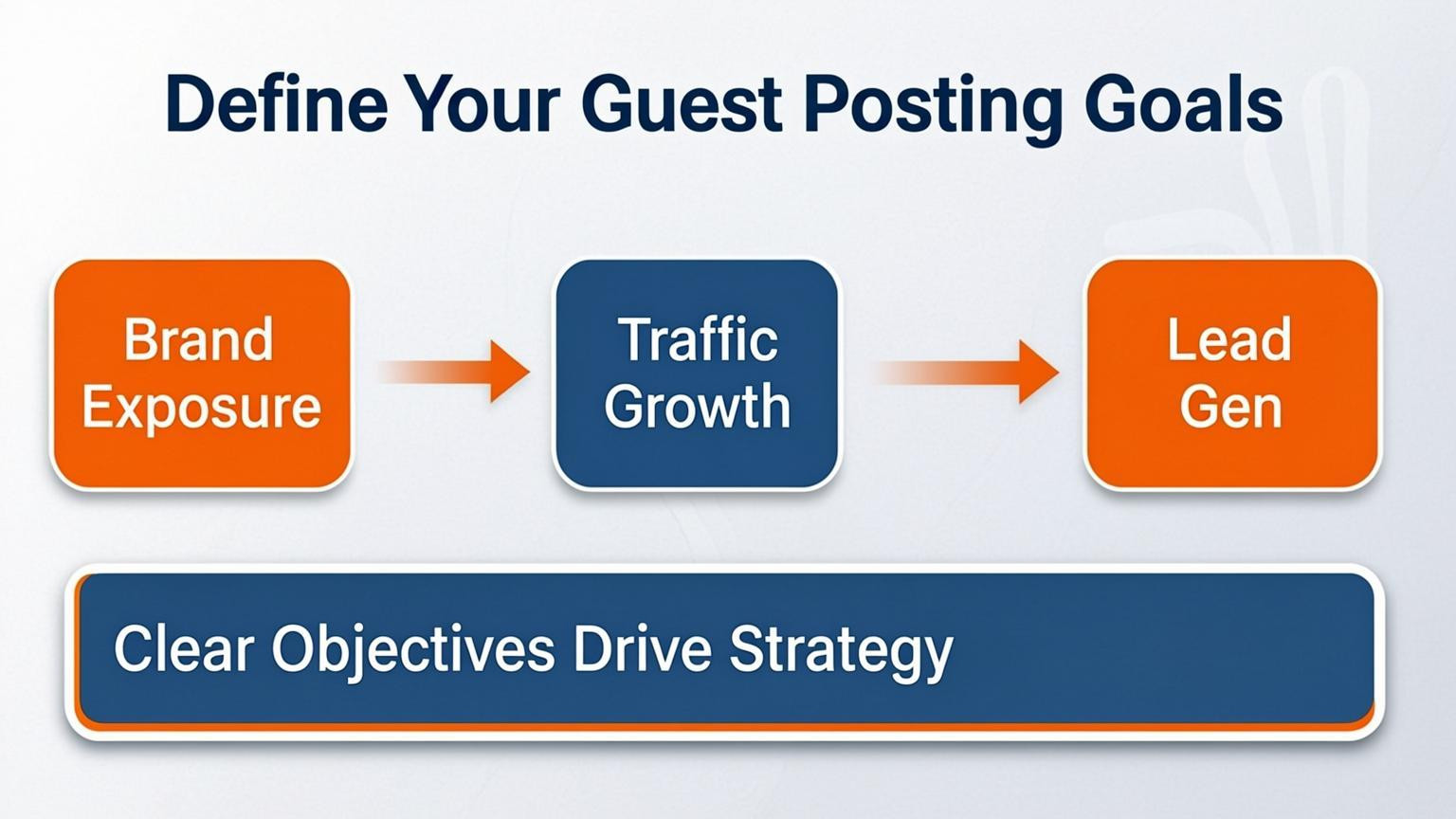
Define Your Guest Posting Goals
Establishing clear objectives is the foundation of a successful guest posting strategy. Without a defined purpose, efforts often result in wasted resources and a low return on investment. You need to determine if the primary aim is building brand awareness, acquiring high-quality backlinks for SEO authority, or driving direct referral traffic to a landing page.
Once the primary objective is set, aligning your content with your marketing funnel is critical for conversion. A guest post intended for the top of the funnel should focus on educational, broad topics to attract a wide audience. Conversely, content for the bottom of the funnel should address specific problems and guide readers toward a solution.
Consider these examples when defining your approach:
- Brand Awareness: Target high-traffic publications with engaging storytelling to introduce your brand personality.
- Lead Generation: Write detailed "how-to" guides that naturally lead readers to a downloadable resource or free tool on your site.
- SEO Authority: Focus on niche-relevant, high-domain-authority sites to secure contextual links that boost search rankings.
By clarifying these goals early, you ensure every pitch and piece of content serves a strategic function in your broader marketing plan.
Identify High-Quality Target Sites
Focusing on domain authority and topical relevance ensures your guest posts contribute meaningfully to your SEO strategy. Prioritize websites with a higher domain authority than your own to maximize the link equity passed to your pages. Relevance is equally critical; securing a backlink from a site within your niche signals trust to search engines and drives qualified traffic.
- Check Domain Authority: Use SEO tools to verify the site's strength.
- Assess Topical Alignment: Ensure the blog covers subjects relevant to your industry.
Beyond static metrics, evaluate engagement to determine if the audience is active and genuine. A site with high traffic but zero comments or social shares may possess inflated or fake metrics.
- Review Comments: Look for recent, meaningful discussions on blog posts.
- Analyze Social Activity: Check if articles are shared across platforms like LinkedIn or X.
For example, if you sell fitness software, target a health blog with active community discussions rather than a generic tech news site with higher authority but no relevant audience. This precision leads to better conversion rates.
Research and Analyze Existing Content
Before drafting your pitch, thoroughly investigate the target website to uncover content gaps and align your voice with theirs. Start by reviewing their most popular articles and recent publications to understand the depth of information typically provided. Look for missing subtopics, unanswered questions, or outdated statistics within your niche that a fresh guest post could address.
For example, if a blog covers "basic SEO tips" but lacks advanced technical guides, proposing a deep-dive article on site speed optimization fills a specific void. Simultaneously, analyze the author's tone. Do they use formal language and industry jargon, or is the style conversational and humorous? Mirror this structure in your outline to demonstrate you are a natural fit for their audience.
- Identify gaps: Search the site for your primary keyword to see what angles are missing.
- Match the format: Note if they prefer listicles, how-to tutorials, or long-form case studies.
- Adopt the voice: Adjust your writing style to reflect the site's level of formality and personality.
Craft a Compelling, Personalized Pitch
The structure of your outreach email determines whether a publisher opens your message or marks it as spam. A successful pitch follows a concise format that respects the recipient's time while clearly demonstrating value. Start with a professional subject line that indicates the topic, such as "Guest Post Proposal: [Topic] for [Site Name]."
Your email body should include the following key elements:
- Personalized Opening: Mention a recent article they published to prove you have done your homework.
- Value Proposition: Briefly outline 3-4 potential headlines that would fill a gap in their existing content.
- Author Bio: Summarize your expertise and why you are the right person to write the piece.
Including relevant writing samples is non-negotiable for building trust. Link to 2-3 live articles published on reputable sites within your niche. Ensure these samples match the tone and quality of the target site. This allows editors to quickly verify your writing style and grammatical proficiency without asking for additional work, significantly speeding up the approval process.
Write High-Value, Actionable Content
Creating authoritative content requires prioritizing depth over superficial word counts. To succeed with this guest posting guide, move beyond generic advice by integrating original data, case studies, or unique frameworks. For example, instead of simply stating that SEO is important, provide a step-by-step breakdown of a technical audit you performed, including screenshots and specific results. This approach establishes immediate trust and demonstrates your expertise to a new audience.
Simultaneously, optimizing for readability ensures your insights are actually absorbed. Large blocks of text can deter readers, so structure your post to facilitate skimming. Use the following formatting tactics to enhance user experience:
- Descriptive Subheadings: Use H2 and H3 tags that clearly describe the following section.
- Short Paragraphs: Limit paragraphs to 2-3 sentences to maintain momentum.
- Bulleted Lists: Break down complex processes into digestible bullet points.
- Bold Emphasis: Highlight key takeaways or critical action items for quick scanning.
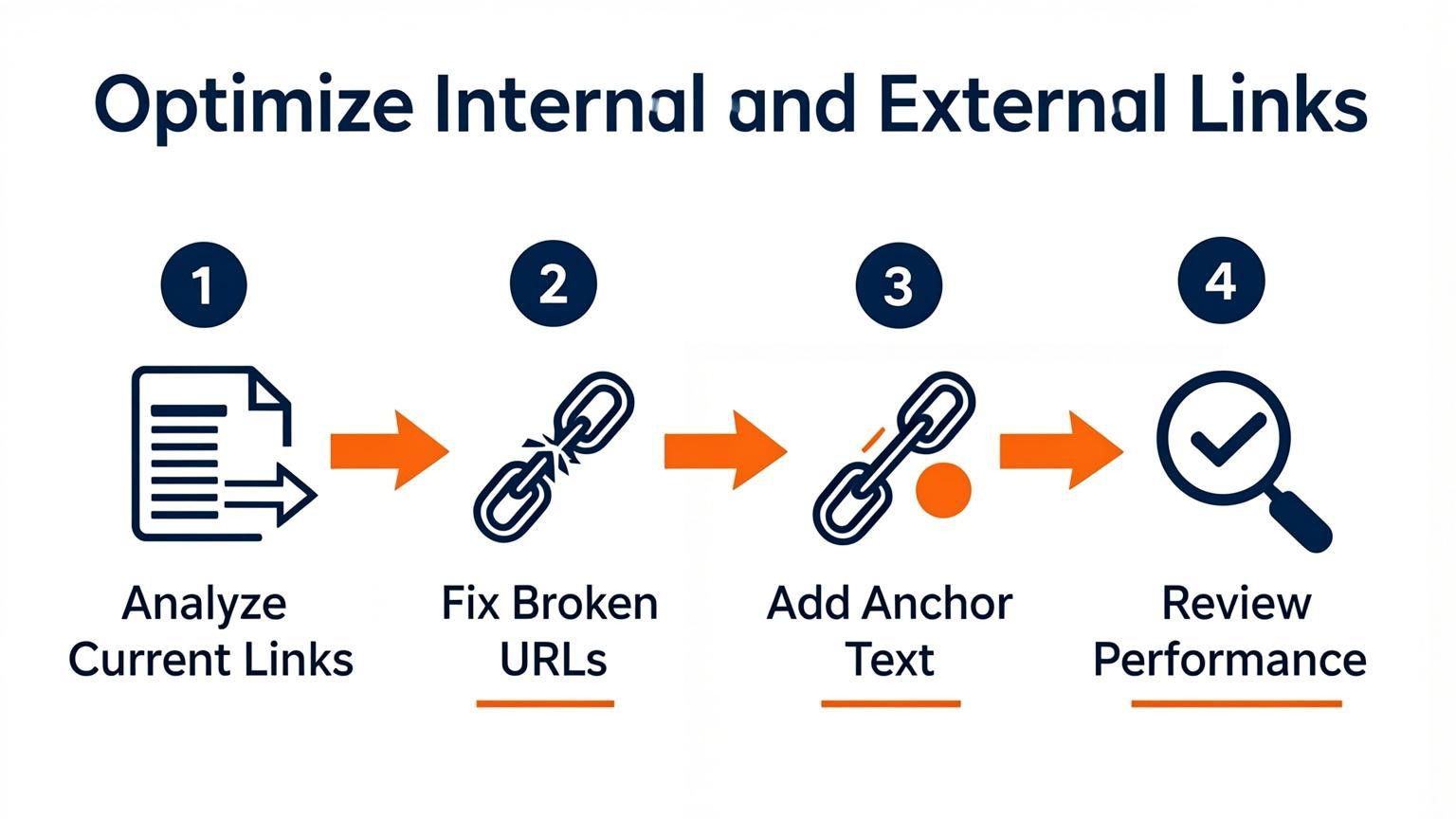
Optimize Internal and External Links
An effective linking structure boosts the SEO value of your guest posting guide by distributing authority and enhancing user experience. Strategically place internal links to relevant articles on your own site within the guest post content or author bio. For example, if writing a post about advanced SEO tactics, link to a case study on your site that demonstrates those tactics in action. This drives targeted referral traffic and helps search engines understand the relationship between your content.
Contextualizing backlinks is equally vital for building authority. Ensure your external links point to high-quality, relevant sources that support your arguments, such as industry studies or official documentation. Avoid generic "click here" anchor text; instead, use descriptive, keyword-rich phrases that signal relevance to search engines.
- Use descriptive anchor text like "comprehensive keyword research checklist" rather than "read more."
- Link to authoritative domains like industry-leading blogs or .edu resources to bolster trustworthiness.
- Audit links periodically to ensure no linked pages have broken or redirected to irrelevant content.
Promote and Amplify Your Guest Post
Publishing your content is only half the battle in a successful guest posting guide strategy; active promotion drives traffic and signals relevance to search engines. Immediately upon publication, share the article across your professional social media profiles, including LinkedIn, X (formerly Twitter), and industry-specific Facebook groups. Do not simply post the link; draft a compelling hook that highlights a specific pain point solved in the article to encourage click-throughs. For example, if your post covers technical SEO fixes, mention the specific speed improvements or ranking gains readers can expect.
Engagement is equally critical for maximizing the value of your contribution. Monitor the comments section of the host site for at least 48 hours after publication. Respond to every question with thoughtful, detailed answers to demonstrate authority and build trust with a new audience. You should also actively share the post on your own social channels multiple times using varied angles, such as pulling out a controversial quote or a key statistic. This multi-channel approach amplifies reach and encourages the host site to share your content with their internal networks.
Conclusion
Mastering the art of guest posting requires a strategic approach focused on value and relationship building rather than simple link acquisition. This comprehensive guest posting guide has outlined how identifying high-authority domains and crafting original, insightful content establishes trust with both the hosting site and its audience. Prioritizing quality over quantity ensures long-term sustainability and protects your site's reputation against algorithmic updates that penalize spammy tactics.
To succeed in your outreach efforts, keep these essential principles in mind:
- Relevance is crucial: Target blogs that align closely with your niche to drive qualified traffic.
- Content quality matters: Submit well-researched, error-free articles that solve specific problems for readers.
- Follow guidelines strictly: Adhere to the host’s editorial standards regarding word count, formatting, and links.
- Nurture relationships: Engage with comments on your published posts to build authority and connection.
By integrating these practices, you leverage guest posting not just as an SEO tactic, but as a powerful tool for brand growth and networking. Consistent application of the strategies discussed here will result in a robust backlink profile and increased visibility in search engine results pages.


Comments
0