
Introduction
Getting a grip on the competitive landscape of search queries is essential for building a solid SEO strategy. If you try to rank for highly competitive terms before your site has the authority to back it up, you’ll likely burn through resources with little to show for it. Learning how to analyze keyword difficulty allows you to spot realistic ranking opportunities and prioritize your efforts where they’ll actually pay off.
Essentially, this metric estimates how tough it is to oust the current competitors from the first page of search results. It factors in things like domain authority, page authority, and the overall quality of the content. For instance, a broad term like "insurance" is going to have a much steeper difficulty score than a long-tail phrase such as "affordable car insurance for new drivers."
By focusing on keywords that match your site's current strength, you can build momentum and generate traffic faster. Targeting terms you can actually rank for helps you establish topical authority before you take on the massive, head terms. This strategic approach ensures your content creation drives real, measurable results.
Step 1: Select a Reliable Keyword Research Tool
Master Keyword Analysis Fast
Skip the guesswork. Semrush provides accurate keyword difficulty scores and competitor insights to help you prioritize high-value rankings immediately.
Key Detail
Accurately analyzing keyword difficulty requires robust software capable of processing massive search engine datasets. While you could try to assess things manually, dedicated tools use proprietary algorithms to assign a numerical score that represents ranking competition. These platforms analyze factors like the domain authority of current top-ranking pages, page-level backlink profiles, and content relevance. Choosing a tool with a transparent scoring scale ensures you prioritize terms that you actually have a shot at ranking for.
How to Implement
Pick a platform that fits your budget and technical needs, then weave it into your daily workflow. To effectively analyze keyword difficulty, follow this process:
- Input Seed Keywords: Enter your primary terms into the tool's discovery interface to generate a list of related variations.
- Filter by Metric: Set a maximum difficulty threshold based on your website's authority; for newer sites, looking for scores under 30 is usually a safe bet.
- Analyze SERP Features: Review the search engine results page data provided by the tool to see if rich snippets or "people also ask" boxes dominate the query.
For example, if you target the phrase "vegan meal prep," a reliable tool might reveal that while the search volume is high, the difficulty score is 85 because established food brands occupy the top slots. This data signals that you should target a long-tail variation like "easy vegan meal prep for beginners" instead.
Step 2: Check the Domain Authority of Current Rankers
Evaluating the strength of the websites currently sitting in the top search results provides crucial context for your keyword analysis. Even if a numerical difficulty score looks low, trying to rank against established industry giants with high authority can be incredibly difficult for newer sites. You need to assess if you can realistically compete with the specific pages dominating the SERPs.
To put this into action, open an incognito browser window and search for your target keyword. Look at the first five organic results and determine the Domain Authority (DA) of each using an SEO tool. If the results are dominated by domains with a DA of 50 or higher, and your site is significantly lower, conquering that specific term will require a serious amount of time and effort.
- Input your target keyword into a search engine.
- Use a browser extension or SEO tool to check the DA of the top 5 results.
- Compare the average DA of the results against your own site’s score.
For instance, attempting to rank for "best running shoes" might show results dominated by major publishers with DAs over
- In that scenario, pivoting to a more specific long-tail keyword, such as "best running shoes for flat feet over 40," often reveals competitors with lower authority, making ranking much more achievable.
Step 3: Analyze On-Page and Content Quality
Key Detail
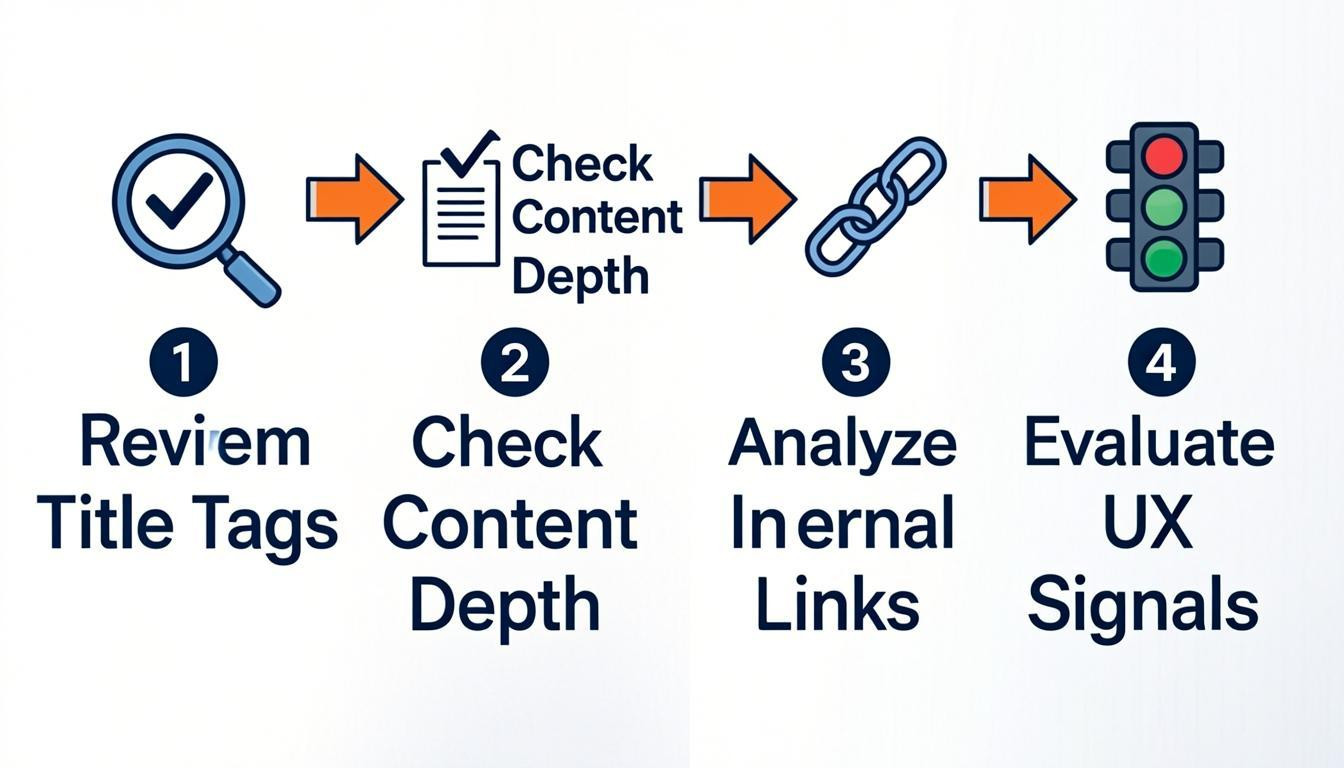
Keyword difficulty metrics don't always tell the whole story regarding the caliber of the top-ranking content. You need to assess whether the current top results actually answer the user's question comprehensively or if they are thin, outdated, or lacking depth. High difficulty scores can sometimes be misleading if the existing content fails to satisfy user needs. For example, if the top-ranking pages for "how to analyze keyword difficulty" are just brief lists without actionable steps, a long-form guide packed with screenshots and clear instructions can outrank them regardless of what the difficulty metric says.
How to Implement
Review the top three to five results for your target keyword and evaluate their structure and value. Follow these steps to determine if you can create something superior:
- Check Content Depth: Count the word count and analyze whether the topic is covered exhaustively or just superficially.
- Evaluate User Experience: Look for intrusive pop-ups, poor mobile optimization, or slow loading speeds on competitor pages.
- Identify Gaps: Read comments and "People Also Ask" boxes to find questions competitors have ignored.
- Assess Format: Note if results are blog posts, product pages, or videos, and aim to match the preferred format.
Step 4: Evaluate Backlink Profiles of Top Pages
Key Detail
Backlink profiles are often the strongest indicator of why specific pages rank highly for a target keyword. To accurately assess keyword difficulty, you have to look beyond a simple difficulty score and analyze the quality and quantity of links pointing to the top-ranking results. If the first page is made up of domains with immense authority and thousands of referring domains, outranking them is going to require significantly more effort and resources.
How to Implement
Inspect the top three to five search results for your target keyword using an SEO tool. Focus on the "Referring Domains" metric to see how many unique websites link to each page, rather than just the total number of backlinks.
- Check Domain Authority: Compare the domain rating of the ranking pages against your own site.
- Analyze Link Quality: Look for links coming from high-authority, industry-relevant websites.
- Assess Link Velocity: Determine if the page has a steady stream of new links over time.
For example, if the top result is a comprehensive guide with 500 referring domains from high-traffic news sites, the keyword difficulty is effectively very high. Conversely, if the top pages have fewer than 20 referring domains from smaller blogs, the opportunity to rank is much more attainable.
Step 5: Assess Search Intent and Page Type
Key Detail
Keyword difficulty metrics often fail to account for the searcher's underlying goal. A keyword might have a low technical difficulty score, but ranking requires matching the dominant page type in the results. Search engines prioritize content that satisfies specific user needs, such as transactional, informational, or navigational intent. If the top results are product pages, publishing a blog post targeting the same keyword will likely struggle, regardless of the difficulty rating.
How to Implement
Analyze the top 10 search results for your target keyword to identify the content format and intent. Align your content strategy with these findings to improve your ranking potential.
- Identify the intent: Determine if users want to buy, learn, or find a specific website.
- Check page types: Note whether the results list e-commerce product pages, "best of" listicles, comprehensive guides, or definition posts.
- Match the format: If the results are predominantly "how-to" guides, create a tutorial. If they are category pages, build a relevant landing page.
For example, when analyzing "running shoes," you might find a mix of commercial review pages and retailer listings. To compete effectively, you should structure your page as a product comparison rather than a general history of running footwear.
Conclusion
Mastering the process of how to analyze keyword difficulty is essential for developing a sustainable content strategy. It allows marketers to distinguish between search terms that offer quick wins and those requiring significant authority to rank. By accurately gauging the competitive landscape, you can prioritize your efforts effectively and allocate resources where they matter most.
Understanding the nuances of this metric helps in forecasting campaign success. For instance, a low difficulty score might indicate a lack of content quality rather than a lack of competition, which requires a deeper manual inspection. Conversely, a high score often signals established dominance by major publishers, suggesting that new sites should target long-tail variations first.
Key Takeaways
- Look beyond the score: A numerical metric is just a starting point, not the final verdict on rankings.
- Analyze top competitors: Assess the domain authority and backlink profiles of the current top-ranking pages to see if you can compete.
- Evaluate search intent: Ensure the content type currently ranking—whether it is a blog post, product page, or listicle—matches your strategy.
- Consider link gaps: High-difficulty keywords usually require a robust backlink profile to break into the top positions.
Incorporating these analytical steps ensures a data-driven approach to SEO.

Comments
0