

Introduction
Building a content strategy around unverified search terms is a quick way to waste resources and miss out on relevant traffic. Many marketers get caught up in generating massive lists of potential topics, but the real value comes from filtering that list to find the terms with actual ranking potential. Understanding how to validate keyword ideas ensures you prioritize opportunities where your website can realistically compete and convert visitors. This approach shifts the focus from simple search volume to the intent behind the query and the strength of the competition.
Validation helps you avoid the common trap of targeting keywords that are too broad or too competitive for your current domain authority. For instance, a small business might initially want to rank for a general term like "shoes," but validation often reveals that a specific phrase like "best running shoes for flat feet" offers a much higher return on investment. By verifying data before you create content, you ensure that every piece serves a strategic purpose.
The key benefits of a rigorous validation process include:
- Improved ROI: Directing efforts toward terms that lead to conversions rather than just casual browsing.
- Efficient Resource Allocation: Saving time and budget by avoiding terms dominated by established competitors.
- Audience Alignment: Ensuring the content matches the specific needs and questions of your target market.
Validating your keyword list transforms a theoretical strategy into an actionable roadmap for organic growth.
Tip 1: Analyze Search Intent
Stop Guessing, Start Ranking
Use Semrush to validate keyword ideas instantly, analyze competition difficulty, and target high-ROI topics with confidence.
Validating a keyword requires looking beyond search volume to understand the "why" behind a query. You need to determine if a user is looking to buy, learn, or navigate to a specific site. If you target a keyword with "transactional" intent using an informational blog post, you will likely struggle to rank effectively. Aligning your content type with user motivation is the first step in ensuring your keyword is worth pursuing.
To put this into action, enter your keyword idea into a search engine and examine the current top results. Categorize the intent based on the content format that dominates the page. Common classifications include:
- Informational: Users seeking answers, guides, or "how-to" instructions.
- Transactional: Users ready to purchase, often searching for "best," "review," or "discount."
- Navigational: Users looking for a specific brand or website page.
- Commercial Investigation: Users comparing products or services before buying.
For example, if you validate "running shoes" and see top results filled with product listings and "best of" roundups, the intent is clearly transactional or commercial. To rank, you should create a product comparison page rather than a definition of what running shoes are.
Tip 2: Check Search Volume and Trends
Validating keyword ideas requires establishing a baseline demand to ensure your efforts target an audience that actually exists. High search volume indicates popularity, but analyzing trends over time reveals whether interest is stable, growing, or seasonal. A term with a low average volume might still be valuable if it shows a consistent upward trajectory, signaling a rising market opportunity.
To implement this analysis effectively, follow these steps:
- Input your list into a keyword research tool to view monthly averages.
- Analyze the trend line for sharp spikes or declines; avoid fad keywords that drop off quickly.
- Compare year-over-year data to distinguish between seasonal fluctuations and genuine growth.
For example, if you are targeting "eco-friendly running shoes," check if the peak search volume occurs only during April, coinciding with Earth Day. If the trend remains flat during other months, you might need an evergreen content strategy to maintain traffic. This data-driven approach ensures you prioritize terms with sustained potential rather than temporary surges.
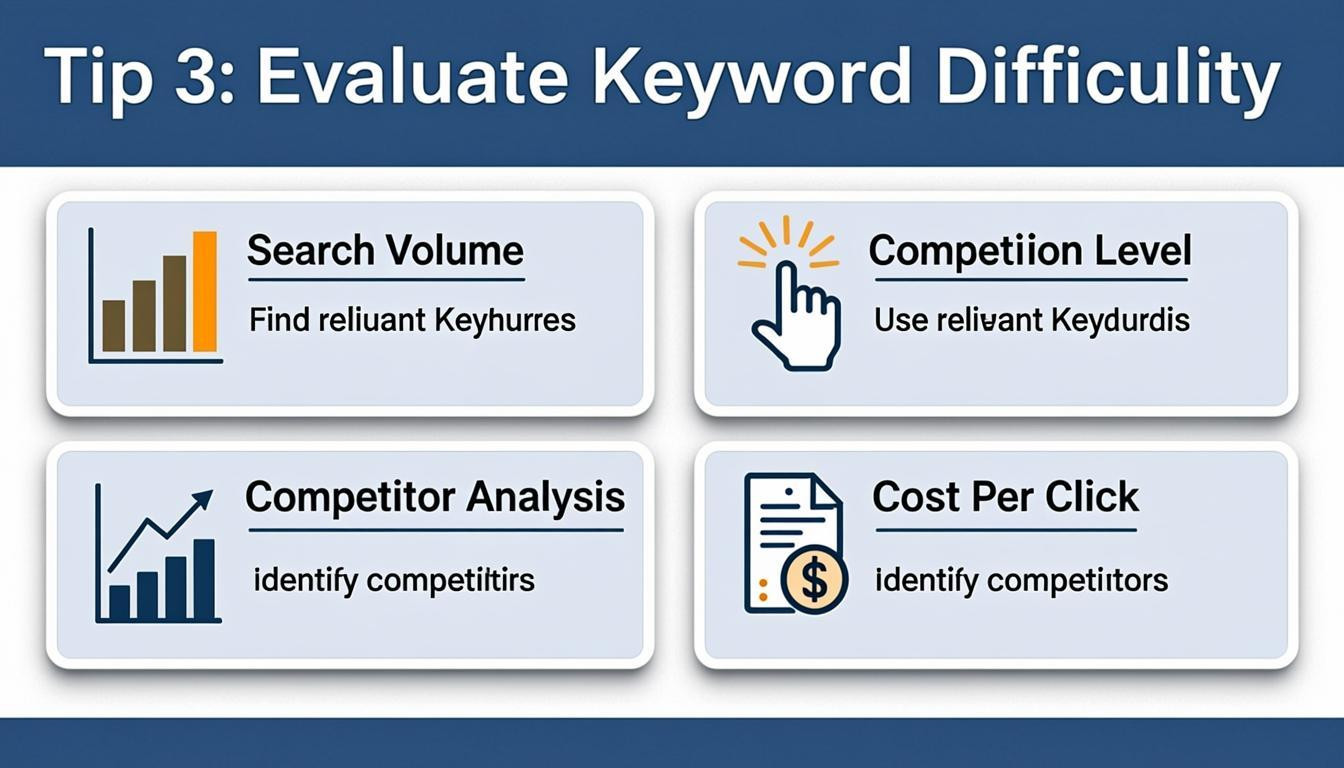
Tip 3: Evaluate Keyword Difficulty
Assessing keyword difficulty is essential to determine if you can realistically rank for a search term. This metric estimates the strength of the current top-ranking pages based on factors like domain authority and backlink profiles. Targeting keywords with excessively high difficulty often wastes resources, whereas choosing terms with lower competition scores increases the likelihood of quicker ranking success.
To implement this effectively, start by filtering your keyword list using SEO tools that provide a difficulty score, typically ranging from 0 to
- A score below 30 generally indicates low competition, making it ideal for newer websites. It is also wise to analyze the top three search results for your target term manually to gauge content quality and user intent.
Implementation Steps:
- Filter for keywords with a difficulty score under
30.
- Inspect the SERPs to see if big brands dominate the results.
- Look for gaps where competitors have thin or outdated content.
- Prioritize long-tail variations with decent search volume but lower competition.
Tip 4: Examine the Top 10 Competitors
Validating keyword ideas requires dissecting the current search engine results pages (SERPs) to understand why the top 10 pages rank. Analyze these results to evaluate content quality, depth, and format. Look for content gaps where competitors may lack specific details, outdated statistics, or poor user experience. If the top results are listicles, a comprehensive guide could differentiate your offering and satisfy user intent more effectively.
To implement this analysis, perform the following steps:
- Enter your keyword into an incognito search engine window to see unbiased results.
- Review the top 10 URLs and note the content type, such as blog posts, product pages, or videos.
- Assess word count and structure of these pages to identify the standard depth required to rank.
- Read comments and forums within the results to find unanswered user questions.
For example, if targeting "best running shoes," and the top 5 results lack reviews for wide widths, creating content focused on wide-fit options fills a specific market void. This approach confirms demand while highlighting a clear path to outrank existing competition.
Tip 5: Assess Commercial Value and Monetization
Validating keyword ideas requires confirming that a topic offers financial returns. High search volume is meaningless if users are only looking for free information rather than spending money. Focus on keywords with high commercial intent, such as terms containing "buy," "discount," "best," or "review," to ensure the traffic aligns with revenue goals.
To determine ROI potential, analyze the current search engine results pages (SERPs). If the top results are dominated by e-commerce product pages or pricing tables, the keyword likely has strong monetization potential. Conversely, a page filled with dictionary definitions or free educational resources suggests low commercial value.
Implement this strategy by following these steps:
- Check Cost Per Click (CPC): High advertiser bids typically indicate a lucrative keyword.
- Analyze Competitor Offers: Look for affiliate links, lead magnets, or direct sales on competing pages.
- Map to a Funnel Stage: Ensure the keyword matches your offer, e.g., targeting "software pricing" for a demo landing page rather than a blog post.
Tip 6: Leverage "People Also Ask" and Related Searches
Search engine features like "People Also Ask" (PAA) boxes and related searches at the bottom of the page are goldmines for validating keyword ideas. These sections reveal the specific questions and sub-topics users associate with your primary term, indicating genuine search intent and demand. If users frequently ask "how to validate keyword ideas manually" or "best tools for keyword validation," creating content around these specific queries validates your broader topic strategy. This approach ensures you cover the subject comprehensively, signaling topical authority to search engines.
To implement this effectively, follow these steps:
- Input your seed keyword into a search engine and analyze the PAA dropdowns. Click on related questions to uncover even deeper layers of the topic.
- Scroll to the bottom of the search results page to capture "related searches." These terms often reflect long-tail variations that are easier to rank for.
- Group these questions into clusters to form the structure of your article or to identify gaps in your current content.
For example, if your main target is "keyword research," a PAA box might suggest "why is keyword research important?" or "how to find low competition keywords." Integrating these specific queries helps you validate the need for a broader content hub centered on your primary keyword.
Tip 7: Run a Quick PPC Test
Running a small Pay-Per-Click (PPC) campaign is one of the most effective methods for obtaining real-world data on search volume and user intent quickly. Unlike keyword research tools that provide estimates, PPC platforms reveal actual click-through rates and conversion potential for your target terms. By spending a modest budget over a few days, you can determine if users searching for a specific phrase are actually interested in your offer before investing heavily in long-term SEO content.
To implement this strategy, follow these practical steps:
- Create a focused ad group: Select the top 5-10 keywords you wish to validate.
- Set a strict budget: Limit the campaign to a small daily spend to minimize financial risk.
- Design a simple landing page: Direct traffic to a relevant page that matches the user's search intent.
- Analyze performance metrics: Monitor click-through rates (CTR) and cost-per-click (CPC) to gauge competition and interest.
For example, if you are considering the keyword "vegan meal delivery," a high CTR combined with a reasonable CPC confirms strong market demand. This empirical evidence removes the guesswork from keyword selection.
Conclusion
Validating potential search terms is a fundamental step in developing a successful content strategy. Effectively learning how to validate keyword ideas ensures that effort is focused on topics with genuine demand and achievable competition levels. This process transforms a broad list of possibilities into a refined set of targets that align with business goals and user intent.
Key takeaways from this exploration include the necessity of analyzing search volume trends to distinguish between seasonal spikes and consistent interest. It is equally vital to evaluate keyword difficulty to understand the competitive landscape before committing resources. Prioritizing long-tail variations often yields higher conversion rates due to their specific nature, whereas head terms typically drive broader awareness.
To build a robust strategy, practitioners should:
- Assess search intent to ensure content matches what users actually seek
- Cross-reference metrics across multiple reliable data platforms
- Analyze the current SERP layout to identify content gaps and opportunities
By systematically applying these validation techniques, content creators can confidently invest in topics that drive measurable organic traffic and sustained growth.

Comments
0