
Understanding the Core Differences
The debate of seo vs paid ads really comes down to the trade-off between building lasting authority and generating instant traffic. Organic search relies on optimizing your website content and technical structure to earn high rankings naturally. This process builds long-term equity, as a well-optimized page continues to attract visitors over time without ongoing costs for each click. Conversely, paid search operates on a cost-per-click (CPC) model where advertisers bid on keywords to secure immediate visibility at the top of the results. While this guarantees traffic instantly, the flow stops the moment the budget runs out.
Search intent plays a pivotal role in distinguishing these strategies. For organic rankings, algorithms prioritize content that thoroughly answers user queries, establishing trust and relevance over time. Paid targeting, however, allows advertisers to bypass the natural ranking process and display specific ads tailored to a user's immediate commercial intent.
- Organic Strategy: Focuses on high-quality content to earn top rankings for informational or transactional queries.
- Paid Strategy: Targets specific demographics and keywords to capture high-intent users ready to convert.
For example, a comprehensive guide on "how to fix a leak" ranks organically through its sheer utility, while a "plumber near me" ad captures users who need urgent service right now. Ultimately, the question of seo vs paid ads isn't a binary choice but rather a balance between compounding growth and immediate returns.
Analyzing Traffic Volume and Quality
When evaluating seo vs paid ads, traffic volume and quality are major differentiators. Click-through rates (CTR) for top organic positions significantly outperform paid placements. Users often skip the "Sponsored" label at the top of search results, gravitating toward the first organic result because it is perceived as more authoritative. For instance, the first organic listing typically garners a much higher percentage of clicks compared to the top paid ad, even though the paid ad appears first visually.
Conversion rate disparities further distinguish the two channels. While paid ads generate immediate traffic, organic traffic generally yields higher conversion rates over time. This happens because users arriving via organic search are often actively seeking specific solutions or information, leading to deeper engagement. In contrast, paid traffic can sometimes result in accidental clicks or lower intent.
Trust factors heavily influence this user behavior. Organic rankings signal credibility and longevity to users, suggesting a website has earned its position through quality and relevance. Conversely, some users approach paid ads with skepticism, aware that the position was bought rather than earned. Key trust factors include:
- Perceived Authority: High organic rankings imply industry leadership.
- Relevance: Organic results closely match user intent queries.
- Ad Blindness: Frequent internet users subconsciously ignore paid banners.
Cost Implications and Budget Allocation
When looking at seo vs paid ads, the financial structures differ significantly. SEO typically requires a substantial upfront investment in content creation, technical optimization, and link building before you start seeing results. Once established, however, maintenance costs are relatively low compared to the traffic volume achieved. Conversely, paid advertising demands immediate financial outlay for every click or impression, with costs stopping the moment the campaign pauses.
Calculating Customer Acquisition Cost (CAC) reveals distinct efficiency metrics over time. Paid campaigns yield instant data for CAC calculation but require continuous spending to maintain the flow of acquisitions. SEO lowers CAC incrementally as the initial investments amortize over a growing base of organic traffic.
Budget flexibility varies considerably between the two approaches:
- Paid Campaigns: Allow for daily budget adjustments, rapid geographic targeting, and immediate pausing of underperforming ads.
- Organic Efforts: Involve long-term resource commitments where pivoting strategy takes weeks or months to impact search rankings.
For example, a business can double its paid ad spend overnight to capture a trending topic, whereas increasing organic capture for that same trend requires producing new content and waiting for it to be indexed. Ultimately, paid media offers spend control, while organic search focuses on building long-term assets.
Timeframes for Results and Sustainability
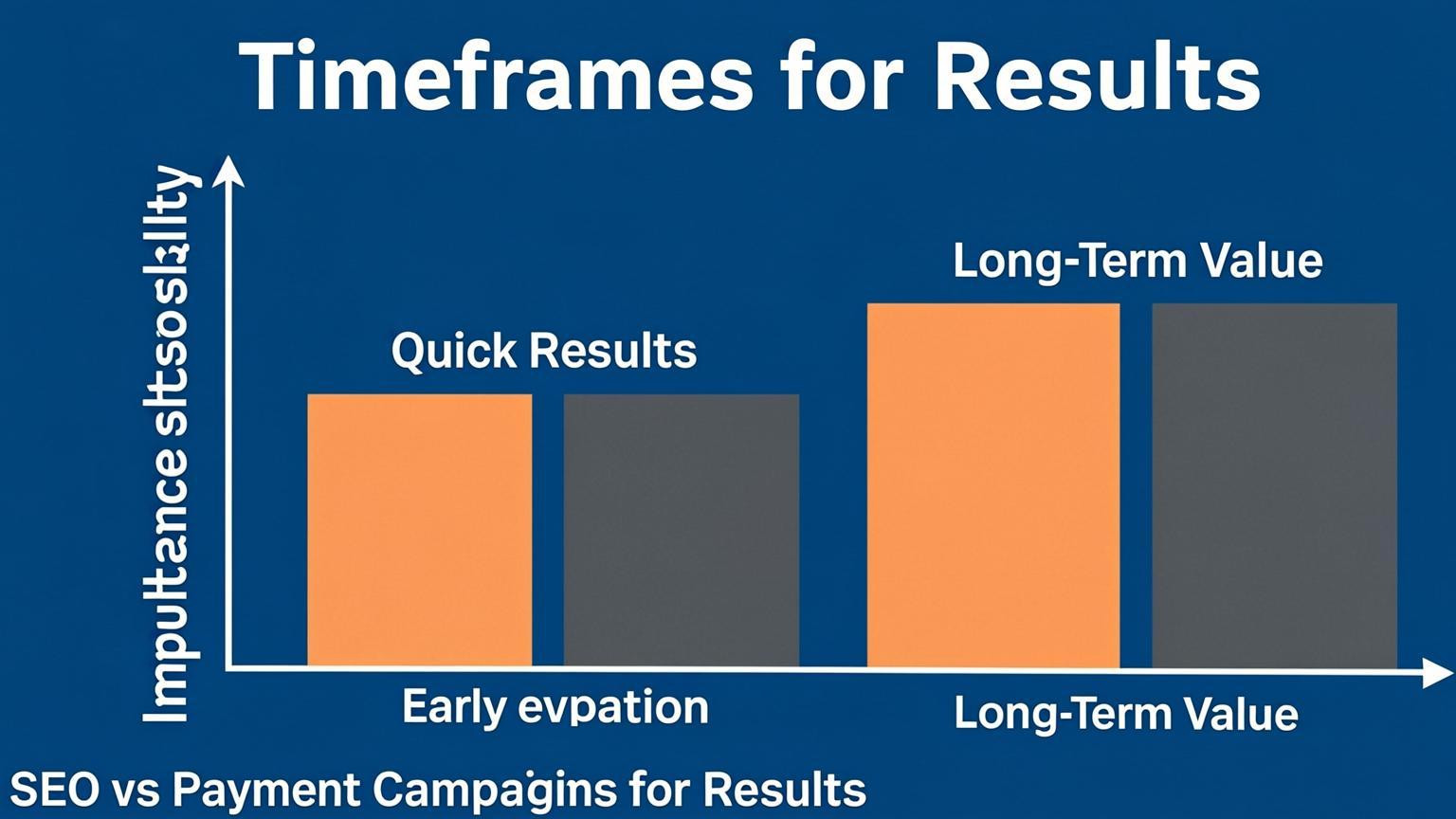
When weighing seo vs paid ads, the timeline for seeing results is vastly different. Paid campaigns offer immediate visibility; ads can appear at the top of search results within hours of setup. In contrast, SEO requires a ramp-up period often lasting several months. Search engines need time to crawl, index, and assess the quality of new content and backlinks before assigning high rankings.
The nature of traffic growth also varies between the two strategies:
- Paid ads: Generate short-term traffic spikes that correlate directly with the budget.
- SEO: Delivers long-term compounding growth, where established content gains authority and attracts more visitors over time without additional spend.
Sustainability is the defining factor in this comparison. Paid traffic creates a dependency on continuous funding; the moment ad spend stops, the traffic flow ceases immediately. Conversely, SEO builds an asset. A well-optimized page retains its rankings and continues to drive organic traffic long after the initial work is completed. For instance, a comprehensive blog post can generate leads for years, whereas a promotional ad vanishes the instant the campaign is paused. This distinction makes SEO essential for long-term stability, while paid ads serve best for immediate, temporary boosts.
When to Prioritize Paid Advertising
When analyzing seo vs paid ads, paid channels provide the speed and precision required for specific business scenarios. One primary instance is launching new products or testing new markets. Since organic search takes time to build authority, paid ads allow businesses to appear at the top of search results immediately, validating product-market fit before committing to long-term SEO strategies. For example, a company expanding into a new geographic region can use geo-targeted ads to gauge interest without waiting for local search rankings to mature.
Another critical scenario involves targeting high-intent keywords where the organic difficulty is prohibitively high. Established competitors may dominate the organic results for terms like "best enterprise software" or "buy luxury watches online." In these cases, bidding on these terms ensures visibility despite a lack of organic ranking. Finally, paid advertising is essential for time-sensitive promotions or seasonal campaigns. Organic fluctuations are unpredictable, but paid campaigns can be activated, scaled, and deactivated to align perfectly with specific dates, such as holiday sales or flash events.
- Immediate visibility: Essential for new product launches.
- Bypassing competition: Targets high-intent keywords with high organic difficulty.
- Strict timing: Aligns perfectly with seasonal sales and limited-time offers.
Integrating SEO and PPC for Maximum Reach
Master Your SEO Strategy Today
Some website owners improve their SEO using tools like Semrush for keyword research and competitor analysis to boost organic rankings.
The debate of seo vs paid ads often overlooks the potential of combining both strategies. Integrating search engine optimization with pay-per-click advertising creates a synergy that maximizes visibility and conversion opportunities. Rather than treating them as opposing forces, successful marketers leverage the unique strengths of each channel to dominate the digital landscape.
Retargeting organic visitors with paid ads
Users who arrive via organic search may not convert immediately. Paid retargeting campaigns reconnect with these visitors, keeping the brand top-of-mind. For example, a user reading a blog post about running shoes can later be shown display ads featuring a specific product discount, effectively nurturing the lead through the sales funnel.
Using ad data to inform organic keyword strategy
PPC campaigns provide immediate feedback on keyword performance and user intent. This data is invaluable for organic content planning. Marketers can identify high-converting terms from paid campaigns and prioritize them for long-term optimization efforts.
Dominating search engine results pages (SERPs) with dual presence
Securing both a top organic ranking and a paid advertisement on the same results page significantly increases brand credibility and click-through rates. This dual presence ensures competitors cannot easily squeeze a brand out of view.
- Increased Trust: Users often perceive brands appearing in both slots as industry authorities.
- Higher Total Clicks: Occupying multiple real estate points leads to more total traffic than a single listing would generate.
- Cost Mitigation: Strong organic performance can eventually allow for reduced ad spend on high-volume terms.
Making the Strategic Choice for Your Business
Selecting between organic search and media buying requires a clear assessment of your starting position and market difficulty. When weighing seo vs paid ads, first evaluate your current domain authority against the competition. If competitors hold high authority scores, organic ranking will demand significant time and investment. Conversely, a lower barrier to entry often makes advertising a viable short-term tactic for new websites seeking immediate visibility.
Aligning the channel with specific business goals dictates the optimal path. Organic strategies typically excel for long-term brand building and sustainable traffic growth, while paid campaigns provide precise control for time-sensitive promotions or lead generation. For example, a business launching a limited-time offer might prioritize immediate reach over gradual organic accumulation.
Resource availability ultimately determines the ideal mix. Consider the following factors when allocating budget and personnel:
- Time vs. Speed: Organic growth requires patience; ads deliver instant results.
- Budget Allocation: SEO demands labor for content and links; ads require direct financial spend for clicks.
- Team Expertise: Success relies on having skilled specialists for either technical optimization or campaign management.
Balancing these elements ensures a sustainable strategy that maximizes return on investment.

Comments
0