

Introduction
The digital landscape changes fast, and relying on gut instinct alone isn't enough to capture attention anymore. Modern content teams are under immense pressure to deliver high-quality material across multiple channels at breakneck speeds. As AI tools evolve from simple writing assistants into robust platforms for text, visual, and audio creation, the bar for excellence keeps rising. If your audience clicks away quickly or ignores your calls to action, it is a clear sign that your content is not engaging enough.
To turn things around, creators need to leverage technology to streamline workflows and really understand what their audience wants. AI can handle repetitive tasks and generate creative variations, freeing you up to focus on strategy and resonance. However, simply churning out more volume isn't the answer; the real value lies in crafting relevant, optimized experiences. Without these insights, even the most frequent posting schedules will fail to build momentum. You have to move beyond basic production and start building systems that prioritize connection and retention to truly succeed.
Fix 1: Shift Focus from Business-Centric to Audience-Centric Conversations
Make Your Content Load Fast
A slow site kills engagement. Hostinger ensures your content loads instantly so visitors stay focused on your message.
One major reason your content is not engaging enough is that it likely relies on assumptions rather than actual data about your audience's needs. Successful content strategies replace internal guesswork with direct insights gathered from real customer interactions, like survey data, social media polling, and post-conference interviews. Understanding audience psychology requires looking beyond vanity metrics to grasp the specific behavioral triggers that resonate with your demographic. By leveraging predictive intelligence and behavioral science principles, you can craft messages that align with how your audience naturally thinks and responds.
To address this disconnect, you must pivot the narrative from what your business offers to what the audience experiences. This shift transforms the dynamic from a sales pitch into a valuable conversation. For example, rather than listing product features, discuss how those features solve specific pain points revealed by your data.
- Gather direct feedback through customer surveys and social polls to identify true interests.
- Use conversation data from networking events to inform content topics.
- Focus on the audience's perspective and problems, rather than internal business goals.
- Apply behavioral science insights to predict how different messages will perform.
Implementing these changes ensures your content feels relevant and personal, significantly boosting engagement levels.
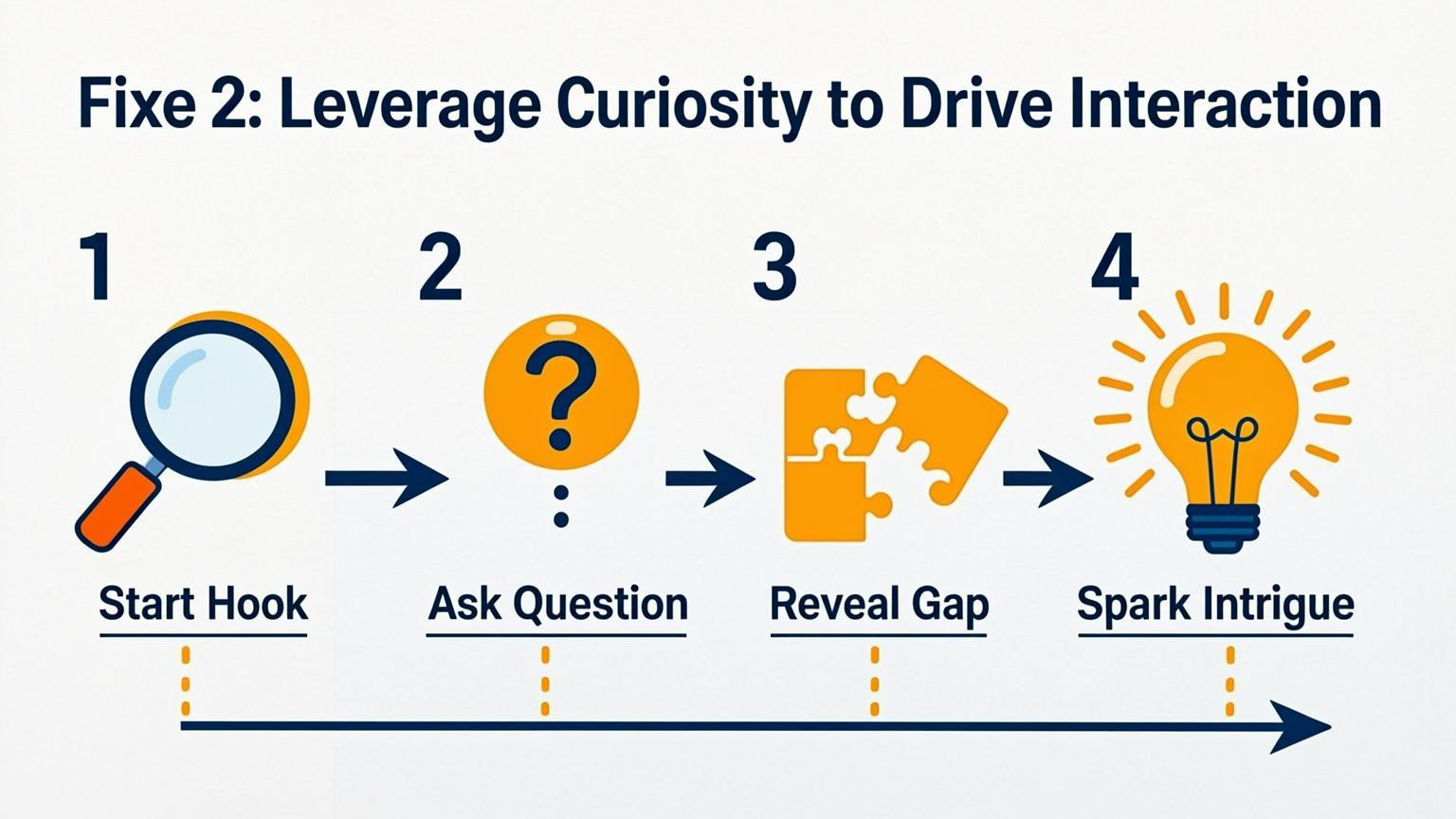
Fix 2: Leverage Curiosity to Drive Interaction
Curiosity is a potent psychological trigger for user engagement. When content teases specific knowledge or poses intriguing questions, it compels users to click, comment, or share to satisfy their need for closure. If your content is not engaging enough, it is likely because it reveals everything immediately rather than creating a knowledge gap that the reader feels compelled to fill.
To implement this strategy, move away from declarative headlines and use open loops that promise valuable insights.
- Use teasers in headlines: Instead of "How to Squat Properly," use "The One Exercise You Should Never Skip."
- Ask open-ended questions: Prompt the audience with inquiries that challenge their assumptions or promise a better result.
- Hide the "how-to" behind a click: Provide the "what" and "why" in the post, but require a link click or comment to reveal the specific solution.
By designing content that forces the audience to seek answers, you transform passive consumption into active participation. This approach taps into the brain's desire for completion, driving deeper interaction with your brand.
Fix 3: Replace Assumptions with Data-Driven Audience Insights
Relying on guesswork regarding audience preferences is another reason your content is not engaging enough. To address this, you must gather actual data on how your audience thinks and responds, moving beyond intuition to research-based predictive intelligence. By understanding the psychological drivers behind user actions, you can create materials that truly resonate.
Replace assumptions with concrete feedback loops using the following methods:
- Conduct direct audience research: Utilize customer surveys, social media polls, and post-event interviews to gather qualitative data on specific needs and pain points.
- Leverage engagement analytics: Analyze trackable user signals—such as scroll depth, click-through rates, and time on page—to understand which elements capture attention and which cause drop-off.
- Apply behavioral science principles: Design content based on proven human responses to different approaches, ensuring that every element is crafted to align with how minds process information.
This data-driven strategy allows you to personalize content effectively, turning static assets into a dialogue that builds trust and holds attention.
Fix 4: Prioritize Authenticity Over Perfection
If your content is not engaging enough, it may be because it feels too mechanical or safe. While AI tools can produce flawless text and visuals in seconds, audiences in 2026 crave raw human connection. Over-polished, generic content often fails to resonate because it lacks the psychological nuance that drives genuine interaction. Readers ignore perfect ads; they connect with human stories.
To solve this, shift your focus from technical perfection to emotional resonance. Use automation to handle data, but inject your unique voice and perspective into the final output.
- Share real struggles: Instead of only highlighting wins, discuss the challenges faced during a project.
- Use natural language: Write as you speak, avoiding corporate jargon and overly formal sentence structures.
- Show behind-the-scenes: Reveal the process or people behind the product to build trust and relatability.
Feeds are becoming smarter at detecting inauthenticity. By prioritizing genuine, emotion-driven content over grammatical perfection, you cut through the digital noise and foster deeper loyalty.
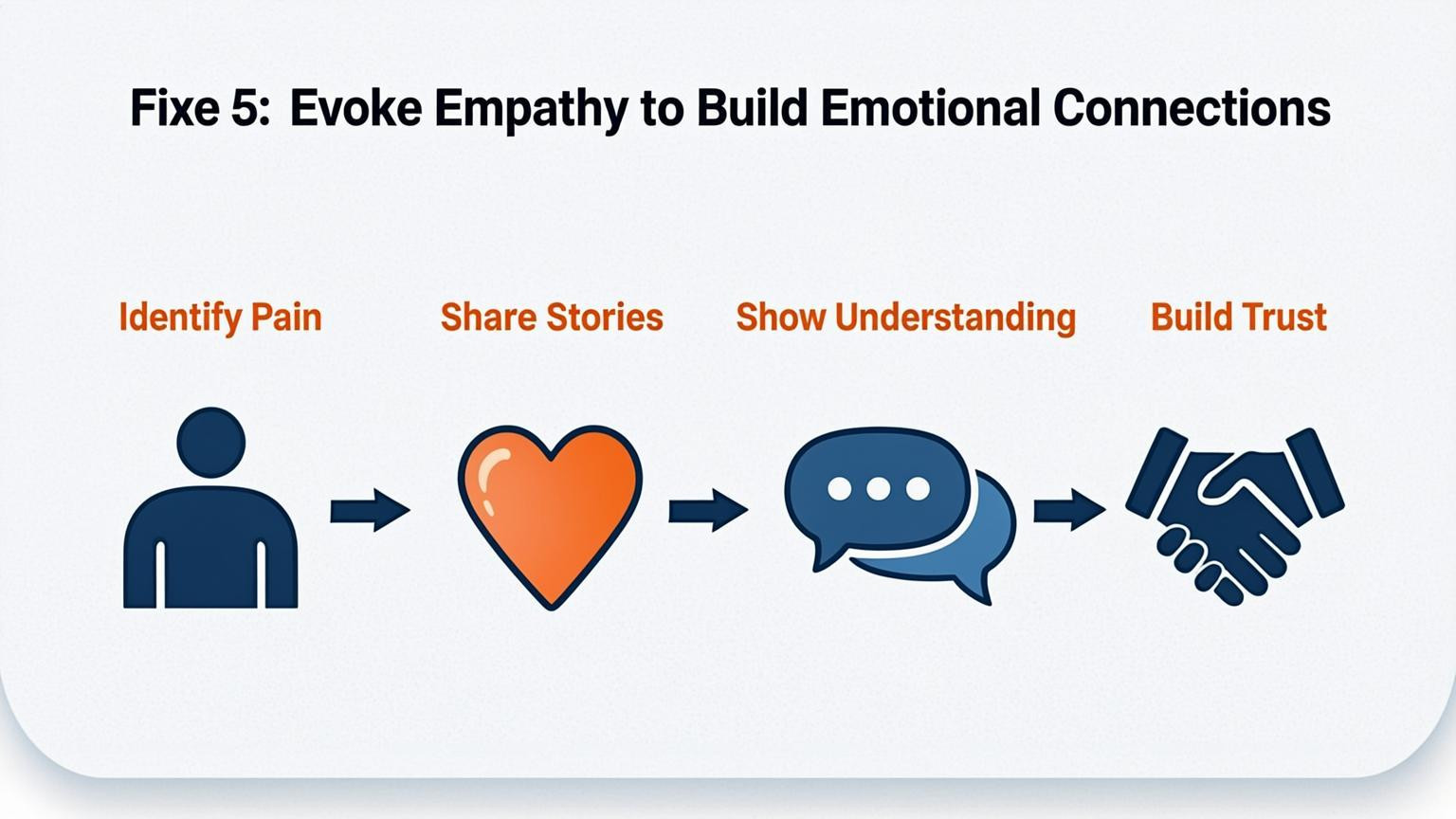
Fix 5: Evoke Empathy to Build Emotional Connections
When your content is not engaging enough, it likely lacks emotional resonance. Modern audiences crave authentic connections rather than polished sales pitches. Content that addresses user challenges, aspirations, or values creates a sense of connection and encourages dialogue. By validating your audience's struggles, you transform passive readers into active participants who feel understood on a human level.
To fix this, focus on relatability and genuine problem-solving in your writing.
- Share specific struggles: Instead of generic advice, describe the exact frustrations your audience faces daily.
- Use "you" language: Shift focus from "we" or "I" to directly address the reader's experience and feelings.
- Highlight shared values: Align your message with the core beliefs and aspirations of your target demographic.
- Tell success stories: Use case studies that mirror the reader's journey, showing how others overcame similar obstacles.
For example, a fitness brand might ask, "Do you feel too tired to work out after your 9-to-5?" This specific, empathetic question triggers recognition and trust far better than a generic "Exercise regularly" command.
Fix 6: Use Engagement Data to Personalize the Journey
If your content is not engaging enough, you likely treat every visitor the same rather than acknowledging their unique stage in the buying journey. Generic pages fail to hold attention because they lack relevance to the specific needs of the individual. Instead, analyze how users interact with specific assets to track their progress. Each action a user takes provides a signal that can be used to guide them toward a conversion.
Use this behavioral data to create a personalized dialogue that adapts to visitor behavior. By responding to these trackable moments, you can capture and hold attention more effectively.
- Track micro-interactions: Monitor scroll depth, click-through rates, and time on page to understand which topics resonate most.
- Map content to intent: Develop specific assets for different funnel stages, such as educational blog posts for awareness and detailed case studies for consideration.
- Implement dynamic recommendations: Display related articles or product suggestions based on the pages a user has previously viewed.
Fix 7: Commit to High-Quality Creation Over AI Speed
Relying solely on artificial intelligence for speed often results in generic material, meaning your content is not engaging enough for today's discerning audiences. While automation streamlines workflows and generates basic variations, it cannot replicate the nuance of human storytelling or the psychological triggers that build deep trust. To truly resonate, you must prioritize human creativity over machine efficiency.
Shift your strategy by using AI only as a supportive assistant rather than the primary creator. Focus on crafting narratives that solve specific problems and evoke emotion, rather than simply filling a content calendar. Audiences connect with brands that understand their fears and desires, elements algorithms struggle to authentically simulate.
- Use AI for data, not direction: Let tools uncover audience insights and optimize headlines, but write the core message yourself.
- Inject human psychology: Design every frame and sentence to move with the audience's mindset, addressing their real needs.
- Edit heavily: Never publish raw AI output. Refine the text to ensure a unique voice and distinct perspective.
Quality creation is a strategic approach that pulls audiences in by offering value, whereas speed often just adds to the noise.
Conclusion
The landscape of digital marketing is shifting rapidly. To keep up with the pressure of delivering more content across various channels, you must integrate the right technology into your strategy. If your content is not engaging enough, simply producing more volume will not solve the problem. The solution lies in leveraging advanced tools to streamline your workflow and enhance the quality of your output.
By utilizing AI platforms, you can move past basic generation and start building efficient content engines. These tools assist in analyzing data to uncover deep audience insights, generating multiple creative variations, and optimizing posts for better readability. However, remember that automation is not a replacement for human oversight. You must still apply heavy editing to ensure the brand voice remains authentic and the messaging resonates with your specific audience.
Don't let the overwhelming number of options stall your progress. Start testing these solutions today to refine your process and see results in weeks rather than months.
- Analyze data to uncover specific audience preferences
- Generate variations to test different creative angles
- Optimize readability with one-click improvements
- Edit rigorously to maintain a human touch
Begin transforming your strategy now to ensure your content consistently captures attention and drives engagement.

Comments
0